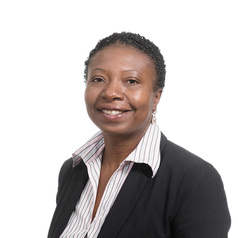
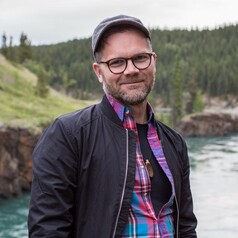
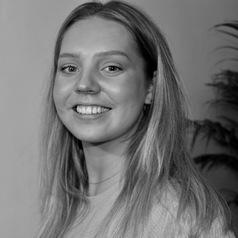
Senior Lecturer, University of Pretoria I acquired my Master’s degree in economic development and policy analysis from the University of Nottingham, United Kingdom. I obtained a PhD in management sciences from the Department of Public Administration, Radboud University Nijmegen, Netherlands. I studied the effect of poverty on education in Nigeria during my Master's programme. My investigation of the effect of poverty on education shows that the “quantity-quality trade-off” is vital to the investment households are ready to make in the educational development of their children. Household per capita expenditure and fertility (the number of children in a household) were highly significant in explaining child school enrolment in Nigeria. Households with high per capita expenditure were found to invest more in their children’s education. After my Master's’ programme my research interest shifted to the co-production (citizen inclusivity) of public services. Co-production is defined as the active and direct involvement of citizens in public services and policy cycles. Co-production is a resurgent topic in public administration and management research. The idea is that government alone should not develop and implement policies and/or services, citizens should be actively involved in the planning and delivery as well. My research has focused on the co-production of public services (healthcare delivery and water provision) in Africa. Coproduction is still an emerging concept in Africa. The practice is widely used in innovative ways in developed countries, with citizens being asked to co-design, co-commission, co-assess, co-deliver, co-implement and co-execute public services. I studied the coproduction of healthcare and water provision extensively in my PhD research. I research, in particular, the policy instruments required to sustain coproduction practice, the drivers of coproduction, citizen resourcefulness in coproduction practice, and the segmentation of coproduction in countries like Ghana, Nigeria and South Africa. My research is now focused on the achievement of SDG 16 (peace and inclusive society) through the coproduction of neighbourhood security in South Africa and Germany by 2030. The pragmatic research approach is aimed at developing innovative and practical models of coproducing neighbourhood security in both countries. I hope that there will be ‘mutual learning’ from the contextual differences and/or similarities in neighbourhood security in these two countries. Besides my research projects, I am a board member and a senior consultant at the Centre for Collective Learning and Action (CCoLA) – a non-governmental organisation at Leiden, Netherlands. My responsibilities at CCoLA include (i) developing diaspora humanitarianism capacity in the Netherlands, (ii) coaching and mentoring Dutch students studying global health at the University of Applied Science in Amsterdam during their internships and fieldwork in the health sector in Africa, and (iii) co-promoting the values and goals of CCoLA. I am also a member of the International Institute of Administrative Studies (IIAS) Study Group on Coproduction of Public Services. Lastly, I have blindly reviewed manuscripts for Administratio Publica, Journal of Public Administration and Governance (JPAG), Heliyon and Environmental health Insights journals.
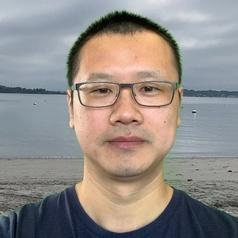
Associate Professor of Oceanography, University of Rhode Island Meng (Matt) Wei is an associate professor of oceanography at the University of Rhode Island’s Graduate School of Oceanography. His lab work on topics include geodesy, fault mechanics and natural hazards. Wei completed his Ph.D. in earth sciences at the Scripps Institute of Oceanography.
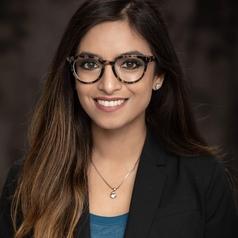
Assistant Professor of Behavioral Medicine & Psychiatry, West Virginia University Maria Khan, PhD is a clinical psychologist, clinical assistant professor, and director of the Resilience After Complex Trauma (ReACT) Clinic through the Department of Behavioral Medicine and Psychiatry at the Rockefeller Neuroscience Institute, West Virginia University (WVU) Medicine. She is passionate about reaching under-served and vulnerable populations, such as children and families who have experienced adversity and exhibit heightened risk for a host of psychosocial and developmental difficulties. She provides evidence-based interventions for children and families experiencing depression, anxiety, behavioral problems, and attachment/relationship difficulties. She specializes in evidence-based therapies for children and families who have undergone traumatic experiences. Her research interests revolve around child trauma and adverse childhood experiences (ACEs), risk and protective factors, and parent-child attachment, in the context of child and family functioning.
Assistant Professor, School of Journalism and Communication, Carleton University Following an award-winning career in print and broadcast journalism at the Smithers Interior News, the Ottawa Citizen, and CBC Radio, Matthew Pearson was appointed an assistant professor of journalism at Carleton University's School of Journalism and Communication in 2020. His research interest explores the intersections of journalism, trauma, and mental well-being, with a focus on preparing journalism students and working journalists to report on traumatic incidents and those affected by them, and to take care of themselves and colleagues afterward.
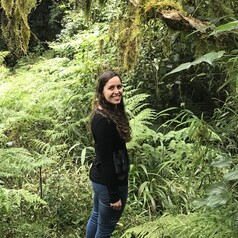
PhD Candidate, Neuroscience, Western University Michaela Kent is a PhD candidate in the Neuroscience Graduate Program at Western University in London, Ontario, Canada. She is based at the Western Institute for Neuroscience and is co-supervised by Dr. Emma Duerden and Dr. Jody Culham. Her interest in the developing brain has been a driving factor behind previous work. During an undergraduate degree at Glasgow Caledonian University, Michaela wrote a dissertation focussing on the neurodevelopment of children raised in orphanages. She then completed a Master’s degree in Brain Science at the University of Glasgow, working primarily on a functional magnetic resonance imaging (fMRI) study exploring aspects of social cognition. Whilst in Glasgow, Michaela worked with Dr. Ruud Hortensius and as part of the Social Brain in Action Lab on the ERC-funded Social Robots research project. Building on her neuroimaging background, Michaela is now working to use functional near-infrared spectroscopy (fNIRS) to study the developing brain in naturalistic settings. Specifically, she uses fNIRS and behavioural measures to study how socio-cognitive skills develop and how brain responses to social interactions might be influenced by the environment. Outside of her research, Michaela serves on the Executive Committee for the Society of Neuroscience Graduate Students and as a graduate teaching assistant at Western University.