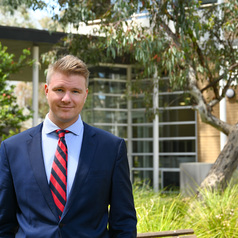
Postdoctoral Research Fellow, Australian National University Mas is currently a postdoctoral research fellow at the School of Regulation and Global Governance at Australian National University. Max received his Ph.D in Political Science from the University of Pittsburgh in 2022. His work has been published in The Review of International Political Economy, the SAGE Handbook of Research Methods, Political Studies Review, and is forthcoming in The Handbook of Bureaucratic Autonomy: Politics, Resources, Power. (B. Guy Peters, Ed. Edward Elgar Publishing Ltd.)
Research Fellow and Senior Lecturer in Reconciliation and Peacebuilding, University of Winchester I am an experienced principal investigator of international research projects and a conflict transformation facilitator. I am also an award winning teacher and presenter. Here are some of the areas I cover in my training: 1) Exploring interpersonal conflict; 2) Turning conflict styles into strategies: 3) Developing key interpersonal skills; 4)Facilitating challenging conversations; 5) Developing intercultural awareness and competencies; 6) Creating a culture of dialogue; 7) Workplace mediation; 8) Facilitating inclusive meetings and 9) Developing strategies using envisioning and appreciative inquiry. My research currently focuses on welcoming and integrating people on the move in Europe. I am currently particularly interested in the roles of language cafes in integration and the roles of faith-based actors in integration. In the past I have also done a lot of research on accountability for war crimes and transitional justice processes. I also manage distance learning master programmes in reconciliation and peacebuilding at the University of Winchester, for more information see: https://www.winchester.ac.uk/study/postgraduate/courses/ma-reconciliation-and-peacebuilding/
Lecturer in Economics, Aberystwyth University Dr. Maria Plotnikova received her PhD at the University of Illinois. She is a member of the Regional Science Association and has been successful in attracting a number of funding awards, including Horizon 2020 and ESRC funded awards on spatial justice and inequality in Europe and poverty and vulnerability in Wales. Maria's research interests are in Regional and Urban economics, economics of poverty and inequality, as well as economics of housing in transition economies.
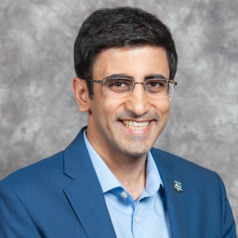
Assistant Professor of Computing and Information Sciences, Florida International University M. Hadi Amini is an Assistant Professor at the Knight Foundation School of Computing and Information Sciences at the College of Engineering and Computing, Florida International University (FIU). He is the founding director of Sustainability, Optimization, and Learning for InterDependent networks laboratory (www.solidlab.network), director of the ADvanced education and research for Machine learning-driven critical Infrastructure REsilience (ADMIRE) Center (funded by the US DHS), and Associate Director of the US DOT Transportation Center for Cybersecurity and Resiliency (TraCR). He received his Ph.D. in Electrical and Computer Engineering from Carnegie Mellon University in 2019, where he received his M.Sc. degree in 2015. He also holds a doctoral degree in Computer Science and Technology. Since founding solid lab, his research on advanced machine learning algorithms/optimization and their applications has been extensively funded by various federal and state agencies, with a total funding of $4.7M ($2.92M as PI and $1.78M as Co-PI). His research interests include distributed machine learning/optimization algorithms, federated learning, interdependent networks, and cyber-physical-social resilience and cybersecurity. Application domains include smart cities, intelligent transportation systems, healthcare, and energy systems. Hadi is a Senior Member of IEEE, and a life member of IEEE-Eta Kappa Nu (IEEE-HKN), the honor society of IEEE. He served as President of Carnegie Mellon University Energy Science and Innovation Club; as a technical program committee of several IEEE and ACM conferences; and as the lead editor for a book series on ‘‘Sustainable Interdependent Networks’’ since 2017. He also serves as Associate Editor of Data Science for Communications (Frontiers in Communications and Networks). He has published more than 150 refereed journal and conference papers, and book chapters. He edited/authored eight books. He is the co-recipient of the best paper award from “2019 IEEE Conference on Computational Science & Computational Intelligence”, 2021 best journal paper award from “Springer Nature Operations Research Forum Journal”, the Excellence in Teaching Award from FIU School of Computing and Information Sciences in 2020, 2023 Faculty Senate Excellence in Teaching Award from the Office of Faculty Leadership and Success at Florida International University, best reviewer award from four IEEE Transactions, the best journal paper award in “Journal of Modern Power Systems and Clean Energy”, and the dean’s honorary award from the President of Sharif University of Technology.
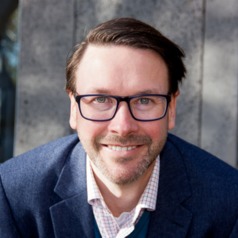
Professor of Philosophy, University of South Carolina For a couple of decades, I worked in philosophy of physics, especially quantum theory. After a (too-long) stint as an administrator, I have returned to civilian life, and am developing a new research expertise in philosophy of music. This new interest grows out of a lengthy training as a classical pianist and French horn player, a brief career as a professional musician before becoming a philosopher, and a continued abiding and serious interest in both musicology and musical performance. I am currently studying existing work in the field, and developing a few projects of my own. In addition, I am reviving an old interest in medieval philosophy, originally developed as a graduate student, and subsequently as a teaching avocation at Indiana University, where I worked for ten years in the Department of History and Philosophy of Science. Specifically, I have an interest in medieval theories of truth and medieval aesthetics (and the connections between them), among other things. I have also done some research in game theory, especially variations of signaling games. This work has included both analytical results and simulations of multi-agent systems. Finally, I have done some work in what we might as well call 'epistemology of of philosophy', focused on the role that so-called 'intuitions' in fact play in contemporary philosophy (which is prominent in some areas) as compared to the role that I believe they should play (which is nil). My view in a nutshell is that rather than citing 'intuition' as a form of evidence, we should admit that we don't know, and just leave such things as 'thoughts deserving of further investigation'.