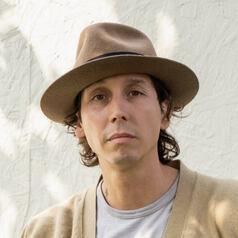
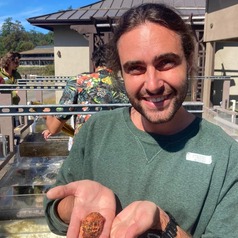
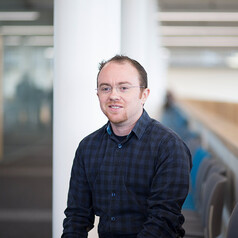
Associate Teaching Professor in Culture & Performance, Arizona State University Dr. Sandoval is an Associate Teaching Professor at Barrett the Honors College in Downtown Phoenix. He is also an ASU Social Transformation Lab Fellow and a member of ASU's Chicano /Latino Faculty & Staff Association. Dr. Sandoval holds a PhD in Culture & Performance from UCLA, an MA in Individualized Study with a focus on Performance Studies from NYU, and a BA in English with a focus on Performance at the University of Nevada Las Vegas. Dr. Sandoval is currently researching the transborder holiday Dia de los Muertos (Day of the Dead). He focuses on the holiday's popular history of the holiday as it has circulated in mass media, art exhibitions, tourism, and cinema. He also conducts ethnographic research on large-scale public celebrations of the holiday in Mexico and the US Southwest in order to examine the ways the holiday has developed from ancient Mesoamerican ritual to mass media spectacle. His research analyzes issues of performance, transnationalism, interculturalism, race, hybridity, indigeneity, spirituality, and cultural appropriation & commodification. Furthermore, he writes about the way Day of the Dead intersects with his experiences coming of age as a working-class mixed-race Chicano.
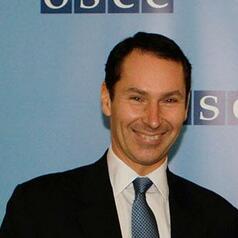
Affiliate professor, ESCP Business School Maxime Lefebvre est diplomate et docteur en science politique. Il est diplômé de l'École des hautes études commerciales de Paris (1989) puis de Sciences Po Paris (1990) et a fait une maîtrise d'histoire à l'Université de Sorbonne Paris IV (1990). Diplomate, ancien ambassadeur, il est actuellement professeur à l’ESCP, et auteur de La politique étrangère européenne (« Que sais-je ? », 2021) et La politique étrangère de la France (« Que sais-je ? », 2019). Les propos des articles publiés sur ce site sont tenus à titre personnel.
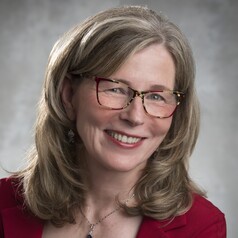
Dean, Faculty of Engineering, University of Waterloo Mary Wells P.Eng, Ph.D. is the Dean of Engineering at the University of Waterloo, Canada's largest engineering school. Professor Wells is a professor of materials engineering in Waterloo's Department of Mechanical and Mechatronics Engineering and she is currently the Chair of Engineering Deans Canada. Professor Wells has established her reputation as a leader who understands and promotes the need for a diversity of perspectives and approaches in the engineering profession and the University more broadly. An accomplished and award-winning materials engineer, her research focuses on the relationship between processing, structure and properties of advanced metallic alloys used in the transportation sector. Wells began her academic career as a professor in materials engineering at the University of British Columbia and has worked in the steel industry in Canada and internationally.
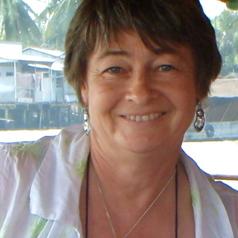
Professor of Developmental & Marine Biology, University of Sydney Maria Byrne is Professor of Marine and Developmental Biology at the University of Sydney. For 12 years she was the director of One Tree Island Research Station, the University’s facility on the Great Barrier Reef. Over the years this iconic, fully protected reef system has provided a major platform for Prof Byrne’s research on the biology and ecology of marine invertebrates that has largely involved echinoderms as model organisms. Her work on comparative evolutionary developmental biology and marine climate change has been funded by the Australian Research Council and other agencies for over 20 years. In recent years Prof Byrne’s work has involved the quantification of the impacts of climate change stressors, ocean warming and ocean acidification on fundamental biological processes including growth, physiology, development and calcification. This work investigates the responses of marine invertebrates across life stages to climate change and has involved species from the tropics to the poles. Most importantly the labile nature of development and possibility of an in-built redundancy and adaptive capacity of developmental processes in a climate change world will be crucial to the resilience of some marine species. Her current research investigates potential for climate adaptation merging here two main areas of research, evo-devo and global change.
PhD Student, University of Sydney Matthew Clements is PhD student working closely with Professor Maria Byrne in her Marine and Developmental Biology lab at the University of Sydney. He is interested in the ecology of crown-of-thorns starfish throughout their entire life history; from larvae to adult. Echinoderms have had centre stage in his research career to date spanning topics of asexual reproduction, salinity tolerance of the larvae, juvenile-adult interactive behaviour and field based adult population demography and ecology. One Tree Island Research Station, the University’s facility on the Great Barrier Reef, provides a stunning coral reef system to delve into a marine biology career and an exciting place to continue exploring important topics in echinoderm biology.
Senior Lecturer in Functional Materials, Nottingham Trent University Dr. Addicoat’s research interests lie in computational combinatorial chemistry – that is using computer calculations to search and sort many thousands or even millions of possible chemical compounds, before any of them are synthesised. In particular, Dr. Addicoat is interested in applying these methods to materials chemistry, where the following three types of materials are of current interest: Molecular Framework Materials – Molecular Framework Materials, such as Metal Organic Frameworks (MOFs), Covalent Organic Frameworks (COFs) and Zeolitic Imidazolate Frameworks (ZIFs) are highly porous materials made by stitching together various metal or organic “nodes” (corners) with organic “linkers” (edges) to create 2D and 3D frameworks. These materials typically have high surface area, tuneable pore size and changeable functional groups leading to possible applications in fields such as gas adsorption and separation, catalysis and sensing. Given the hundreds of different networks and the effectively infinite number of molecules that can be used to create a framework material, identifying the optimum framework by chance is highly unlikely. Ionic Liquids – Ionic liquids (ILs) are liquids comprised entirely of ions, differentiated from typical ionic salts by having melting points below 100 oC. IL melting points are low because electrostatic interactions between component ions are weaker, and crystal lattice packing is hindered. This is typically achieved by making at least one of the ions large, unsymmetrical and organic. The physicochemical properties of ILs can be tuned through a judicious choice of ions. This flexibility has driven wide-ranging research into their use as solvents in green chemistry, energy and electrochemical applications, pharmaceuticals and lubricants. Transition Metal Clusters – Small clusters of transition metal atoms in the sub-nanometre range have been shown to catalyse a number of environmentally important reactions – e.g. the oxidation of CO and reduction of NO. However, the properties of these clusters are very difficult to predict, and adding or subtracting a single atom can change the reaction rates by several orders of magnitude.