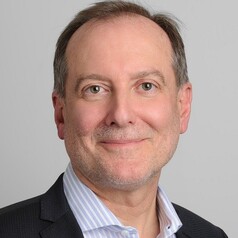
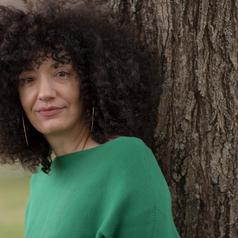
Professeur et Titulaire de la Chaire de Gouvernance S.A. Jarislowsky, Concordia University Membre de la Société royale du Canada Membre de l'Ordre de l'excellence en éducation du Québec FCPA auditeur, FCA Administrateur de sociétés certifié Expertise en analyse financière, états financiers, gouvernance d'entreprise, responsabilité des entreprises, rémunération
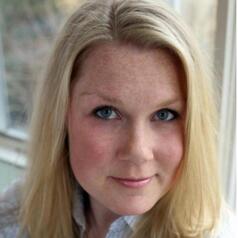
Associate Professor in Conservation Biology, University of Canterbury I focus on interdisciplinary tools, such as GIS and high-resolution satellite imagery, to study spatial and population dynamics of penguins, seals, & cougars - species facing substantial conservation challenges as both the physical and social environments change across the world.
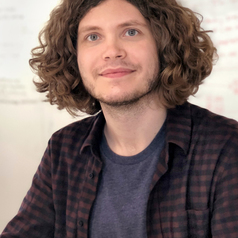
Doctoral Scholar, Geography, Queen Mary University of London I am an artist-researcher working at the intersection of discourses around place, the photographic, and care in more-than-human worlds. My practice spans between more ‘normative’ humanities research outputs in the form of research publications and conference presentations, as well as artistic outputs in the form of printmaking, sculpture, and experimental films/filmic essays. I maintain broad discursive interests around materialisms, ethics of care, more-than-human enquiry, science and technology studies, and participatory art models and criticism. Recently these areas have been focused on the colonial legacies of houseplants and on jellyfish economies. Currently a doctoral scholar within the School of Geography at Queen Mary, University of London, my thesis (working title - Connective Tissue: (Un)lively Materialities of Gelatinous Life) considers the intersections between legislation, ethics, and naturecultures in mapping the material and social life of gelatine, collagen, and their related commodities. Gelatine and collagen are animal agriculture (by)products extracted from connective tissues in the form of odourless/tasteless granules or powder. It accomplishes this through three approaches: (1) charting the development of global gelatine/collagen markets by engaging with a selection of historical and contemporary production and consumption practices; (2) focusing on a collaboration between a private company and university scientists working to produce/sustain a coastal jellyfish/gelatine economy in the state of Georgia in the United States; and (3) exploring the emergent world of jellyfish aquaculture and companion gelatinous zooplankton.
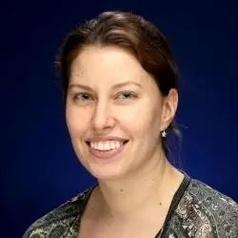
Associate Professor of Spanish, California State University, San Bernardino Dr. María García Puente (California State University San Bernardino) scholarship focuses on small cinemas and emergent female filmmakers in Hispanic cinemas.
Staff K-12 Initiatives, Office of the Chancellor, University of Illinois at Urbana-Champaign My name is Dr. Marlee Bunch. I am an educator, author, researcher, and lifelong learner. My research examines the oral histories of Black female educators in Hattiesburg, Mississippi who taught between 1954-1971, and the implications that integration had on their lives and careers. I have two forthcoming publications on university presses celebrating the voices and histories of these women. I received my doctoral degree from the University of Illinois in 2022 in Education/Policy/Organizational Leadership. Additionally, I have a Masters in Education (MEd), a Masters in Gifted Education (MS), a Bachelors in English, a certification in Diversity/Equity/Inclusion, and a certification in ESL (English as a Second Language). I have been an educator for 17+ years, and am the founder of the Unlearning the Hush teaching framework. You can learn more about my work at https://www.unlearningthehush.com/ or https://www.drmarleebunch.com/
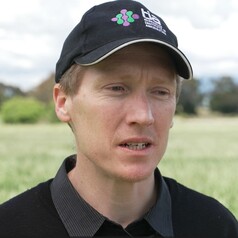
Associate Professor of Sustainable Agriculture, University of Tasmania Associate Professor Matthew Harrison is an award-winning scientist based at the Tasmanian Institute of Agriculture in Launceston, Australia. Matt is internationally renowned for his work in improving the sustainability of agricultural and land-use systems through innovative economic, environmental and social solutions to demand-driven problems. His team uses systems thinking to develop skills, technologies and practices aimed at improving food production, enterprise profitability, social licence to operate and long-term agri-food sustainability. The impact of his work on carbon removals, greenhouse gas emissions, the climate crisis and food security will have enduring benefits for decades to come. Matt is the Director of the Carbon Storage Partnership, a multi-million-dollar transdisciplinary initiative that is developing environmentally-contextualised and socially-acceptable pathways aimed at profitably progressing the entire Australia livestock sector to net-zero greenhouse gas emissions by 2030. Matt has long engendered a culture of research excellence, as shown by his mentoring and supervision of colleagues, his training of the next generation of scientists, and his inclusive approach to leading diverse teams of people. He has supervised numerous Honours, Masters and PhD scholars through to successful completion, and he welcomes enquiries relating to research supervision or collaboration. As an egalitarian, he regularly advocates for social equality of people he works with. The knowledge, skills and technologies developed by Matt and his co-workers have contributed significantly to the University of Tasmania’s ‘well-above world standard’ Excellence in Research Australia (ERA) rankings in ‘Agriculture, Land and Farm Management’ and ‘Crop and Pasture Production’. *Career biography* After completing undergraduate degrees in Applied Science, Plant Science (Hons) and Civil Engineering (Hons), Matt conducted a PhD with the Australian National University while based at the Commonwealth Scientific Industrial Research Organisation (CSIRO) in Canberra, Australia. From 2009, he conducted post-doctoral fellowships at the CSIRO in Canberra, Australia, working with various stakeholders to develop fit-for-purpose, legitimate and sustainable livestock production systems. Matt later worked at the ‘Institut Nationale de la Recherche Agronomique’ (INRA) in Montpellier, France, and during this period he spent extensive time at Pioneer Hi-Bred International in Des Moines, USA, and the University of Queensland in Brisbane, Australia. Since completing his undergraduate degrees, Matt worked with- and was tutored by preeminent scientists in crop breeding, systems modelling, agronomy, computer-, plant- and animal-science. His post-doctoral research integrated the physics, maths and computer science from his engineering background into agricultural science. It was truly a multi-disciplinary training pathway. Matt joined the Tasmanian Institute of Agriculture in 2012 at the Cradle Coast Campus in Burnie, Australia. In 2022, he relocated to Launceston in support of the University’s strategic plan to grow a critical mass of world-class plant scientists in the north of the State.