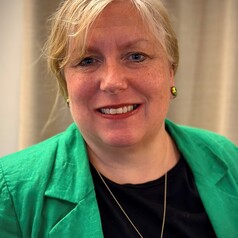
Faculty Member and Chair, Cyber Intelligence and Data Science, National Intelligence University Dr. Mark Bailey writes about the intersection between artificial intelligence, complexity, and national security. He is a faculty member at the National Intelligence University, where he is the Department Chair for Cyber Intelligence and Data Science, as well as the Co-Director of the Data Science Intelligence Center. His work has appeared in publications such as the journal Futures, Nautilus, and Homeland Security Today. Previously, he worked as a data scientist on several AI programs in the U.S. Department of Defense and the Intelligence Community. He is also an Officer in the U.S. Army Reserve. In his spare time, he does ceramics, is a beekeeper, and endeavors to turn his yard into a vegetable garden.
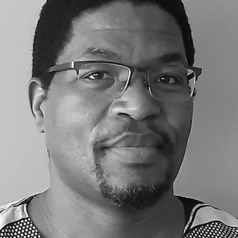
Academic Professional Advisor and Lecturer in Education, Western Sydney University Dr Marion Sturges is an experienced educator of over 33 years. She currently works at Western Sydney University leading a team to prepare preservice educators to become classroom teachers. Marion has led and participated in numerous research projects working collaboratively with other researchers and educators. The focus of these projects is working with marginalised members of the community, including children, people with disability, and women to ensure their rights are met and exploring how the place can support or inhibit rights.
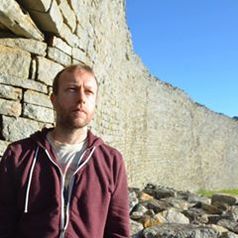
Professor of Development Planning and Urban Studies, University of the Witwatersrand Mfaniseni Fana Sihlongonyane was appointed lecturer in the Planning Programme (department then) in 1996. He is currently a Professor of Development Planning and Urban Studies. He is the director of the Planning Programme, a chairperson of the Committee of Planning schools (CHoPS), a board member of the Gauteng City-Region Observatory (GCRO) and a member of the South African Council for Planners (SACPLAN). He has been a member of Gauteng Development Tribunal and has worked with various communities in the country. Fana is the first PI on the Wits-TUB-UNILAG Urban Lab. His research interests spread over a wide range of theoretical, applied and policy arenas in the global as well as African realms of development. The research encompasses principally the interface between development Planning and urban studies largely within the context of the poignant dynamics of the political economy in Africa. His main interests include: African city and African Urbanisms, African Political economy, Dynamics of Globalisation and Local Economic development, Urban change and the political and cultural economy, Traditional Leadership, theories and Discourses of Urbanisation. Through her base in CUBES, Marie has engaged in policy debates and networks nationally, regionally and globally.
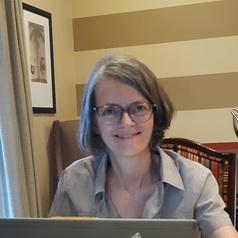
Writing fellow at the African Centre for Migration Studies, University of the Witwatersrand Matthew Wilhelm-Solomon is a Writing Fellow on the Migration and Health Project Southern Africa, based at the African Centre for Migration & Society at the University of Witwatersrand (Wits). Matthew holds a doctorate from the University of Oxford, which was ethnographic study of HIV/AIDS treatment programmes to displaced communities in northern Uganda. Over the past five years he has conducting research in inner-city Johannesburg on themes of migration, religion, health and housing. He is beginning new research looking at African migration to Brazil. Matthew has published widely in different books and journals including Medical Anthropology, Critical African Studies and the African Cities Reader, and a number of newspapers and journalistic publications including the Mail & Guardian, Sunday Times, Chimurenga Chronic and the ConMag. He is presently completing a narrative book about unlawfully occupied buildings in inner-city Johannesburg. He is the lead editor on the forthcoming book 'Routes and Rites to the City: Mobility, Diversity and Religious Space in Johannesburg' to be published by Palgrave-MacMillan.
Lecturer in Spatial Planning, Cardiff University I am an urban geographer and planner who is interested in working across and between spatial and political disciplines. My work is comparative, largely focused on the Global South, and draws on embedded and well-established research networks that span multiple countries. My research explores key questions of urban sustainability through various lenses, such as housing provision and mobility, framed by broader theoretical analyses of governance and gender. My research projects have ranged in focus from urban housing, land use management, transit-oriented development, to urban governance, questions of mobility and accessibility, and work on gender and the Geographies of Care. This has given me the scope to engage with broad conceptual themes of socio-economic rights, urban sustainability, spatial change and identity politics and their relationship to the City through comparative studies. These have included comparisons between Delhi, India and Johannesburg; Johannesburg and Cairo, Egypt; and I am currently involved in a comparative mobility study with colleagues in Maputo, Mozambique, and study of the housing/employment nexus of the urban youth in Hawassa, Ethiopia and Ekangala, South Africa.
Professor, School of Architecture and Planning, University of the Witwatersrand Prof Marie Huchzermeyer is a professor in the School of Architecture & Planning at Wits University and the current Director of the Centre for Urbanism and Built Environment Studies (CUBES) in the School. Her research has spanned Brazil, South Africa, Kenya and other African countries. She has explored questions of policy and rights as they relate to informal settlements, private rental housing or tenements and housing more widely. Her current research is on the right to the city and the right to development and their implications for policy, planning and institutional arrangements in a context of inequality and the prevalence of what has come to be known as informality.