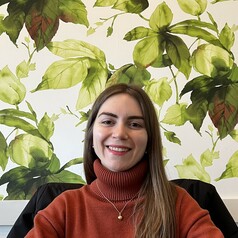
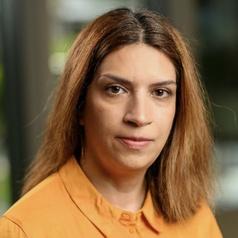
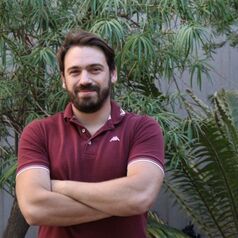
PhD Candidate (Epidemiology), University of Toronto Melina is an Epidemiology PhD candidate and research assistant at the University of Toronto (since 2021). Prior to starting her PhD, Melina completed her B.Sc. in Biology (2018) and M.Sc. in Population and Public Health (2021) at the University of British Columbia (UBC). Melina has several years' research experience, having previously worked as a research assistant at the UBC Centre for Health Services and Policy Research and the Human Early Learning Partnership at UBC, before starting her PhD and research assistant position at the University of Toronto. Through her academic training and several research assistantships, Melina has experience utilizing quantitative methods to analyze self-reported patient data, survey data, and population-level administrative datasets. Her research ability is demonstrated by several peer-reviewed publications. Melina's current research is at the intersection of chronic disease epidemiology and maternal and child health. She is currently working on several projects examining the reproductive health of people with chronic health conditions. Her PhD dissertation utilizes Ontario health administrative data (which are generated at every healthcare encounter) to examine the patterns of comorbid (i.e., co-occurring) chronic conditions among people with migraine with a recognized pregnancy as well as the association between pre-pregnancy maternal migraine and adverse perinatal outcomes. Melina is passionate about helping achieve health equity for people living with chronic health conditions such as migraine. In addition to being a student at the University of Toronto, Melina is also a trainee member of the Women's Health Research Cluster based at UBC and a trainee member of the 2-year interdisciplinary CIHR-funded Guiding interdisciplinary Research On Women's and girls' health and Wellbeing program (2022/23-2023/24 cohort).
Research Principal at the Institute for Sustainable Futures, University of Technology Sydney Melita is a Research Principal at UTS Institute for Sustainable Futures and leader of the Resource Flows team. Her main work and research focus on circular economy in Energy, Water and Resources sectors. Melita's research aims to identify the transition pathways to a circular economy, including development of policy, modelling resource streams and identifying options and practical solutions for businesses and governments.
Student Community Engagement Specialist, Connecticut College Megan Griffin is the Student Community Engagement Specialist at Connecticut College's Holleran Center for Community Action and Public Policy. Previously, she studied Rural Sociology at Penn State, where she focused on issues of gender and agriculture, agricultural labor, critical development studies, and science and technology studies.
Senior Research Fellow, Materials Science, Queensland University of Technology Mahboobeh Shahbazi holds MSc and PhD degrees in Materials Science and Engineering from the University of Wollongong, where she worked on developing energy materials including iron-based superconductors. After graduating, she joined QUT where she followed her research studies on a variety of topics including perovskite solar cells, superconductors and magnetic materials. In 2017, Mahboobeh was awarded an Advance Queensland Fellowship in partnership with Siemens. In addition, Mahboobeh collaborates effectively with Australian and overseas superconductivity experts and is a co-investigator with her collaborative network at the University of Queensland on ARC Linkage projects investigating nanostructure engineered superconductors for fusion energy and MRI applications. In January 2023, she started a new role as Foundation Fellow for a key project with the Future Energy Exports CRC. In this role, she collaborates on hydrogen-based projects in the CRC’s Programme 2 “Hydrogen Export and Value Chains” including identifying and resolving key issues associated with scaling up electrolysers and the use of magnetocaloric materials for the efficient liquefaction of hydrogen. In addition, she was part of an ARENA-funded team investigating the operational safety of Lithium-ion batteries used in hybrid renewable energy and hydrogen production facilities. Mahboobeh’s research interests have centred on developing new and efficient methods to synthesise a variety of energy materials including superconductors, batteries, electrolysers and magnetocaloric materials. These syntheses are aimed at cost-effective, quality materials for use in applications such as MRI instruments and fusion reactors, hydrogen liquefaction and green hydrogen production systems. She is passionate about understanding the fundamental relationships between material structure, physical and electronic properties of materials and, accordingly, improving their performance in practical applications.
Professor of Paleontology, Sapienza University of Rome Marco Romano received his PhD in Earth Science (vertebrate paleontology) from Sapienza, University of Rome Italy, with a focus on the phylogeny of basal synapsids (Family Caseidae, Casesauria, Synapsida). Since 2012 he has been a Research Associate in Vertebrate Paleontology at the Sam Noble Museum (Norman, Oklahoma) and since 2018 has been a corresponding member of the Subcomission on Permian Stratigraphy (International Commission on Stratigraphy). After completing his PhD he spent two years at the Museum für Naturkunde, Leibniz-Institut für Evolutions of Berlin, as post-doc researcher in vertebrate paleontology in the framework of the Sofja Kovalevskaja-Project “Early Evolution and Diversification of Synapsida.“