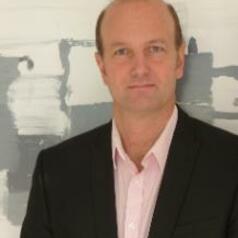
Professor in History of Art, University of York Michael White is a Professor in History of Art working chiefly on the interwar avant-gardes. He wrote his doctoral thesis on Theo van Doesburg and has a special interest in De Stijl and modernism in the Netherlands. He was consultant curator of the 2010 Tate Modern exhibition ‘Van Doesburg and the International Avant-Garde: Constructing a New World’, advised the Kunstmuseum Den Haag on the display of its permanent Mondrian and De Stijl collections, and was the external curator of the exhibition 'Mondrian and his Studios' at Tate Liverpool in 2014. Michael is also the author of ‘Generation Dada: The Berlin Avant-Garde and the First World War’ (Yale University Press, 2013) and the co-editor of ‘Virgin Microbe: Essays on Dada’ (Northwestern University Press, 2013). The dual interests he has in abstraction and Dada are informing his latest research projects.
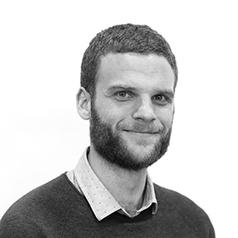
Associate Professor of Psychology and Neuroscience, Auckland University of Technology I am an Associate Professor at Auckland University of Technology (AUT - Department of Psychology and Neuroscience) and the Associate Head of Research at the AUT School of Clinical Sciences. My research interest is developing and validating new technologies for quantifying human brain networks using brain imaging methods, including Artificial Intelligence (AI), complex network science and dynamical systems theory. These approaches have significantly contributed to our ability to model brain dysfunction in people with epilepsy and traumatic brain injury. I currently hold the HRC Emerging Researcher Grant. I am the AI lead of the $30 million Australian Epilepsy Project and a core member of the AUT Traumatic Brain Injury Network and the AUT BioDesign Lab. I received the AUT Excellence Award Emerging Researcher in 2021; the University of Melbourne early-career fellowship in 2018; the American Epilepsy Society Young Investigator Award in 2017; and the John Milne Neuroscience Award for best departmental PhD thesis at The University of Melbourne in 2016. I have presented my work at multiple international conferences and have been invited to present my work at universities in Asia, Europe, and the US.
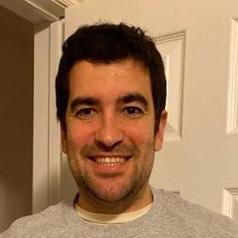
Estudiante de Doctorado en Medicina, Universitat de València Licenciada en Farmacia por la Universitat de València. Graduada en Nutrición Humana y Dietética por la Universitat de València. Estudiante de 5º año de Doctorado en Medicina en la Universitat de València. Farmacéutica adjunta (2005-2022). Dietista-Nutricionista (desde 2013 y desde noviembre de 2022 en la Clínica de la UV, CUNAFF).
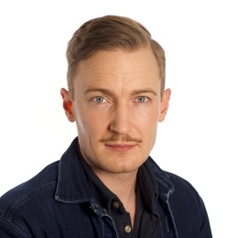
PhD candidate of Psychology, Stockholm University I am a licensed clinical psychologist, licensed child psychotherapist (Swedish National Board of Health and Welfare), and PhD candidate within a project that is lead by prof. Pehr Granqvist and postdoc Tommie Forslund. My research mainly regards contextual risk factors among mothers with intellectual disability or ADHD, in relation to various parenting capacities (e.g., parental mentalizing, interpretation of children's emotional signals), and child socioemotional development (attachment). I also teach attachment theory, mentalization theory, and developmental psychopathology on various courses on the clinical psychology/psychotherapy programs, as well as on the master program in psychology. Beyond the field of attachment research, I also have a strong interest in developmental psychology more generally. My main interests concern the developmental roots of intersubjectivity and social learning, as well as developmentally informed clinical interventions for children and their families. I am a member of an international group of researchers and clinicians who work with Parental Embodied Mentalizing (a method for assessing automatic mentalizing in parents of infants), as well as of the International Relations Committe of APA Division 39 Society for Psychoanalysis and Psychoanalytic Psychotherapy. I am also engaged in questions relating to child welfare, and applications of developmental theory in a wider societal context.
Associate Project Scientist and Continuing Lecturer in Environmental Health Sciences, University of California, Berkeley Dr. Megan Schwarzman is a physician and Environmental Health Scientist at UC Berkeley’s School of Public Health where her research and teaching focus on endocrine-disrupting chemicals, reproductive environmental health, U.S. and European chemicals policy, and strategies for applying environmental health knowledge to the design and selection of safer chemicals and materials. She is also Associate Director of Health and Environment for the interdisciplinary Berkeley Center for Green Chemistry—a joint center of the School of Public Health, the Colleges of Chemistry, Engineering, and Natural Resources, and the Haas School of Business. Dr. Schwarzman has served since 2009 on California EPA’s Green Ribbon Science Panel advising the Safer Consumer Products Program, and since 2014 as a member and chair of the Scientific Guidance Panel for California’s biomonitoring program. Her current research includes an assessment of the impact of California’s Proposition 65 on exposure to breast carcinogens and endocrine disrupting chemicals. After studying history at Haverford College, Dr. Schwarzman earned her medical degree from the University of Massachusetts. She completed specialty training in Family and Community Medicine at the University of California, San Francisco (SF General Hospital) where she earned the Julius R. Krevans Award for Clinical Excellence. She earned a Master of Public Health in Environmental Health Sciences from the University of California, Berkeley in 2007. Dr. Schwarzman also trains family medicine residents in reproductive medicine.