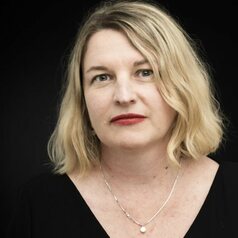
Lecturer, Queensland University of Technology Michelle Newcomb was chosen as one of the ABC's top five ECR researchers in the humanities in 2022. She is a lecturer with the School of Public Health and Social Work at the Queensland University of Technology. Prior to this, she worked extensively in human services in both Australia and the United Kingdom. Michelle's research concerns burnout and attrition in the social care sector.
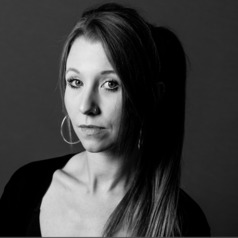
Ph.D. Candidate in Geography and Urban Studies, Concordia University Ph.D. candidate in Geography and Urban Studies and Public Scholar at Concordia University (Montreal), I hold an M.A. in Political Science (Université du Québec À Montréal), a Maîtrise in Political Science (Paris 8 University/CUNY City College of New York), and a B.A. in Political Science (Paris 8 University). Specialization: Gentrification and cities, critical whiteness studies, critical race theories, racial capitalism, time and temporality, feminist geographies, tech geographies, and visual methods.
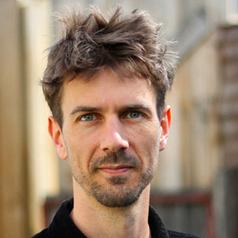
Host + Producer, The Conversation Michael Green is a Walkley Award–winning journalist and producer. He's the co-host of Fear & Wonder, a podcast for The Conversation that takes listeners inside the UN's era-defining climate report – via the hearts and minds of the scientists from all around the world who wrote it.
Profesor lector en Ecología, Universitat de Barcelona Summary of the CV I have published a total of 55 JRC articles in 33 different journals covering a wide range of topics (e.g. biodiversity conservation, ecotoxicology, metacommunity ecology, paleolimnology). I am the first author of 19 and the last author of 6 of those articles. My publication rate has considerably increased during the last years, from 1 article published in 2009 to 10 articles published in 2021. Additionally, I have published 2 books and 7 book chapters. Thirty-one of my articles are published in journals belonging to the first quartile, including high impact journals like Science (IF = 37.2), Frontiers in the Ecology and the Environment (IF = 10.9), BioScience (IF = 8.3), Limnology and Oceanography Letters (IF = 7.875), Philosophical Transactions of the Royal Society B (IF = 5.7) and Science of the Total Environment (IF = 4.9). My publications have been cited 1948 and 2639 times and my h-index is 23 and 27, according to Scopus and Google Scholar (respectively). Some of my articles as first author have been widely cited. For example, my 2016 article in Science (351: 914-916) is in the top 5% of all research outputs ever tracked by Altmetric, and my 2013 article in Environmental Pollution (173: 157-167) was acknowledged as highly cited in the field of Environmental Sciences according to the Web of Science (i.e. it performed in the top 1%). According to the Field Citation Ratio, my articles have been cited on average 7.2 times more than the rest of articles published in the same field and in the same year. I have participated in 21 R&D projects funded through competitive calls of public or private entities (leading 5), 8 R&D non-competitive contracts (leading 4) and I have directly secured 527.656 euros in research funds. Also, I serve as a Senior Advisor to the Spanish Government on biomonitoring climate change and pollution in rivers and streams through the public corporation Tragsatec. I obtained 3 highly competitive fellowships (Ramón y Cajal, Fulbright and Marie Curie). I have coordinated mesocosm experiments and field campaigns in Iceland, Spain and USA. I have supervised 1 PhD student (+ 2 more on going), 2 postdoc researchers, 6 master theses and 6 undergraduate dissertations. Two of my students were awarded for their research projects: Daniel Torres (best BsC dissertation of the University of Vic in 2016) and Miquel Sala (II Earth & Torres award on innovation). I have been a committee member of 6 PhD defences. I have given 4 plenary talks, been a member of 4 scientific committees and chaired 9 special sessions at international conferences. I serve as an academic editor for Plos One (IF = 2.7) and I have served as guest editor for Philosophical Transactions of the Royal Society B (IF = 5.7), Limnology and Oceanography Letters (IF = 5.2) and Frontiers Ecology And Evolution (IF = 2.1). I have reviewed 172 articles for 42 different journals (e.g. Global Change Biology, Scientific Reports, Nature Geoscience, Ecography) and in 2017 I was awarded by Publons as the third best reviewer from the University of Barcelona. I am a member of the Gender and Science Commission of the Iberian Limnological Society and I served as the representative of early career researchers in the European Federation for Freshwater Sciences. I created and chaired a Global Interest Group on Freshwater Salinization at the Society of Environmental Toxicology and Chemistry bringing together stakeholders and scientists from around the world. Scientific trajectory I obtained my PhD from the University of Barcelona in 2009, focusing on the ecology and management of coastal ecosystems and publishing 7 JRC articles. During that period I did a research stay at the University of Algarve (Portugal), where I later (2010-2011) worked on integrated coastal management as a contracted researcher. Then (2011-2012) I came back to the University of Barcelona as an adjunct professor and a contracted researcher and I became interested on freshwater salinisation. I coordinated several mesocosm experiments and published 3 JRC articles, including a review acknowledged as highly cited by the Web of Science. Then I was awarded with a Fulbright Fellowship at the Oregon State University (2012-2014) to asses the impacts of climate change on stream biodiversity. There, I started my own research line on metacommunity ecology (publishing 2 JRC articles) and continued my research on freshwater salinisation (e.g. I created Global Interest Group at the Society of Environmental Toxicology and Chemistry). By then, I already had a strong and wide scientific network and I had gained international recognition. This allowed me to obtain a Marie Curie Fellowship at the University of Vic (2014-2016), where I created a research line on freshwater salinisation. I coordinated several experiments, supervised students and led my own research projects. This resulted in 5 JRC articles, including 1 published in the policy forum section of Science. After that (2016 present) I came back to the University of Barcelona, where I worked as a contracted researcher and an adjunct professor, and I was finally hired as a tenure-eligible lecturer professor within the Serra-Hunter talent attraction programme. During this period I have started a research line on biodiversity conservation planning, and I have gained independency (e.g. leading research projects, supervising students) and international reputation (e.g. plenary/invited talks, editorial activity, scientific advisory boards, media interviews). More recently, I have been awarded a Ramón y Cajal Fellowship by the Spanish Government that will fund my research for the next 5 years.
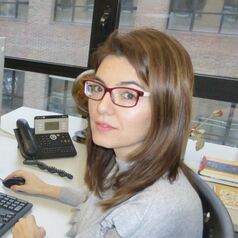
Postdoctoral Research Fellow, Institute for Molecular Bioscience, The University of Queensland Meltem Weger is Postdoctoral Research Fellow in the laboratory of A/Prof. Frederic Gachon at the Institute for Molecular Bioscience (IMB) at the University of Queensland. Meltem is interested in the understanding of the role of the stress axis and the circadian clock for (patho-) physiology and metabolism.