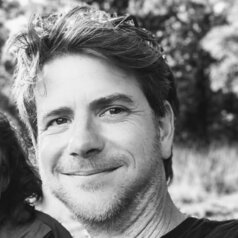
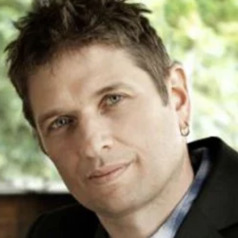
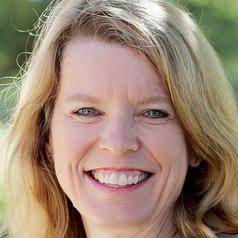
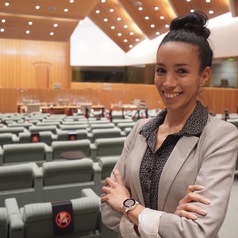
Assistant Professor, University of Alberta I am an urban ethnographer, specializing in gangs, neighbourhood redevelopment, and inner-city policing in the Canadian context. My research interests include issues pertaining to harm reduction, neighbourhood violence, gangs, neighbourhood revitalization, and police-community relations (including police misconduct).
Senior Scientist, Institute of Hydrology and Water Management, University of Natural Resources and Life Science (BOKU) Mathew Herrnegger obtained his degree in Water Management and Environmental Engineering in 2007 and his Ph.D. in Hydrology in 2013. He is a Senior scientist at the Institute of Hydrology and Water Management (HyWa), University of Natural Resources and Life Sciences, Vienna. His lecturing and research interest covers a broad range of water-related topics, ranging from catchment hydrology to water resources management. He has worked and (co-)authored papers on the water balance, flood and inflow forecasting systems, model development and parameter estimation of distributed hydrological models, machine learning, remote-sensing hydrology, climate change impact assessments on water resources, assessment of changes and drivers of flood risks, but also water quality and uncertainties in erosion modelling. In East Africa, he has worked in the Mara, the Sio-Malaba-Malakisi River Basin in the border between Kenya and Uganda and Lake Bunyoni in the south west Uganda. Lately, his research interest lies in understanding the lake level rises in the Rift Valley lakes of Kenya and since 2021 he is also involved in the project "Sustainable water quality management supporting Uganda’s development ambitions".
Associate Professor in Music, MMus Programme Director and Deputy Director of the International Guitar Research Centre, University of Surrey Milton Mermikides is a composer, guitarist and educator in a wide range of musical styles and collaborates with artists and scientists as diverse as Tim Minchin, Evelyn Glennie, Pat Martino, John Williams, Tod Machover, Professor Sophie Scott, Professor Morten Kringelbach, The Swingle Singers, Steve Winwood, Peter Zinovieff and Brian Eno. Son of a CERN nuclear physicist, he was raised with an enthusiasm for both the arts and sciences, an eclecticism which has been maintained throughout his teaching, research and creative career. He is a graduate of the London School of Economics (BSc), Berklee College of Music (BMus) and the University of Surrey (PhD). He has lectured, exhibited and given keynote presentations at the Royal Academy of Music, TEDX, Royal Musical Association, European Sleep Research Society, British Sleep Society, St. Bart’s Hospital, The British Library, Royal Physiological Society, Royal Society of Medicine, British Psychological Society, Hong Kong Academy of the Performing Arts, The Design Museum, Smithsonian Institute, Glastonbury Festival, Charterhouse School, The Science Museum, Manchester Science Festival, Aldeburgh Music, Ableton’s Loop Conference (2017 Berlin and upcoming 2020) and his work has been featured in the Times Higher Education, Oxford Handbook of Computer Music, BBC Radio 4 Midweek, New Scientist, BBC Radio 3 Music Matters and BBC Radio 4 Inside Science. His music and writing are published by Viribus, Deutsche Grammaphon, Mute, Extreme, Cambridge University Press and Oxford University Press, and he has won awards and commendations for writing, teaching, research and his charity work. Milton is Associate Professor in Music at the University of Surrey, Professor of Jazz Guitar at the Royal College of Music, Deputy Director of the International Guitar Research Centre, a Governor of Addison Primary School, and lives in London with his wife, the guitarist Bridget Mermikides and his daughter Chloe. Research interests •Data sonification and Data-based composition •Guitar research •Technology at the intersection of composition, pedagogy, improvisation, analysis and performance. •Time-feel (micro- and macro- rhythmic expression) •Composition analysis, modelling and broad practice (from acoustic, electronic to generative) •Music notations and illustrations
Associate Professor of Human Development and Family Studies, Purdue University I joined the Family Studies faculty in the Department of Child Development and Family Studies at Purdue University in the fall of 2007. My program of research focuses on marital processes in the management of chronic illness. In this work, my colleagues and I investigate health lifestyles and marital interactions and their association with the physical health and psychological well-being of both marital partners. Our current work is funded by the National Institute on Aging. I am a social psychologist, and I received my doctoral degree from Kent State University. My dissertation research ignited my continuing interest in marital processes in the context of illness. Together with my graduate mentor, Mary Ann Stephens, I investigated the social support that husbands provide to their wives who are caring for an aging parent. This work on family caregiving led me to pursue postdoctoral training in gerontology. I received an NIA postdoctoral fellowship through the Institute of Gerontology at the University of Michigan. My postdoctoral training with Dr. A. Regula Herzog focused on productive aging and on self-making among older adults. Following my postdoctoral training, I joined the faculty at Wayne State University where I began my research on the management of chronic illness in married couples. I later returned to the University of Michigan to continue my research in the Institute for Research on Women and Gender. At Purdue, I am a faculty associate in the Center on Aging and the Life Course. My families and health research is conducted through the Relationships and Healthcare Lab, in collaboration with Dr. Cleveland Shields. Several exciting projects are underway in this lab, and new projects are being developed by affiliated faculty and students. These projects will contribute new knowledge about the influence of marriage and family relationships on the health and well-being of individual members.
PhD candidate, College of Social Sciences and International Studies, University of Exeter Meriem, a PhD candidate at the College of Social Sciences and International Studies, has spent recent months conducting interviews as part of her research on the conflict in Western Sahara. The interviews took place in London and New York where she gained valuable insights from, among others, Aminatou Haidar, one of Africa’s most prominent human rights activist and Nobel Prize nominee. Meriem’s research focuses on the absence of an explicit human rights monitoring mechanisms in the United Nations Mission for the Referendum in Western Sahara (MINURSO). In April 2019, the United Nations Security Council unanimously extended the mandate of MINURSO for the 45th time since its creation in 1991, but once again did so without entrusting the Mission with any human rights monitoring responsibilities. This makes MINURSO the only post-Cold War UN peacekeeping mission without a human rights monitoring mandate. This is despite the fact that, according to reports from major international NGOs, human rights abuses have been committed by both parties to the long-running conflict in Western Sahara. Against this background, Meriem is evaluating the extent to which human rights monitoring and protection mechanisms can play a part in advancing the current process towards a peaceful resolution of the conflict in the Western Sahara. She has a particular interest in the issue regarding the right to access natural resources and their management by a people living in a Non-Self-Governing Territory. To that effect, she has been invited to join a panel at the next World Congress of the International Political Science Association due to take place in Lisbon next summer under the title: “Why do natural resources matter in the Western Sahara conflict: Actors and Strategies”. In addition to working on her thesis, Meriem has participated in a number of high-profile conferences and meetings on the subject of the Western Sahara throughout Europe. She is a member of the steering committee of the International Academic Observatory on Western Sahara at the University of Paris Descartes. As such, she has participated in a pluri-disciplinary colloquium in Amiens earlier this year on the legal, economical, anthropological and social questions raised by the situation in Western Sahara. Meriem has recently been offered a placement at the European Parliament in Brussels where she will be working closely with the Human Rights Advisor to the Greens/EFA group, looking specifically at the relations between the EU and Western Sahara.
Senior Lecturer in Criminology and Criminal Justice, University of the West of Scotland Dr Maria Sapouna is Senior Lecturer in Criminology and Criminal Justice at the University of the West of Scotland. Her main research interest is school bullying, on which she has published widely. Most recently, she led a EU- funded project on prejudice-based bullying involving 4 European countries.