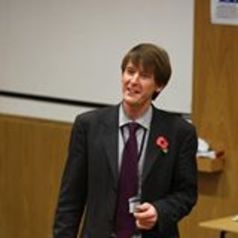
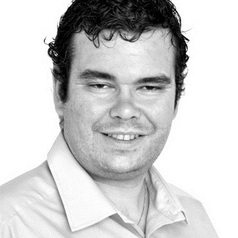
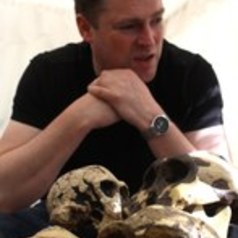
Assistant Professor, Faculty of Social Sciences, University of Nottingham Mark Stuart is an Assistant Professor in the School of Politics and International Relations. For the last twenty years, his main research area (along with Professor Philip Cowley) has been in the realm of parliamentary voting behaviour. He has also published widely in the field of British political biography, having penned portraits of Douglas Hurd (1998) and John Smith (2005). His latest biography - on Eric Forth - is due to be published in the late autumn of 2017.
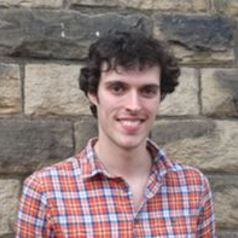
Postdoctoral Research Associate, University of Sheffield Matt Wood is a postdoctoral research associate at the Department of Politics and Deputy Director of the Sir Bernard Crick Centre for the Public Understanding of Politics. He has previously worked in local journalism and lobbying, and has held visiting fellowship positions at the UK Cabinet Office and ANZSOG Institute for Governance, Unviersity of Canberra. Matt's research interests are diverse, but centre mainly upon understanding the problem of 'anti-politics' as a societal trend of disaffection, disengagement, and anger with liberal democratic politics in western states.
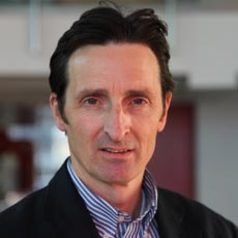
Professor of International Politics, University of Birmingham Mark Webber is an International Relations specialist. Having begun his academic career specialising in Russian foreign policy, he has spent the last fifteen years teaching and researching foreign policy analysis, security studies and international organisation. The specific focus of his current research is the politics of NATO and European security cooperation. Professor Webber worked for nearly twenty years at Loughborough University before moving to Birmingham in January 2011 as the Head of the School of Government and Society. Research and academic interests: The politics, history and theoretical interpretation of NATO Foreign policy analysis Security governance EU external relationsy Comparative international organization Russian foreign policy and the international politics of the former Soviet Union Current and recent projects: NATO after Afghanistan (ESRC Seminar Series, concluded October 2015). Theorizing NATO Europe after Enlargement NATO: Survival or Regeneration? British Academy (completed 2007) Inclusion, Exclusion and the Governance of European Security, Leverhulme Research Fellowship (completed 2004) Security Governance in the New Europe, joint holder, Economic and Social Research Council, ‘New Security Challenges’ programme (completed 2002)
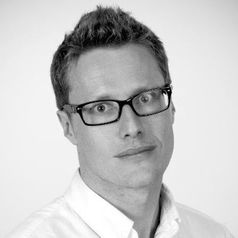
Senior Lecturer in Popular Music, Middlesex University Marcus O'Dair co-leads the Popular Music BA at Middlesex University, where he is convenor of the Blockchain for Creative Industries research cluster. He is the author of Different Every Time: the Authorised Biography of Robert Wyatt (Serpent's Tail, 2014). Shortlisted for the Penderyn music book prize, it was a Radio 4 book of the week and a book of the year in the Guardian, the Independent, the Times, the Sunday Times, the Evening Standard, Mojo Uncut. Marcus has written for the Guardian, the Independent, the Financial Times, the Irish Times, Uncut, the Arts Desk, the Quietus, Pitchfork, Wire and Jazzwise. He is an occasional studio guest on BBC 6 Music (Freak Zone, Freakier Zone) and BBC Radio 3 (Jazz on 3, the Essay) and has presented music podcasts for the Independent, Music Week and the Barbican. As a keyboard player, double bassist and manager, Marcus is one half of Grasscut, who have released three acclaimed albums (Ninja Tune, Lo Recordings) and performed across Europe. As a session musician, he also spent several years on retainer with Passenger, performing at festivals including V and Latitude and live on Radio 2 and Radio 4, but somehow managed to leave before Let Her Go became an international number one.
Principal Teaching Fellow, University of Warwick My current research focuses on contemporary British politics and the political economy of the post-war British state. I maintain an interest in education policy, specifically the politics of higher education, which was the subject of my doctoral dissertation. My forthcoming monograph on the role of Anthony Crosland’s contribution to the politics of post-war British education policy begins a critique of state intervention in education within the context of a ‘moral economy’ of social fairness in the post-war period. This will be followed by a second book, The Birth of the Knowledge Economy, which interrogates the political economy of the post-war state in relation to British higher education. The two books taken together will offer a significant new interpretation of post-war British educational politics and its place in the wider life of the nation. I have previously researched and published on a wide range of topics including the social history of the First World War, the politics of constitutional reform, contemporary education reform and the tenure in office of the coalition government between 2010 and 2015. I am currently working with Professor Matt Qvortrup (Coventry) and Professor Gillian Peele (Oxford) on a project analysing the politics of the forthcoming referendum on Britain’s membership of the European Union. I am also editing a forthcoming special section of the Political Quarterly on the role of history in the British political present. I was born in Liverpool, where I studied for my first degree, receiving a BA in History from the University of Liverpool. An MPhil and PhD in History at Magdalene College, Cambridge followed, and I spent a year at Harvard University as Kennedy Scholar in History. I also read BA Theology at Exeter College, Oxford, specialising in the study of Islam and Catholicism. I have taught widely in universities, teaching History and Politics at both Oxford and Cambridge, Politics, Political Science and International Relations at the London School of Economics (for the Hansard Society) and in the Department of Political Science and International Studies at the University of Birmingham. I also taught education at a number of institutions, and was the founder of the Centre for Education Policy Analysis. I worked in Westminster politics for a number of years as a speechwriter and political adviser, and I also have a background in journalism. My research draws on this diverse range of experiences; my writing of political history/contemporary political analysis is indebted both to my original training as an empirical historian and my subsequent work in politics and the media. I have appeared in a range of broadcast media, and in May 2015 contributed election commentary to CNN and BBC local radio.
Professor of Climatology, UCL Mark Maslin FRGS is a Professor of Physical Geography at University College London. He is a Royal Society Industrial Fellowship and Founding Director of Rezatec Ltd. He is science advisor to the Global Cool Foundation, Climatecom Strategies, Sopra-Steria, and Carbon Sense Ltd. He is member of Cheltenham Science Festival Advisory Committee. Maslin is a leading scientist with particular expertise in past global and regional climatic change and has publish over 150 papers in journals such as Science, Nature, Nature Climate Change, The Lancet and Geology. He has been awarded research council, charity and Government grants of over £40 million. His areas of scientific expertise include causes of past and future global climate change and its effects on the global carbon cycle, biodiversity, rainforests and human evolution. He also works on monitoring land carbon sinks using remote sensing and ecological models and international and national climate change policies. Professor Maslin has presented over 45 public talks over the last three years including UK Space conference, Oxford, Cambridge, Leeds, RGS, Tate Modern, Frontline Club, Fink Club, Royal Society of Medicine, British Museum, Natural History Museum, The Baker Institute, Goldman Sachs and the Norwegian Government. He has supervised 10 Research fellows, 15 PhD students and 25 MSc students. He has also have written 8 popular books, over 30 popular articles (e.g., for New Scientist, The Times, Independent and Guardian), appeared on radio and television (including Timeteam, Newsnight, Dispatches, Horizon, The Today Programme, Material World, BBC News, Channel 5 News, and Sky News). His latest popular book is the high successful Oxford University Press “Climate Change: A Very Short Introduction” the third edition was published in 2014 and has sold over 45,000 copies. Maslin was also a co-author of the 2009 Lancet report ‘Managing the health effects of climate change’. He was included in Who’s Who for the first time in 2009 and was granted a Royal Society Wolfson Research Merit Award for the study of early human evolution in East Africa in 2011. He is currently the Director of the London NERC Doctoral Training Partnership.