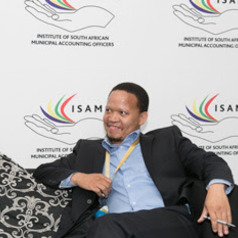
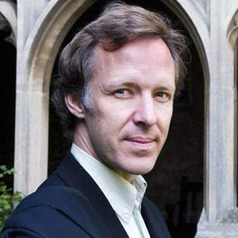
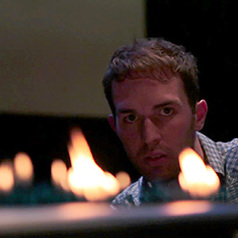
Professor of Public Affairs, Tshwane University of Technology With twenty(20) years of teaching experience in different universities in South Africa, Maserumule is an experienced researcher. His areas of research interest include, among others, the Historiography, Ontology and Epistemology of Public Administration, Developmental State, Politics of Transition, Pan-African Thought and Philosophy of Governance.
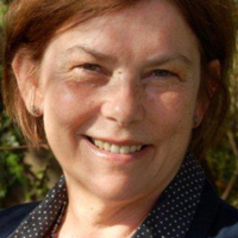
Professor of Sociology, The Open University Marie is co-director of Centre for Research on Socio-Cultural Change. She researches diaspora and national media cultures comparatively, historically and ethnographically. Her interests cluster around South Asian and Middle Eastern diasporas, cultural transnationalism, and changing configurations of audiences and publics in relation to question of citizenship. Recent collaborative include: a large-scale study of the BBC World Service as a multi-diasporic institution; an exploration of the new politics of security via a collaborative ethnography of transnational news cultures in multi-ethnic British households in eight UK cities; a national survey with the BBC on the changing face of British humour, ethnic jokes and comedy. Marie was awarded an AHRC Public Policy Fellowship in 2011 to develop research on the interface between international broadcasting and social media, specifically in relation to the BBC Arabic Services.
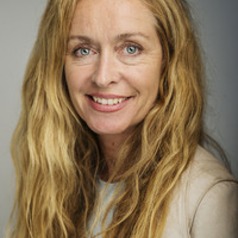
Professor of Sociology, Oslo and Akershus University College of Applied Sciences I am a professor of sociology at the University College of Oslo and Akershus in Norway. My main interests are gender studies, social politics and childhood and family Research. My work includes analysing gender, the welfare state, vulnerable subjects and lately also differences in healthcare treatment to look at social inequality. I study standards and the general cultural understandings that produce what is understood as different, or deviant. II have also published several international articles about research methods. Within qualitative methods I've discovered untapped data sources and developed new procedures.
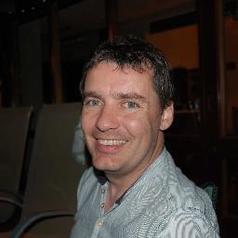
Associate professor, Monash University I am an observational astronomer, studying how galaxies evolve over billions of years. I was born and raised in Melbourne’s southeastern suburbs. My interest in astronomy began as a child, when the Voyager spacecraft visited the outer planets. I undertook my undergraduate and postgraduate studies at the University of Melbourne during the 1990s. For my PhD, I used (now antiquated) photographic plates to identify thousands of galaxies and measure their distribution in space. In 2000 I joined the staff of the National Optical Astronomy Observatory, and started working on surveys of the distant Universe with large ground-based telescopes and satellites. In 2004 I was awarded Princeton University’s Henry Norris Russell Fellowship, and studied the growth of the most massive galaxies. Using thousands of galaxies in the constellation of Bootes, I found that the most massive galaxies have grown slowly over the past seven billion years, which is almost certainly due to mergers of galaxies. Since 2007 I have been at Monash University’s School of Physics and Astronomy. I am measuring spectra of galaxies across the electromagnetic spectrum, which is useful for measuring the distances to galaxies, the luminosities of galaxies and how rapidly galaxies form stars. I am also using large astronomical surveys to measure how rapidly galaxies are growing, and how this growth compares to the growth of dark matter halos.
Associate Professor and Senior Research Fellow in Neuroscience, University of Oxford Morten is also Professor of Neuroscience at the Music in Brain Center at Aarhus University, Denmark. He is interested in understanding pleasure in its many forms, including chocolate and music. Professor Kringelbach uses advanced neuroimaging, neurosurgical and computational methods to understand brain function together with Hedonia team members and international collaborators. He is on the advisory board for Scientific American and a Fellow of the ASP. He has published fourteen books, and over 300 scientific papers, chapters and other articles.
Space Plasma Physicist, Queen Mary University of London Dr Martin Archer is a Space Physicist at Queen Mary University of London (and Imperial College London). Martin became a published scientist whilst still an undergraduate, working on the Cluster space mission. It is this work which has inspired his PhD research on structures and waves in the Earth’s magnetosphere. In addition to his research, Martin is determined to come up with fresh perspectives on how to communicate his love of science, especially to young audiences, and has worked on a number of exciting and unique projects including his DJ Physics shows, the Droppin’ Science Podcast, WiiJing and appearances at numerous science festivals and schools. You’ll regularly see Martin on television both in the UK and internationally discussing the latest physics news, explaining scientific concepts and championing the importance of engaging the public with science. In addition to this Martin has featured on the BBC Radio 4 Today programme, the Guardian Science Weekly podcast and has written numerous science pieces and been profiled by a number of publications including The Guardian, The Times and MSN.