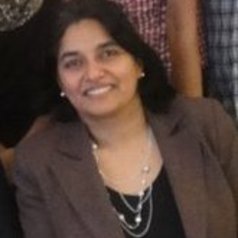
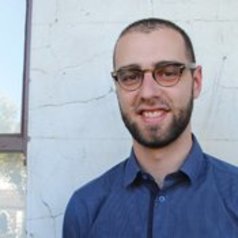
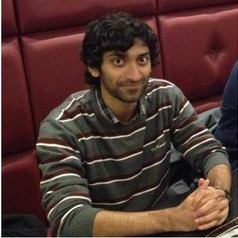
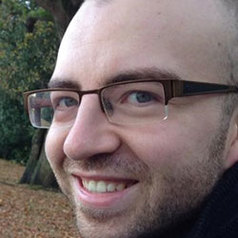
Associate professor, University of Bath I have been involved in research and teaching cancer biology for over a decade. I did my PhD in radiation oncology, and subsequent research on tumour hypoxia led to our drug reaching Phase II clinical trials. I also teach a very popular course on cancer biology to students at Bath, which made me realise how much I enjoyed teaching AND how little resources there were on introducing cancer genetics to the general public. It led to my writing a free e-book (Introduction to cancer biology, www.bookboon.com) and a free online course ('Inside Cancer' - www.futurelearn.com). The online course was designed for anyone with an interest in cancer - from sufferers to researchers - and has attracted over 32000 learners from over 90 countries, with 98% recommending the course to friends.
Professor of Environmental Science, Columbia University When I was about eight-years-old, I did not speak to my parents for a whole day because they threw a banana peel out of our car, which I found was unacceptable from an environmental point of view. I knew early on that I wanted to dedicate my career to environmental issues and studied Physics, because there was no such thing as Environmental Science back then. My PhD thesis research topic at the University of Heidelberg focussed on novel tracer techniques to study the dynamics of ground water flow, and the use of ground water as an archive of paleoclimate. I have been interested in water issues ever since and can still hardly resist to take a plunge into a thermal spring I encounter or take a sip from a well that might tap an interesting aquifer. I believe that water will play an increasingly important role in our attempts to achieve a sustainable global development. I am also trying hard to be a decent teacher and undergraduate and graduate student adviser, because I think that is where faculty members have the most influence on the future of our planet. Some of my projects include: Health Effects and Geochemistry of Arsenic and Lead San Andreas Fault Observatory at Depth (SAFOD/EarthScope) Carbon Sequestration Natural Gas Production by Hydraulic Fracturing
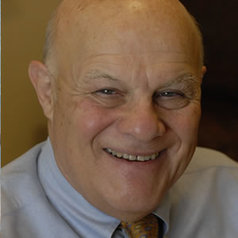
Professor of International Policy and Practice, University of Michigan Ambassador Melvyn Levitsky, a retired Career Minister in the U.S. Foreign Service, is Professor of International Policy and Practice at the University of Michigan's Gerald R. Ford School of Public Policy. He is Senior Fellow of the School's International Policy Center and a member of the University of Michigan's Substance Abuse Research Center (UMSARC) and a Faculty Associate of the University's Center for Russian and East European Studies (CREES) and of the Weiser Center for Emerging Democracies. Prior to joining the University of Michigan in the fall of 2006, Ambassador Levitsky taught for eight years as Professor of Practice in Public Administration and International Relations at Syracuse University's Maxwell School of Citizenship and Public Affairs. He is a Distinguished Fellow of the Maxwell School's Moynihan Institute of Global Affairs. He has also taught as a Professorial Lecturer at the Johns Hopkins University School of Advanced International Studies (SAIS). In 2003 Ambassador Levitsky was elected by a vote of the United Nations Economic and Social Council to a seat on the International Narcotics Control Board (INCB), an independent body of experts headquartered in Vienna and responsible for monitoring and promoting standards of drug control established by international treaties. He served on the INCB until 2012. During his 35-year career as a U.S. diplomat, Ambassador Levitsky was Ambassador to Brazil from 1994-98 and before that held such senior positions as Assistant Secretary of State for International Narcotics Matters, Executive Secretary of the State Department, Ambassador to Bulgaria, Deputy Director of the Voice of America, and Deputy Assistant Secretary of State for Human Rights. Ambassador Levitsky also served as Director of the State Department's Office of UN Political Affairs and as Officer-in-Charge of U.S.-Soviet Bilateral Relations. Earlier in his career he was political officer at the U.S. Embassy in Moscow and a Consul at U.S. Consulates in Belem, Brazil and Frankfurt, Germany. He has a Bachelor of Arts degree from the University of Michigan and a Master of Arts degree in Political Science from the University of Iowa.
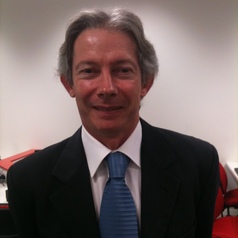
Security Researcher, Senior Lecturer in Software Engineering, Edith Cowan University Dr Mike Johnstone is a member of the Security Research Institute and the School of Computer and Security Science at Edith Cowan University in Western Australia where he teaches secure programming. His research interests include secure development methodologies, wireless sensor networks and cloud security. He is currently working on a large co-operative project about privacy-preserving authentication.
PhD candidate, University of Leicester I have just started a 4 year PhD program with the University of Leicester as my home institution (2015-2019). My research will aim to explore unidentified regulators of the RAS-MAPK pathway which plays a major role in cell proliferation (and if de-regulated, cancer). In 2015 I completed a Masters degree entitled 'Cancer Cell and Molecular Biology' at the University of Leicester (2015-2016). My undergraduate degree, in Biological Sciences, was again at the University of Leicester (2011-2014). Recently I have developed a great interest in communicating scientific concepts to the public. As a result of this I started a three month placement at the University of Leicester Press Office which has provided me with an outlet to communicate science to the public.
Senior Lecturer in Media and Communication, Bath Spa University Dr Matthew Freeman is Senior Lecturer in Media and Communication at Bath Spa University, where he is also Director of the Media Convergence Research Centre. He completed his PhD in Culture, Film and Media at the University of Nottingham and holds an MA and a BA (Hons) in Film and Television Studies, both from the University of Warwick. Before taking up his post at Bath Spa University in 2015, he taught at the University of Nottingham and in the School of Media at Birmingham City University. His research concentrates on cultures of production across the borders of media and history, writing extensively on the industrial history of transmedia storytelling. He has also published on such topics as media branding, convergence cultures, and methodological approaches to media industry studies. Matthew is the author of Historicizing Transmedia Storytelling: Early Twentieth-Century Transmedia Story Worlds (Routledge, 2017), Industrial Approaches to Media: A Methodological Gateway to Industry Studies (Palgrave Macmillan, 2016), and the co-author (with Carlos A. Scolari and Paolo Bertetti) of Transmedia Archaeology: Storytelling in the Borderlines of Science Fiction, Comics and Pulp Magazines (Palgrave Pivot, 2014). His research can also be found in journals such as The International Journal of Cultural Studies, Historical Journal of Film, Radio and Television, and International Journal of Communication.