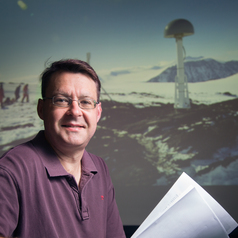
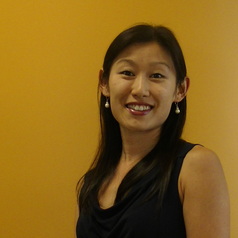
After graduating I entered the accounting profession, specialising in tax after qualification (ACA, CTA). In 1993 I became a lecturer and have recently completed my PhD on the role of power in the formulation of tax policy. I have written extensively for professional journals and am the author of a technical book on taxation (Taxation of Small Businesses - Spiramus Press). However, I have published academic papers taking a critical approach towards the sociological and moral underpinnings of taxation.
Melissa J. Ferguson (melissaferguson[at]cornell.edu) is an experimental social psychologist. She received her doctorate in social psychology from New York University in 2002 and then joined the psychology department at Cornell University. Her research focuses on the implicit and non-conscious cognitive processes that enable evaluation, goal-pursuit, self-control, and social behavior. Three recent topics of research in the lab are self-control (what predicts success?), first impressions (how do they form, change, and influence behavior?), and ideology (how do ideological symbols affect us?). Her research has appeared in outlets such as the Journal of Personality and Social Psychology, Psychological Science, Trends in Cognitive Sciences, Journal of Experimental Psychology: General, and the Proceedings of the National Academy of Sciences and her work has been funded by the National Science Foundation and the National Institutes of Health. She is also currently a Public Voices Fellow of The OpEd Project.
Matthew Carmona is Professor of Planning and Urban Design at the Bartlett School of Planning, UCL. He has previously lectured at the University of Nottingham and before that worked as a researcher at Strathclyde and Reading Universities and as an architect in practice. His research has focused on the policy context for delivering better quality built and natural environments, having worked on a range of research projects examining: design policies and guidance design coding residential design and development processes delivering urban renaissance the value of urban and architectural design the working relationships between housing providers and planners measuring quality in planning managing external public space local environmental quality and standard London squares and high streets governance of design, the case of CABE Matthew is on the editorial board of ‘Urban Design Quarterly’, is European Associate Editor for the ‘Journal of Urban Design’, and edits the ‘Design in the Built Environment’ book series for Ashgate. He is a regular advisor to government and government agencies both in the UK and overseas and writes a column for Town & Country Planning, the journal of the Town & Country Planning Association. He is a Design Council CABE Built Environment Expert. Between 2003 and 2011 Matthew Carmona served as Head of the Bartlett School of Planning. His book "Capital Spaces: The Multiple Complex Public Spaces of a Global City" is published by Routledge: http://www.routledge.com/books/details/9780415527095
Monica Mary Grady CBE (born 1958) is a leading British space scientist, primarily known for her work on meteorites. Since 2005, she has been Professor of Planetary and Space Science at the Open University, and is currently Head of the Department of Physical Sciences. Prior to 2005, Grady was based at the Natural History Museum in London, where she curated the UK's national collection of meteorites. She graduated from the University of Durham in 1979, then went on to complete a Ph.D. on carbon in stony meteorites at Darwin College, Cambridge in 1982. Since then, she has built up an international reputation in meteoritics, publishing many papers on the carbon and nitrogen isotope geochemistry of primitive meteorites, on Martian meteorites, and on interstellar components of meteorites. She gave the Royal Institution Christmas Lectures in 2003, on the subject "A Voyage in Space and Time". Asteroid (4731) was named Monicagrady in her honour. Grady was appointed Commander of the Order of the British Empire (CBE) in the 2012 Birthday Honours for services to space sciences. She is the first UK scientist to be President of the international Meteoritical Society. Grady is the oldest of eight children; her youngest sister, Dr Ruth Grady, is a Senior Lecturer in microbiology at the University of Manchester. Grady's husband, Professor Ian Wright is also a meteoriticist.
I am Professor of Polar Geodesy and ARC Future Fellow at the University of Tasmania. My field of expertise is geodetic observation of Earth deformation and the global water cycle, including ice-sheet mass balance and sea-level change and particularly using the Global Positioning System (GPS) and the Gravity Recovery and Climate Experiment (GRACE). I also work on reduction of systematic and random errors in these techniques in order to maximise the information content in the data and improve the reliability of the interpretations. I have authored more than 80 peer-reviewed publications including several articles in the leading scientific journals Science, Nature, Nature Geoscience, Nature Climate Change and Proceedings of the National Academy of Science. In 2015 I was awarded the Royal Society (London) Kavli Medal and Lecture (see the lecture at https://royalsociety.org/events/2015/04/continental-loss).