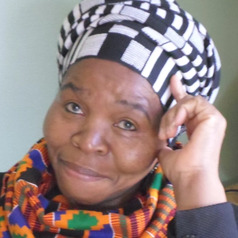
Associate Professor of Practice, Faculty of Humanities, University of Johannesburg Makhosazana Xaba is an award-winning South African anthologist and short story writer. She is also an editor, essayist, poet and an Associate Professor of Practice in the Faculty of Humanities at the University of Johannesburg based at the Centre for Race, Gender and Class. She was formerly a Research Associate at the Wits Institute for Social and Economic Research. Xaba has worked with national and international NGOs and in the areas of women’s sexual health and rights, gender and anti-bias training and in philanthropy. Xaba initially trained as a general nurse, midwife and a psychiatric nurse and later became an anti-apartheid activist and spent some years in exile. She holds an MA in Creative Writing from Wits University. Recently she co-edited Foundational African Writers: Peter Abrahams, Noni Jabavu, Sibusiso Nyembezi and Es’kia Mphahlele with Bhekizizwe Peterson and Khwezi Mkhize and introduced, Noni Jabavu: a Stranger at Home with Athambile Masola. This book is a compilation of columns written by Noni Jabavu for the Daily Dispatch newspaper in 1977.
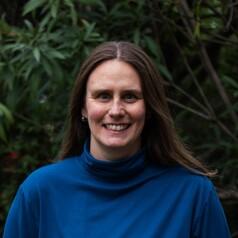
Research Fellow & Lab Head in Medicinal Chemistry, Monash Institute of Pharmaceutical Sciences, Monash University I started my career with an apprenticeship as a chemical lab technician at Ciba Specialty Chemicals. After a few years working in industry, I then obtained a Bachelors and Masters in Chemistry from the University of Applied Sciences Northwestern Switzerland and the University of Basel, respectively. While being interested and trained as an organic chemist, I have always been extremely passionate about the application of chemistry within the health sciences. Therefore, for my PhD I have specialised in Medicinal Chemistry as I want my research to contribute to improving health within our society. Currently. I am a Monash-Newcastle University research fellow and lab-head in the Medicinal Chemistry Theme at the Monash Institute of Pharmaceutical Sciences. My research interests are in the development of chemical probes and small molecule drugs.
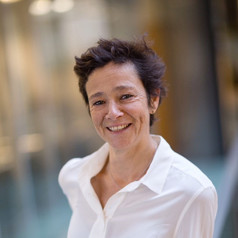
Directrice Carrières et NewGen Talent Centre, EDHEC Business School Manuelle Malot est Directrice Carrières et Prospective de l'EDHEC Business School depuis plus de 20 ans. Spécialiste de l'insertion professionnelle, elle réalise des bilans et diagnostics de compétences auprès de jeunes diplômés et cadres dirigeant, conseille et accompagne les entreprises dans leur politique de recrutement, de fidélisation et d’engagement. Elle a fondé en 2012 le NewGen Talent Centre, centre d’expertise sur les motivations, comportements et compétences des nouvelles générations. Elle est l’expert des graduate programmes d’entreprise en France sur lesquels elle a publié plusieurs études, articles et ouvrages et anime des conférences en France et à l’étranger. Manuelle Malot est diplômée de l'EDHEC et d’un 3ème cycle du CELSA Université Paris IV Sorbonne en sciences de l'information et de la communication. Elle contribue régulièrement en tant qu’expert carrière sur plusieurs supports.
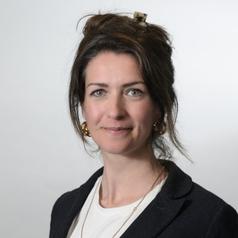
Associate Professor in Psychology, University of Greenwich Martha Newson joined Greenwich in 2023 as Associate Professor in Psychology. Though working with modern human populations, Martha’s research is strongly informed by evolutionary theory. Her highly inter-disciplinary research draws from anthropology, psychology, evolutionary theory and criminology, so she has connections across academic disciplines. Her research and consultancy practice is guided by the themes of social cohesion, ritual, and belonging. Her primary focus is on the rituals underlying social cohesion and the ensuing cooperation and conflict emerging from tightly bonded groups. Dr Newson has worked with a range of challenging populations, from fundamentalist Indonesian Muslims to London’s ravers. She has particular experience working with football fans, including surveys and interviews with hardcore Brazilian, Indonesian and Australian fans (ultras) and collecting hormonal samples from fans at live World Cup events. She gained a BSc in Human Sciences from the University of Sussex then taught English in Vietnam and Spain, before completing her postgraduate studies at the University of Oxford in Cognitive and Evolutionary Anthropology. She remains a Research Affiliate at the University of Oxford (Centre for the Study of Social Cohesion). Dr Newson provides consultancy and commentary on issues related to group psychology, belonging, conflict, and cooperation. This concerns human behaviour and evolutionary psychology in general terms, and with regard to football fandom specifically. Previous consultancy clients include Guinness, the Premier League, Manchester City and Hyundai among others. Martha has contributed to Discovery’s Why We Hate, produced by Steven Spielberg, as well as numerous BBC and Sky TV features in the UK, such as BBC News and Sky News, alongside a number of radio shows including Radio 4’s World at One and PM programmes. Her research has also featured in The Guardian, The Telegraph, The Independent, International Business Times, The Daily Mail, The Sun, Haaratz, Der Spiegel and many others.
Associate Professor of Astrophysics, Stockholm University My research is focused on the origin and evolution of galaxies, where I am concerned with how galaxies are assembled in the early universe and evolve to become the population of galaxies we see at the present day. Aside from being interested in galaxy surveys, I typically say I have the following overlapping main interests: The reionization process and the sources that drove it. The infering the neutral fraction of the intergalactic medium, understanding the properties of the first galaxies, Lyman alpha emission, the escape of ionizing radiation, etc. The circumgalactic medium. What are the thermodynamic properties of 'galactic atmospheres'? Can we map CGM gas in emission, measure its thermal state, figure out where the metals are, etc. Stellar feedback and galaxy winds. How does energy returned by massive stars interact with the ambient material in the galaxy? How are winds launched and accelerated, and what influence does this have on galaxy conditions and the future of star formation. The formation of the first black holes. Were the first black holes formed by direct collapse, popullation III star formation, or other processes? How can surveys of massive black holes in the early universe inform this? Star formation histories and stellar modeling. How can we infer the star formation history of galaxies using spatially resolve high resolution imaging and large wavelength baseline spectroscopy from multiple telescopes. Nebular diagnostics. How can we infer the properties of warm gas in and around galaxies, and how reliable are these measurements? My approach to answering these questions is mostly observational. I use mainly the James Webb Space Telescope, Hubble Space Telescope, and the European Southern Observatory, although we use any telescope that can provide unique measurements.