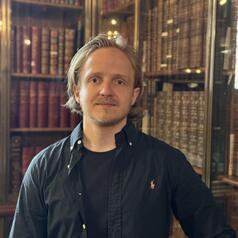
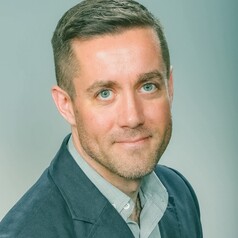
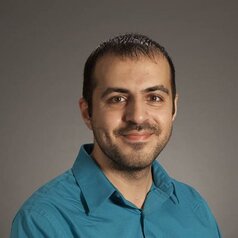
PhD Candidate, Russian and East European Studies, Manchester University Maksim is a linguist (computational linguistics, corpus-based studies, semantics, terminology) and discourse analyst, working on an interdisciplinary PhD project, situated at the intersection of Linguistics, Media Studies, and Russian and East European Studies. Under the supervision of Professors Stephen Hutchings and Vera Tolz at the University of Manchester, Maksim is carrying out research using a combination of quantitative and qualitative methods for a PhD project entitled: "Transforming Meaning: Russian Trolls in Social Media’s Changing Linguistic Landscape". When complete, Maksim's thesis will provide the first substantive analysis of how the linguistic practices of online actors identified as Russian state-sponsored trolls change with time and context.
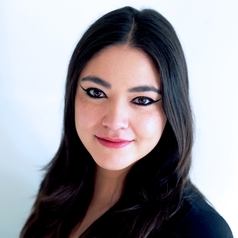
Lecturer, Cultural Studies, The University of Melbourne Dr Mahli-Ann Butt is a feminist ethnographer researching questions of diversity in the cultures and industries of videogames.
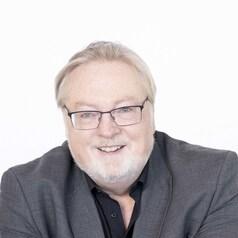
Professor of Architectural Analytics, UNSW Sydney Michael J. Ostwald [DSc, PhD, BArch (Hons 1), BSc; AIA (Architecture), PIA (Urban Design)] is Professor of Architectural Analytics at UNSW, Sydney (Australia). He was previously Professor of Architecture and Dean of Architecture and Built Environment at the University of Newcastle (Australia), EU Professorial Fellow in Architecture and Engineering, Professorial Fellow in Architecture and Design at Victoria University Wellington (NZ) and he has held academic positions in Hong Kong, Europe and North America as well as throughout Australia. His professional training and industry experience are in architecture, urban design and legal assessment.
Research Associate, Department of Psychology, University of Waterloo For many years, my research has been focused on basic human values as they appear across nations. More recently, I got interested in perceptions of older adults and lay theories of wisdom, both in a cross-cultural perspective. Simultaneously, I pursue a track of methodological research. In particular, I investigated a complex role of ipsatization and effects of accounting for measurement error in the values research. I contributed to the measurement invariance methods, including invariance of the second-order factors and latent classes. Currently I am developing an R package featuring a method for identifying clusters of invariant groups in a network-like representation.
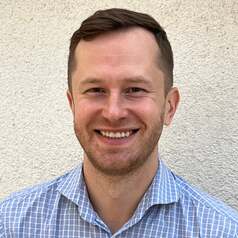
Associate Professor and Director, Doctoral Program in Urban Planning and Public Policy, Rutgers University Dr. Michael Smart is an associate professor at the Edward J. Bloustein School of Planning and Public Policy at Rutgers. His research interests include the influence of social and spatial phenomena on individuals’ transportation decisions, with a particular interest in built-environment effects on alternative modes of travel, such as biking and walking. Dr. Smart’s current research explores the ways in which social networks embedded in particular neighborhoods of affinity—such as immigrant neighborhoods and gay and lesbian neighborhoods—influence the activity patterns of those who live in those neighborhoods. His work has examined the extent to which immigrant neighborhoods across the country function as “cities-within-cities,” and developed novel techniques for describing the inward- or outward-focus of neighborhoods. He received his PhD from the Department of Urban Planning at UCLA in 2011, as well as a Master’s degree in planning from the University of Pennsylvania in 2006 and a Bachelor’s degree in German from Yale in 2000.
Assistant Professor of Electrical & Computer Engineering, University at Albany, State University of New York Mustafa Aksoy joined the faculty of the Department of Electrical and Computer Engineering in Fall 2017. Dr. Aksoy received his Ph.D. in Electrical and Computer Engineering in 2015 from the Ohio State University, where he worked as a graduate research associate at the ElectroScience Laboratory. Prior to joining the University at Albany, Dr. Aksoy was a post-doctoral research associate at the University of Maryland Baltimore County and NASA Goddard Space Flight Center. His research interests include microwave passive remote sensing of Earth and Space and electromagnetic theory. Dr. Aksoy has been the sole-investigator of several projects supported by NASA, NSF and ORAU, published more than 60 peer-reviewed journal and conference articles, and received NSF Faculty Early Career Development Program, NASA Space Technology Mission Directorate Early Career Faculty, NASA Robert H. Goddard Exceptional Achievement for Engineering, and ORAU Ralph E. Powe Junior Faculty Enhancement awards. Dr. Aksoy is a senior member of the Institute of Electrical and Electronics Engineers (IEEE), the IEEE Geoscience and Remote Sensing Society (GRSS), and the IEEE Geoscience and Remote Sensing Society’s Frequency Allocations in Remote Sensing (FARS) Committee.