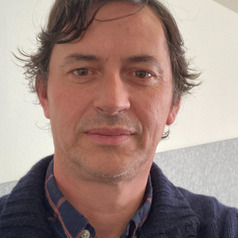
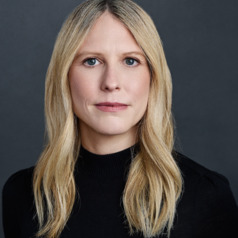
Professor of Augmented and Networked Learning, Director Centre for Change and Complexity in Learning (C3L), Academic Lead AI for LIFE CRC bid development, Education Futures, University of South Australia Maarten de Laat is professor in Augmented and Networked Learning and co-director of the Centre for Change and Complexity in Learning (C3L) at the University of South Australia. His research focuses on learning and value creation in social networks. He uses practice-based research methodologies to study the impact technology, AI, learning analytics and social design has on the way social networks and communities work, learn and innovate. Maarten is co-chair of the international Networked Learning Conference, editor of the Springer book series on Research in Networked Learning, and Research Lead for the AI for Learning Innovation and Future Education (AI for LIFE) CRC bid development.
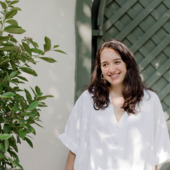
Assistant Lecturer in Psychology, Birmingham City University Having completed my undergraduate degree in Psychology at Staffordshire University earlier that year, I began my PhD in September 2020. Under the supervision of Dr Jade Elliott and Dr Samuel Jones, my PhD investigated why some people share their sexual fantasies with a partner and others do not. During this research, I paid particular attention to the influence of the specific fantasy and the individual's relationship. I am currently the lead of the "Gender, sexuality and intimate relationships" research lab at Birmingham City University. My research interests more widely focus on human sexuality, kink, intimate relationships, sexual communication, inequality and LGBTQ+ experiences. I have previously utilised both quantitative and qualitative research methods.
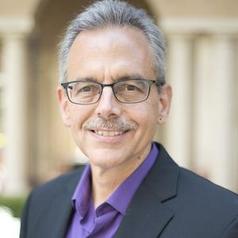
Distinguished Professor of Sociology and American Studies & Ethnicity, USC Dornsife College of Letters, Arts and Sciences Dr. Manuel Pastor is a Distinguished Professor of Sociology and American Studies & Ethnicity at the University of Southern California. He currently directs the Equity Research Institute at USC. Pastor holds an economics Ph.D. from the University of Massachusetts, Amherst, and is the inaugural holder of the Turpanjian Chair in Civil Society and Social Change at USC. Pastor’s research has generally focused on issues of the economic, environmental and social conditions facing low-income urban communities – and the social movements seeking to change those realities. His forthcoming book, Charging Forward: Lithium Valley, Electric Vehicles, and a Just Future (co-authored with Chris Benner), delves into the pivotal role of California’s Lithium Valley in the “lithium gold rush” and its broader implications for climate challenges, justice, and democracy. In 2021, he published two new books, Solidarity Economics: Why Mutuality and Movements Matter (co-authored with Chris Benner) and South Central Dreams: Finding Home and Building Community in South L.A. (co-authored with Pierrette Hondagneu-Sotelo). His previous 2018 book, State of Resistance: What California’s Dizzying Descent and Remarkable Resurgence Means for America’s Future was lauded in a New York Times review as “concise, clear and convincing.” Pastor’s previous book, Equity, Growth, and Community: What the Nation Can Learn from America’s Metro Areas, co-authored with Chris Benner (UC Press 2015), argues how inequality stunts economic growth and how bringing together equity and growth requires concerted local action. Combining data, case studies, and narratives on multi-sector collaborations in 11 metro regions, the book offers a powerful prescription not just for metros but for our national challenges of slow job growth, rising economic inequality, and sharp political polarization. He also co-edited the book, Unsettled Americans: Metropolitan Context and Civic Leadership for Immigrant Integration with John Mollenkopf (Cornell University Press 2016), which offers a comparative study and detailed analyses of immigrant incorporation efforts across seven different U.S. metro regions. His previous volumes include: Just Growth: Inclusion and Prosperity in America’s Metropolitan Regions, co-authored with Chris Benner (Routledge 2012), advances the idea that growth and equity can and should be linked, offering a new path for a U.S. economy seeking to recover from economic crisis and distributional distress; Uncommon Common Ground: Race and America’s Future (W.W. Norton 2010; co-authored with Angela Glover Blackwell and Stewart Kwoh), documents the gap between progress in racial attitudes and racial realities and offers a new set of strategies for both talking about race and achieving racial equity; This Could Be the Start of Something Big: How Social Movements for Regional Equity are Transforming Metropolitan America (Cornell University Press 2009; co-authored with Chris Benner and Martha Matsuoka) highlights a promising set of organizing efforts across the U.S.; Staircases or Treadmills: Labor Market Intermediaries and Economic Opportunity in a Changing Economy (Russell Sage 2007, co-authored with Chris Benner and Laura Leete) which offers a critique of current employment strategies and argues for a new “high road” approach to connecting demand and supply in labor markets; and Regions That Work: How Cities and Suburbs Can Grow Together (University of Minnesota Press 2000; co-authored with Peter Dreier, Eugene Grigsby, and Marta Lopez-Garza), a book that has become a standard reference for those seeking to link neighborhoods and regions. Pastor was the founding director of the Center for Justice, Tolerance, and Community at the University of California, Santa Cruz. He was also the Director at the USC Program for Environmental and Regional Equity (PERE) and the USC Center for the Study of Immigrant Integration (CSII). He has received fellowships from the Danforth, Guggenheim, and Kellogg foundations, and grants from the Irvine Foundation, the Rockefeller Foundation, the Ford Foundation, the National Science Foundation, the Hewlett Foundation, the MacArthur Foundation, the California Environmental Protection Agency, the W.T. Grant Foundation, The California Endowment, the California Air Resources Board, and many others. Pastor speaks frequently on issues of demographic change, economic inequality, and community empowerment and has contributed opinion pieces to such outlets including the Los Angeles Times, the San Jose Mercury News, the San Francisco Chronicle, the Sacramento Bee, and The Hill, among many others. In January 2002, he was awarded a Civic Entrepreneur of the Year award from the California Center for Regional Leadership. He has previously served as a Public Member of the Strategic Growth Council in California, as a member of the Commission on Regions appointed by California’s Speaker of the State Assembly, and as a member of the Regional Targets Advisory Committee for the California Air Resources Board. Pastor received the Liberty Hill Foundation’s Wally Marks Changemaker of the Year award for social justice research partnerships in 2012. He received the Champion for Equity Award from the Advancement Project in 2017 for his work with community-based organizations fighting for social change. In 2022, Pastor was elected to the American Academy for the Arts and Sciences for his work in Public Affairs and Public Policy. In recognition of his impactful work, in 2024, Pastor was named by the Los Angeles Times as one of the region’s most significant civic leaders in their inaugural series, L.A. Influential.
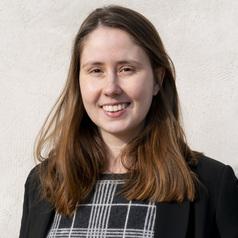
Lecturer in Law, Macquarie University Marie-Eve Loiselle is a Lecturer at Macquarie University in International Law and Legal Theory. Prior to joining Macquarie University, Marie-Eve was a Canadian Social Science and Humanities Research Council (SSHRC) Postdoctoral Fellow at the Munk School of Global Affairs and Public Policy (University of Toronto). She also held a research fellowship from the Max Planck Institute, Department of Ethics, Law and Politics. She was an Australian Research Council (ARC) Research Fellow at the Faculty of Law of the University of New South Wales, where she worked on the project, "Leveraging Power and Influence on the UN Security Council". She was also a research officer on the ARC linkage project "Strengthening the Rule of Law through the UN Security Council" (Australian National University). She received a PhD in Law and Governance from the Australian National University.