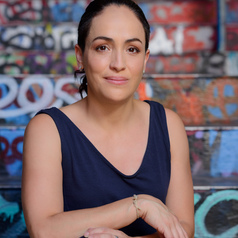
Marilu Melo Zurita
Associate Professor Human Geography, UNSW Sydney
Associate Professor Human Geography, UNSW Sydney
0 articlesOur contributors
Meet the researchers, writers and practitioners bringing perspective to the global conversation.
Join the conversation1432 contributors · M
Associate Professor Human Geography, UNSW Sydney
Associate Professor Human Geography, UNSW Sydney
0 articles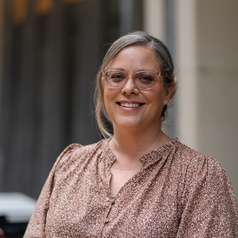
Senior Lecturer, School of Computer and Mathematical Sciences, University of Adelaide
Senior Lecturer, School of Computer and Mathematical Sciences, University of Adelaide Dr. Melissa Humphries is a statistician – she creates, and applies, analytical tools that make sense of our world. Working in areas like forensic science, defence and psychology, the goal is always to increase efficiency, accuracy, and transparency. Building bridges between machines and experts, Melissa’s work aims to support experts in making decisions in an explainable way. That is useful. And easy to work with. And unbiased. Piece of cake, right? Melissa is an ex-chef who completed her PhD in Statistics and Mathematical Psychology from the University of Tasmania in 2017 – with an 11-month-old son in tow. She is currently a senior lecturer in statistics at the University of Adelaide and splits her time between teaching, research and fighting for changes that will make academia more accessible to everyone.
0 articles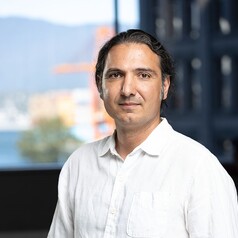
Associate Professor of Economics, School of Public Policy and Urban Studies Program, Simon Fraser University
Associate Professor of Economics, School of Public Policy and Urban Studies Program, Simon Fraser University My academic inquiries and intellectual pursuits are driven by a curiosity to engage with and interrogate issues that captivate my thoughts and concern me on a personal and professional level. This approach has led me down different paths—some less travelled, others well-trodden. My work is a testament to the belief that intellectual growth and societal contribution do not solely arise from depth in a narrow domain of inquiry but can also flourish through breadth and the integration of diverse perspectives. While my research often utilizes quantitative analysis, I also maintain a keen interest in qualitative and mixed-method approaches. Some of my main research areas of interest include economic inequality (with a spotlight on labour market inequalities and discrimination experienced by women, immigrants, and ethnic minorities); precarity in the labour market; public attitudes toward immigration and the forces shaping these views; the influence of ideological underpinnings in neoclassical economics; and the broader scope of political economy.
0 articles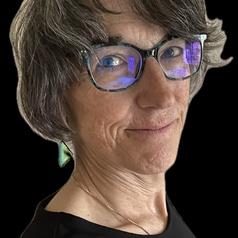
Professor, Faculty of Law, University of Manitoba
Professor, Faculty of Law, University of Manitoba Research in tax law and policy, philanthropy and law (charities), money laundering, proceeds of crime and civil forfeiture law. Teaching interests include tax law and policy, philanthropy and tainted finance.
0 articles
Professor of Health Policy and Management, University of Birmingham
Professor of Health Policy and Management, University of Birmingham Mark is a Professor of Health Policy and Management at the Health Services Management Centre, University of Birmingham. Mark has previously held posts at Southampton University, London School of Economics (LSE), University College London (UCL), Oxford Brookes and Royal Holloway University of London. He was also a Harkness Fellow in health care policy, based at University of California-San Francisco (UCSF) (funded by the Commonwealth Fund of New York). He chairs the Society for Studies in Organising Healthcare (SHOC): @SHOC_OBHC
0 articles
Professor of Human Movement, University of Sydney
Professor of Human Movement, University of Sydney Mark has a background in mechanical and biomedical engineering with research interests in electromyographic and biomechanical studies in the area of motor control. The primary focus of Mark’s research is the study of the control of movements in healthy people and people with pathology. With injury and pathology, movement control is disturbed, resulting in pain or inability to move. By understanding differences in movement and muscle coordination between healthy people and people with pathology, our ability to treat patients with pathology is enhanced. His main research area is studying these differences with the ultimate goal of identifying methods, validated using large randomised control studies, of preventing and treating injuries effectively.
0 articles