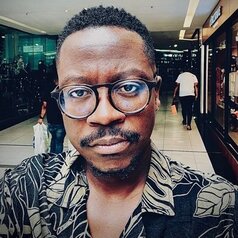
Senior scientist, South African National Biodiversity Institute Dr Mlungele Nsikani is a senior scientist at the South African National Biodiversity Institute, extraordinary lecturer at Stellenbosch University, research fellow at the Cape Peninsula University of Technology, and chairperson of the Society for Ecological Restoration - Africa. Dr Nsikani has broad interests in biological invasions and ecological restoration. His current work focuses on the restoration of native ecosystems in previously invaded areas, detection of new invasive species, eradication of invasive species limited to small areas, and risk analysis for alien and invasive species.
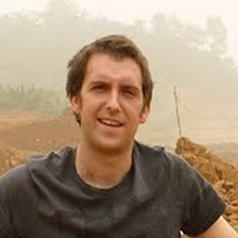
Environmental Social Science Research Fellow, University of Oxford Mark is a research fellow in environmental social science who is interested in addressing inter-linked social and environmental challenges through interdisciplinary research. He is broadly engaged with research that investigates issues of well-being, inequality and justice with respect to climate change and natural resource governance. He is interested how different values and knowledges interact with institutional and cultural contexts in driving the governance decisions which underpin environmental and social change across a range of scales. Previously Mark worked as a post-doctoral researcher working on the Ecosystem Services and Poverty Alleviation (ESPA) Ecolimits project. This interdisciplinary project investigated the linkages between ecosystem service provision and the multiple dimensions of poverty in coffee- and cocoa-dominated agricultural settings, focusing on Ethiopia and Ghana respectively. The project used a range of methods to develop a holistic understanding of how ecosystems influence, and are influenced by, socio-economic, political and cultural conditions across various scales. Mark completed his PhD at the University of Reading which examined land-use conflicts between mining and forests in Ghana.
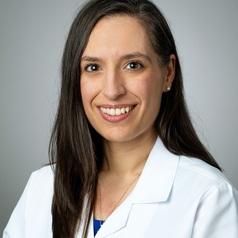
Family Medicine Resident and Nutrition Expert, Eastern Virginia Medical School Mary Scourboutakos is a “double-doctor” devoted to nutrition and disease prevention. After becoming interested in nutrition as a result of a science fair project, she completed a PhD in Nutritional Sciences. She then completed medical school and a family medicine residency at the University of Toronto. She is currently pursuing additional training at the Eastern Virginia Medical School. Her research has been published in prestigious medical journals including JAMA Internal Medicine and the American Journal of Preventive Medicine. Mary is passionate about translating nutrition science into clinical settings and she lectures widely both inside and outside of academia. Her nutrition prescriptions can be found at: www.nutrition-prescriptions.com
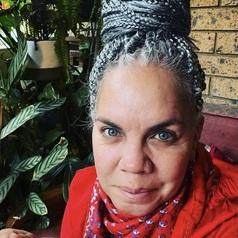
Senior Scientia Lecturer (Research), UNSW Sydney Miri is a Noongar -Yamatji and non-Indigenous woman from Western Australia. She's a Senior Scientia Lecturer (Research Only) at UNSW Australia with the Social Policy Research Centre, and the Environment & Society Group in the Faculty of Arts and Social Sciences. She is also a Chief Investigator with Daniel Robinson on the 5-year Australian Research Council Discovery Project 'Indigenous knowledge futures: protecting and promoting indigenous knowledge' (DP180100507). Miri holds a PhD from Murdoch University's School of Governance that focused on the use of protocols to protect Indigenous knowledge. Miri is a geographer with research interests related to protocols, biodiversity conservation and Indigenous knowledge, organisational forms and practices, food security/justice, and Indigenous and human rights. She has over 20 years’ experience working on Indigenous knowledge related to biological resources and biodiversity conservation, Indigenous research (rights, health care and ageing), and food policy and food security..
Senior Lecturer in Biblical and Religious Studies, University of Sheffield I am a Senior Lecturer at the University of Sheffield, where I am the Director of the Sheffield Centre for Interdisciplinary Biblical Studies. In addition, I am editor in chief of the open-access Journal for Interdisciplinary Biblical Studies. I have published numerous books and articles on early Christianity, early Judaism, and biblical texts. Most recently, I published a co-authored text book with Sara Parks and Shayna Sheinfeld titled Jewish and Christian Women in the Ancient Mediterranean (Routledge 2022). I have two previous mongraphs. Food and Transformation in Ancient Mediterranean Literature (SBL, 2019) defines a genre of transformative ingestion called hierophagy. I use sensory analysis to explore how performative consumption brings about access to other worlds in ancient Mediterranean narratives. My first book, My Flesh is Meat Indeed (Fortress; 2015), evaluates how John 6:51c–58 contributes to the gospel’s presentation of Jesus as divine in light of Hellenistic attitudes about sacrifice, divinity, and the consumption of human flesh. Soon to be published are two co-edited volumes on Judeophobia and the New Testament (Eerdmans 2025) and on Good Omens and the Bible (Sheffield Phoenix 2025).
Executive Director of the Center for Community and Nonprofit Studies, University of Wisconsin-Madison I bring to this role a passion for understanding and improving the role of the “third sector” and decades of experience working as a teacher, attorney, and nonprofit director. The binding theme of my career and volunteer experiences is the advancement of the well-being of all communities, families, and mission-based enterprises. At the Community and Nonprofit Studies (CommNS), I leverage university assets in collaboration with community partners to promote and prepare change agents to support a better third sector, a better Wisconsin, and a better world. In addition to leading the CommNS and directing its research, outreach, and educational mission, I have developed and delivered coursework and other educational experiences for students and community partners in the CommNS network. These offerings include graduate-level School of Human Ecology Professional Skills Courses, including nine 1-credit courses, each focused on a different key topic relevant to preparing future change agents for their careers; the Capstone Certificate Program in Community and Nonprofit Leadership; a Board Development course that places students with nonprofit boards of directors; a Community and Nonprofit Operations and Infrastructure course; and a variety of service learning and professional development opportunities. All of these course offerings bring community and practitioner wisdom to the classroom and prepare students for their careers as effective change agents in a complex world.