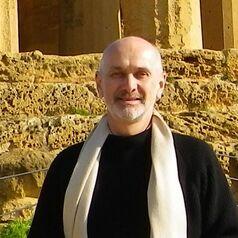
Senior Astrophysicist, Smithsonian Institution Dr. Martin Elvis is an astrophysicist at the Center for Astrophysics | Harvard and Smithsonian. He has published nearly 500 papers on supermassive black holes that have been cited over 38,000 times. He publishes widely on asteroid and lunar resources and the space economy. He is a fellow of the American Association for the Advancement of Science, a Member of the Aspen Center for Physics, and is past-Chair of the Hubble Space Telescope Users’ Committee and of the High Energy Division of the American Astronomical Society. Asteroid 9283 Martinelvis is named after him. His book "Asteroids: How love, fear, and greed will determine our future in space" was published by Yale University Press in 2021.
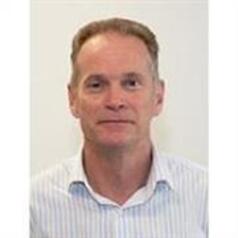
Dean of the Faculty of Education and Social Work, University of Auckland, Waipapa Taumata Rau Professor Mark Barrow is the Dean of the Faculty of Education and Social Work at Waipapa Taumata Rau, the University of Auckland. He has worked as a secondary school science teacher and as an academic developer and academic director within the NZ polytechnic sector. Mark joined the University in 2007 in the role of Associate Dean Academic in the Faculty of Medical and Health Sciences, a role he held for 11 years. Mark’s research interest is the theory and practice of higher education.
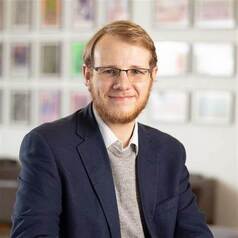
Assistant Professor in Economics, Durham University Michael is an Assistant Professor in Economics and Programme Director for the Philosophy, Politics and Economics and Economics and Politics Programmes at Durham University. Previously he was a Lecturer in Economics and a Post-Doctoral Research Associate for the Durham University Research Impact Fund and Durham University Faculty of Business funded project: 'Future UK Trade Arrangements: Potential Impact on the UK Economy', having completed his PhD in Economics at Durham in 2019.
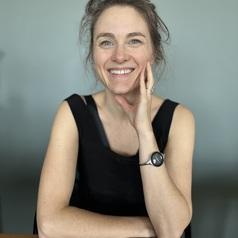
Associate Professor of Behavior Genetics, Karolinska Institutet Dr. Mosing's main research interest is how genes and environment play together to produce individual differences in quality of life throughout lifespan as well as in expertise. Why do some people fare better than others throughout life and in old age in terms of cognitive, mental and somatic health? Why are some people more successful and become experts in a given field? Understanding how genetic predispositions interplay with environmental factors will reveal the nature of phenotypic associations observed in daily life, which will not only allow us to identify truly causal and modifiable risk/protective factors (relevant environments), but will ultimately also help us to identify those who are at greatest risk or may benefit most from interventions. Dr. Mosing is a behavioural geneticist who conducted her PhD research at the QIMR Berghofer Medical Research Institute and the University of Queensland, Australia. After completing her PhD, she held postdoc positions at the Neuroscience and the Medical Epidemiology and Biostatistics Departments at Karolinska Institutet in Stockholm, Sweden, before she became an Assistant Professor in 2016 and an Associate Professor (Docent) in 2020. In 2020, Dr. Mosing was awarded a prestigious DMR fellowship to relocate her research group from Karolinska Institutet to the University of Melbourne, Australia. Since mid 2021, she is permanently back in Europe and leads the Behavior Genetics Unit at the Max-Planck Institute for Empirical Aesthetics in Frankfurt, Germany, while also regularly spending time at her office at the Karolinska Institutet.
Lecturer in Nursing, University of Manchester I am an academic with a background in nursing who works at the intersections of health sciences, sociology, and cultural studies. My work addresses issues around death, sex, drugs, HIV and more recently covid-19. I have an undergraduate degree in Nursing, an MA in Gender, Sexuality and Culture, and a PhD in nursing.