Doctoral Candidate, Centre for Defence & Security Studies, Te Kunenga ki Pūrehuroa – Massey University Nicholas holds a B.A. Hons and an M.A. in Asian Studies from the Australian National University and a Master of International Studies with Honours from the University of Sydney. He is a Certified Counter Terrorism Practitioner (CCTP) (Counter Terrorism Certification Board), Associate Protection Professional (APP) (ASIS International), and Security Risk Management Professional - Country (SRMP-C) (INSSA), and holds a Certificate of Approval in the classes of Security Consultant and Private Investigator (New Zealand Ministry of Justice). He is the recipient of the 2022 New Zealand Outstanding Security Performance Award (OSPA) for Lifetime Achievement.
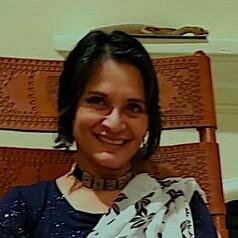
Professor of English, Texas A&M University My primary fields of expertise are Postcolonial Studies and Colonial Discourse Analysis, Creative Writing, World Literature, South Asia Studies and Indian Cinema, Women’s and Gender Studies, Film, Diaspora, Migrations and Exiles, Travel Writing, and Affect Theory. I am Professor of English at Texas A&M University and an affiliate of its Women's and Gender Studies, Africana Studies, and Film Studies programs. I founded and directed (2007-2017) the South Asia Working Group of the Glasscock Humanities Center at Texas A&M University. I have published three academic monographs: Hindi Cinema: Repeating the Subject (London: Routledge, 2012; published as part of the series “Intersections: Colonial and Postcolonial Histories,” ed. Gyan Pandey); Slavery, Colonialism and Connoisseurship: Gender and Eighteenth-Century Literary Transnationalism (Ashgate Press, 2006); and Reading the Splendid Body: Gender and Consumerism in Eighteenth-century British Writing on India (Associated University Presses, 1998). From 2012-2014 I was Director of Graduate Studies in English at Texas A&M University. Between 2003 and 2006 I served as Chair of the Department of Women's and Gender Studies at the University of Toledo. I also have an MFA in Writing (2023) from the Warren Wilson College MFA Program for Writers. My novel Love’s Garden was published in 2020, and my second novel, Homeland Blues, is agented and under submission to publishers.
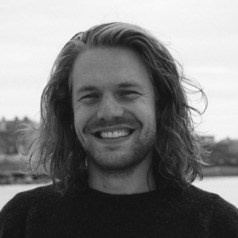
PhD Graduate in Computer Science, Western Sydney University Nik Dennler recently graduated with a Ph. D. in Computer Science, from the University of Hertfordshire and the International Centre of Neuromorphic Systems at Western Sydney University. His research involves the exploration and development of novel sensor platforms and the design of suitable algorithms, leading to improvements in the current state-of-the-art of rapid olfactory sensing. Further interests include efficient sensory coding, neuromorphic computing, and applications thereof. He got his B. Sc. in Physics from the University of Zurich (2018) and his M. Sc. in Neural Systems and Computation, from ETH Zurich and University of Zurich (2021). Further, he worked in various industrial research labs, such as Sensirion AG, IBM Research—Zurich, and Sony Electronics.
Senior Lecturer in Social Science, University of Glasgow Dr Naomi Richards is Director of the End of Life Studies Group at the University of Glasgow. She is a Senior Lecturer in Social Science and is a social anthropologist by training. She specialises in dying and death, ageing and old age, and visual and ethnographic methods. Dr Richards has published over 30 peer-reviewed articles in a variety of social science and clinical journals, in addition to 6 book chapters. Over the last decade she has been funded to undertake empirical and theoretical investigations into: the UK’s assisted dying debate; the phenomenon of old age rational suicide; the relationship between assisted dying and palliative care internationally; and the international Death Café movement. Between 2019-23, she led the Dying in the Margins study - a qualitative visual methods study which aimed to uncover the reasons for unequal access to home dying for people experiencing poverty and deprivation. This lead to the Cost of Dying exhibition. She continues to work on experiences of financial hardship at end life, specifically in rural Scotland, through the Marie Curie-funded Unreached study. She also co-leads the DeathWrites research network, supporting creative writers based in Scotland to write and publish powerful, accessible work on the subject of dying, death, grief and loss. Dr Richards teaches multiple courses on the University of Glasgow’s End of Life Studies Programme (PGCert/PGDip/MSc) and pioneered a partnership with the Royal College of Physicians of Edinburgh to produce a unique microcredential on End of Life Challenges and Palliative Care, introducing social science theories and ways of thinking to health and social care professionals.
Lecturer in Creative Arts, School of Education and Social Work, University of Sydney Dr Natasha Beaumont is a lecturer in Creative Arts K to 6 and secondary pedagogy at The University of Sydney. She is also a contributing researcher at the university's CREATE Centre. Natasha's research interests are creativity, arts education, literacy and EAL/D learners. She teaches drama and filmmaking in primary and secondary programmes across NSW and draws heavily from her background as a professional actor to inform her teaching and research.
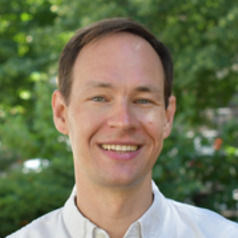
Assistant Professor of Psychology, University of Wisconsin-Madison Our lab uses a socioecological approach to understand contemporary society, one that examines how structural, demographic, geographic, cultural, and historical factors create individual psychology in real-world contexts. We use a multi-method approach, including laboratory experiments, on-line studies, archival research, and surveys with a stress on promoting open replicable practices. Currently, we are focusing on the psychology of peculiarly American cultural beliefs including the symbolism of gun ownership (such as how people think about guns, what historical and demographic patterns have shaped those thoughts, how they use them to cope with threat in everyday life, how they use them to signal identity, and what happens to communities in the wake of gun violence), the ways in which people think about effort and success (such as how people think about those who succeed, how they think about the failures of themselves and others, how they use a linkage between effort and success to shore up beliefs about hierarchy, meritocracy, and deservingness, how such beliefs are shaped by schemas like the Protestant Work Ethic, how these beliefs differ by sociodemographic positioning such as class, and how these beliefs are similar to and different from non-American cultural traditions surrounding the importance of effort), and the political and motivational consequences of America’s built environments (such as the ways in which walkable neighborhoods or neighborhoods full of parks and recreation allow for different sorts of interpersonal interactions among strangers and how residential mobility and its decline in the United States shapes the ways that people are able to form relationships). As a lab full of pragmatists, we’re ultimately interested in making sure that our research *does* something, using the power of theoretically-driven psychology to develop meaningful interventions into the world.