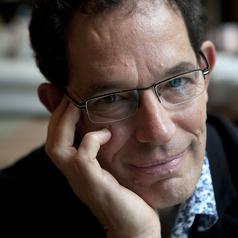
Professor and Chair of Linguistics, University of Sydney I am Professor and Chair of Linguistics at The University of Sydney, Director of the Sydney Social Sciences and Humanities Advanced Research Institute, and the Sydney Initiative for Truth. My research on language, culture and cognition is part of a long-term project aimed at understanding the foundations of human agency.
Doctoral Student in Religious Studies, University of Virginia Nicholas Shrum is a PhD student in religious studies at the University of Virginia. He specializes in American religious history and Mormon studies. He holds a MAR from Yale Divinity School and a BA in American Studies from Brigham Young University.
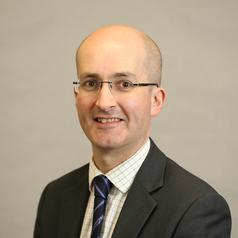
Director of Research and Scholarship, Stranmillis University College, A College of Queen's University, Belfast, Queen's University Belfast Professor Noel Purdy OBE is Director of Research and Scholarship at Stranmillis University College, A College of Queen's University, Belfast. Research Interests: Pastoral Care in Education Bullying in Schools Educational underachievement Special Educational Needs Initial Teacher Education History of Education
Higgs Chair of Theoretical Physics, University of Edinburgh Neil Turok is the inaugural Higgs Chair of Theoretical Physics at the University of Edinburgh. He holds the Roger Penrose Visiting Professorship at Perimeter Institute for Theoretical Physics in Canada where he is emeritus Director. Before that he was Chair of Mathematical Physics at Cambridge and Professor of Physics at Princeton. Neil’s day job is developing and testing fundamental physics theories of the universe. His first-principles predictions of correlations between the temperature and polarisation of the cosmic background radiation (CBR), and the CBR and the galaxy distribution have been confirmed at high precision. His work also ruled out several popular theoretical models. Recently, he showed how a CPT-symmetric universe could provide the simplest-yet explanation of the cosmic dark matter, the large scale properties of the universe and the primordial density variations. Born in South Africa, Neil founded the African Institute for Mathematical Sciences (AIMS), now the continent’s leading institute for postgraduate training and research in the mathematical sciences. AIMS has over 3500 Masters alumni, from 45 African countries. More than 800 have proceeded to PhDs. In 2008 Neil won the TED prize for his research and for AIMS. In 2016 he was made an Honorary Fellow of the UK Institute of Physics and was awarded the John Torrence Tate Medal of the American Institute of Physics for International Leadership in Physics. In 2018 he was appointed an Officer of the Order of Canada.
PhD Student in Computer & Information Science, University of Pennsylvania Neil Sehgal is a PhD student in Computer & Information Sciences at the University of Pennsylvania. His research focuses on computational and causal inference techniques to better understand health disparities and health equity. He previously obtained a Masters of Engineering in Computational Science & Engineering from Harvard University and an A.B. in Computer Science from Brown University.
Director and Senior Research Fellow, Global Finance Group, Environmental Change Institute, University of Oxford Dr Nicola Ranger is the Director of the Global Finance and Economy Group at the ECI and of the Resilient Planet Finance Lab. She is also Executive Director of the Oxford Martin Systemic Resilience Initiative, co-Director of the UKRI Integrating Finance and Biodiversity Programme and a Senior Research Fellow at the Institute for New Economic Thinking of the Oxford Martin School. Her research addresses the advancement of finance and policy to address critical societal challenges across climate, nature, food, water, economic development and human well-being. She brings two decades of experience working in senior roles across government, research, international financial institutions and the private sector, and holds multiple advisory roles, with substantial experience in working to drive change both locally and globally and deep technical expertise in data, risk, analytics, scenario analysis, environmental sciences, economics, policy and decision science. In 2023, Dr Ranger founded the Global Finance and Economy Group in the ECI that acts as a hub for world-leading research at the intersection of finance, climate, nature and analytics in close collaboration with financial institutions, Central Banks and government. She is deeply involved in developing approaches to stress testing and scenario analysis for government, financial institutions and regulators, including working with the IMF, World Bank, NGFS and UK Climate Financial Risk Forum. She is particularly passionate about mobilising sustainable investment in Emerging and Developing Economies (EMDEs) and deeply involved in the development of taxonomies and frameworks to mobilise investment for a net-zero, nature-positive and resilient transition. She also works extensively on systemic resilience, including global systems for tracking, assessing and managing major systems-level crises, with an analytics, risk governance and finance lens. Her interdisciplinary research brings a strong quantitative risk analytics, economics and decision science lens on issues such as assessing systemic risks, measuring the impact of investments, mobilising finance for sustainability, green fiscal policy, sustainable finance, financial regulation and supervision, the role international financial institutions and designing global crisis risk financing mechanisms. Nicola also holds several leadership and advisory roles beyond Oxford, including: a Senior Advisor for the Foreign, Commonwealth and Development Office (Deputy Director, Secondment) on Sustainable Finance and Resilience; co-Chair of the Resilient Planet Data Hub with the High Level Climate Change Champions, the UN and the Insurance Development Forum; a member of the TRASE Advisory Group; a member of the European Commission High Level Expert Group on Sustainable Finance in Low and Middle Income Economies; a member of the UK Green Taxonomy Advisory Group; an expert member of the UK Climate Financial Risk Forum working groups on Adaptation and Scenarios; a member of the Financial Systems Thinking Innovation Centre of the Institute and Faculty of Actuaries; and a former Senior Advisor to the World Bank and Visiting Researcher at the Bank of England. Nicola holds a Senior Visiting Research Fellowship at the Grantham Research Institute of the London School of Economics and Political Science and Cetex. During her career, Nicola has been involved in founding and leading many significant global initiatives related to sustainable finance and systemic resilience, including the G20-V20 InsuResilience Global Partnership, the Global Shield Financing Facility, the Centre for Greening Finance and Investment and the Centre for Disaster Protection. Nicola joined the ECI from the Smith School of Enterprise and the Environment where she was Director, Climate and Environmental Analytics, UK Centre for Greening Finance and Investment, and Head of Sustainable Finance Research for Development in the Oxford Sustainable Finance Group. Prior to joining Oxford, Nicola held senior roles in the World Bank and DFID (now FCDO). In these roles, Nicola worked with financial institutions, Ministries of Finance, Central Banks, International Financial Institutions and regional institutions to strengthen fiscal and financial resilience to climate and other crises, strengthen financial sector development, mobilise finance for resilience and put in place local, national and international systems to strengthen resilience to shocks and crises. At DFID, she also worked to strengthen national early warning systems, shock-responsive systems and integrate climate adaptation and disaster risk management into national policy and investment. Nicola also has a professional background in insurance and catastrophe risk modelling and has been involved in establishing insurance-based mechanisms, contingent financing and regional risk pools protecting multiple countries. Nicola began her career as a scientific advisor on climate mitigation and adaptation policy and researcher on the science, economics and policy of climate change. Nicola completed her postdoctoral research in climate economics and policy at the London School of Economics and Political Science and holds a doctorate in Atmospheric Physics from Imperial College London. In 2005/06, she was part of the HMT/Cabinet Office Stern Review on the Economics of Climate Change team and has worked as a Scientific Advisor at Defra, HM Treasury and the Parliamentary Office of Science and Technology. She has published extensively and contributed to major reports including two UK National Climate Change Risk Assessments, the first UNEP Emissions Gap Report, and reports of the Intergovernmental Panel on Climate Change.