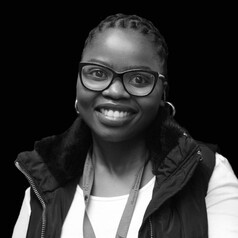
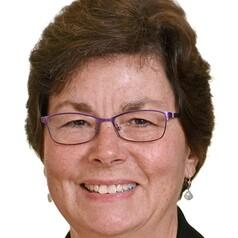
Lecturer: Nematology; Entomopathogenic Nematodes and Fungi, Stellenbosch University DR Nomakholwa Stokwe Lecturer: Stellenbosch University • Dr Stokwe has over 14 years of experience in Entomology research. She completed her BSc (Entomology & Biochemistry) and BSc Honours (Entomology) at the University of Fort Hare and later an MSc (Entomology) and a PhD (Agricultural Entomology) at Stellenbosch University. • She worked for the Agricultural Research Council as a project leader and researcher focusing on integrated pest management. She was responsible for managing research projects on Integrated Pest Management; compiling project proposals for new funding; planning and undertaking research projects; supervising post graduate students; providing leadership to research technicians; managing project budgets; publishing research outputs in peer - reviewed journals, semi scientific publications and technical reports. • She is currently a lecturer and Researcher at Stellenbosch University, championing research on integrated pest management. She lectures a Nematology course and supervises postgraduate students. She is also very passionate about skills development and mentorship in the field of entomology. • Her research interests include the use of entomopathogenic nematodes and fungi to control insect pests (biological control); management of plant parasitic nematodes.
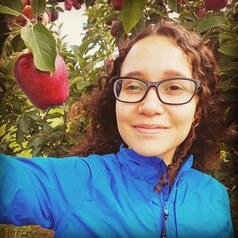
Chercheuse en écologie et génomique microbionne, Institut national de la recherche scientifique (INRS) Chercheuse postdoctorale à l’INRS-ETE, je m’intéresse à l’écologie et évolution génomique des microbiomes aquatiques.
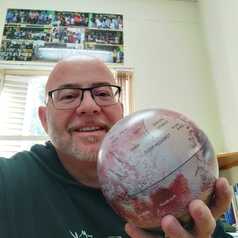
Full Professor of Physics, University of the Western Cape Nico Orce is a nuclear physicist whose passions are novel science and true transformation. Nico's research involves fundamental nuclear physics and includes 150 publications (~1/3 led by him) in Physics mainly, but also in top Mathematics, Biology and Astronomy journals. He has broadly explored the nuclear chart using a variety of nuclear techniques and theoretical calculations and discovered new types of collective excitations and shell phenomena in nuclei. Nico and collaborators recently discovered changes in nuclear polarization that narrow down the reaction network for element production in stellar explosions, which may explain the universality of elemental abundances in our universe [https://academic.oup.com/mnras/article/525/4/6249/7259922]. As PI, he has secured research funds worth over R50M, led to the completion of African-led experiments at CERN and the implementation of major infrastructure research projects in South Africa: 1. the GAMKA spectrometer at iThemba LABS; and 2. Modern African Nuclear DEtector LAboratory at UWC. Prof Orce has active experiments and observations at different laboratories and observatories around the world, including iThemba LABS, SALT, TRIUMF and CERN. He is the chair of the Tastes of Nuclear Physics conference series and the Science Research Open Day 2013, bringing in 2012 Nobel Laureate in Physics, Serge Haroche, to UWC. He is the referee of most nuclear physics journals and a proud Honorary Visiting Professor at the University of York, he has given talks at CERN, Yale, Cambridge and Oxford, and was nominated for the Margarita Salas Award in 2021, aimed “to recognize international impact, contributing to social progress in an exemplary and extraordinary way”. His postgraduate students are world-trained and find jobs in the local and international nuclear energy, big-data and machine-learning industries as well as in national research facilities such as the National Metrology Institute and iThemba LABS or Universities in Japan, China, Canada or India. For more information about Nico’s work please visit: https://nuclear.uwc.ac.za or the group’s GitHub @ https://github.com/UWCNuclear
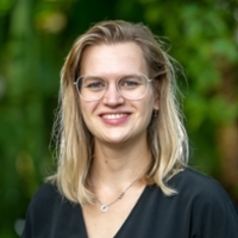
PhD Candidate, Botany and Science Communication, Leiden University My main research subjects are urban flora and citizen science. I am working on a Dutch citizen science project where we map out where and what different pavement plants grow in cities and towns, together with citizens. Using the data about pavement plants, I am interested in researching the impact of anthropogenic (human) disturbance or maintenance practices on the species composition and distribution of pavement plants. Secondly, I study the projects citizen science participants, their motivations and the impact of the project on lessening plant blindness and enriching their (urban) nature experience.
Emeritus Professor of Medicine, Boston University I am an Emeritus Professor of Medicine at the Boston University Chobanian & Avedesian School of Medicine and served as a Research Health Scientist in the Department of Veterans Affairs for 27 years. As a health services researcher, funded by the VA, NIH and non-profit foundations such as the American Heart Association and American Cancer Society, I have been studying racial and ethnic disparities in health care, patients' responses to treatment recommendations, adherence to recommended therapies, and health outcomes for 30 years, with over 150 peer reviewed scientific publications.
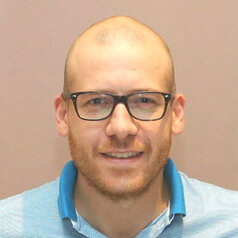
Lecturer in Orbital Mechanics, Surrey Space Centre, University of Surrey Nicola Baresi started his Astrodynamics career with a MSc thesis on “Optimal Control of Formation Flying Satellites”. After graduating full marks in Physics from the University of Padova in 2011, he moved to Israel where he worked as a postgraduate researcher for the Distributed Space Systems Laboratory of the Technion, Israeli Institute of Technology. Starting from 2013, Nicola moved to the United States of America as a US-Italy Fulbright scholarship awardee and pursued his PhD studies on spacecraft formation flying and dynamical systems theory. He was later awarded with a PhD in Astrodynamics and Satellite Navigation Systems from the University of Colorado Boulder, as well as with an outstanding graduate research award from the department of aerospace engineering sciences of the same university. Following graduation, Nicola was employed at the Japanese Aerospace eXploration Agency (JAXA), working on small and large scale satellite missions to the Moon and Mars. He eventually joined the University of Surrey in 2019, first as a Surrey Research Fellow and now as a lecturer in Orbital Mechanics at Surrey Space Centre.