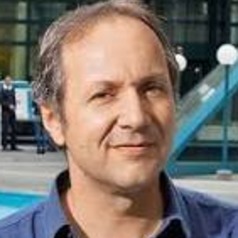
Professeur ordinaire à l’université de Lausanne (Unil), chercheur au Centre d’histoire internationale et d’études politiques de la mondialisation (Unil), co-directeur du Groupe de recherche Achac., Université de Lausanne Nicolas Bancel, historien, professeur ordinaire à l’université de Lausanne (UNIL), codirecteur du Groupe de recherche Achac et chercheur au Centre de recherche d’histoire internationale et d’études politiques de la mondialisation (CRHIM) à l’UNIL. Il a notamment publié ou codirigé La Fracture coloniale, La Découverte, 2005 ; Sexe, race & colonies. La domination des corps, du XVe siècle à nos jours, La Découverte, 2018 ; Le Postcolonialisme, Presses universitaires de France, 2019 ; Décolonisations françaises. La chute d’un empire, La Martinière, 2020 et Décolonisations ? Élites, jeunesses et pouvoirs en Afrique occidentale française (1945-1960; Éditions de La Sorbonne, 2022 et Colonisation & propagande. Le pouvoir de l’image, Le Cherche midi, 2022.
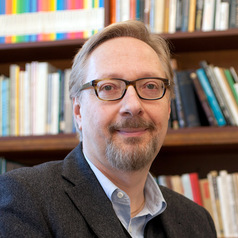
Professor of Political Science, University of Rhode Island I teach comparative and international politics, with a focus on the role that religious, historical, and cultural narratives play in democratic development. My regional areas of expertise are Russia and Ukraine. My latest book, The Tragedy of Ukraine: What Classical Greek Tragedy Can Teach us About Conflict Resolution (Boston and Berlin: De Gruyter, 2023), looks at the conflict in Ukraine through the lens of classical Greek tragedy, highlighting its deep domestic roots. For the parties to move from confrontation to dialogue will require untangling these roots and embracing a change of heart or catharsis. To facilitate this process we should look to classical Greek tragedy, which once performed a similar therapeutic function in Athenian society. As of 2024, I am also a Senior Washington Fellow at the Institute for Peace and Diplomacy.
Postdoctoral Fellow, Kean University Nicole Schroeder, Ph.D., is a member of the inaugural cohort of Equity in Action Presidential Postdoctoral Fellows at Kean University in Union, NJ. She received her Ph.D. in Early American History in 2021 from the University of Virginia. Nicole is a historian of disability, medicine and welfare in early America. She studies processes of medical ableism and political disenfranchisement throughout U.S. history, with a particular focus on the intersectional relationships between poverty, disability, race, and gender. Over the past few years, Nicole's research has been funded by predoctoral fellowships from the American Philosophical Society, the Library Company of Philadelphia, and the Dolores Liebmann Fund Foundation. In her spare time, Nicole is also a disability rights activist and the founder of the DAC (Disabled Academic Collective). The DAC provides outreach and support to disabled faculty, staff, students, and independent scholars who identify as disabled. On social media, Nicole uses the DAC platform to talk about academic ableism and to raise awareness about issues of access and accessibility in higher education. The DAC also houses a website for outreach and resources, and maintains a private Discord server for disabled academics to secure support, community, and academic resources. If you're interested, please search for @DisabledAcadem on Twitter or Google "Disabled Academic Collective" to reach the DAC website.
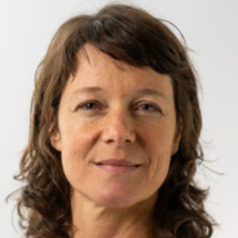
Professor of Psychology, University of Florida Dr. Natalie Ebner is Full Professor and the Trish Calvert Endowed Professor in the Department of Psychology in the College of Liberal Arts and Sciences at University of Florida. She is affiliated with the Center for Cognitive Aging and Memory, the Institute on Aging, the Department of Physiology and Aging, the McKnight Brain Institute, the Pain Research and Intervention Center of Excellence, the Substance Abuse Training Center in Public Health, the Florida Institute for National Security, and the Florida Institute for Cyber Security Research. She received her Ph.D. in 2005 in Psychology with a particular focus on lifespan development and aging from the Free University of Berlin, Germany. She completed post-doctoral fellowships at the Max Planck Institute for Human Development in Berlin and at Yale University, where she also worked as Associate Research Scientist before joining the faculty at the University of Florida. Dr. Ebner’s expertise in experimental behavioral aging research coupled with her background in affective, social, and cognitive neuroscience allow for a comprehensive view of brain−behavior relationships in the study of aging. Methods applied in her lab include structural and functional MRI and eye-tracking as well as pharmacological (i.e., intranasal oxytocin administration), brain-stimulation (real-time fMRI neurofeedback), and real-life (i.e., simulated phishing) interventions, in both healthy and pathological aging (e.g., Alzheimer’s Disease and related dementias). She has received multiple awards throughout her career, such as the International Max Planck Research School on the Life Course Outstanding Alumni Award, the University of Florida College of Liberal Arts and Sciences International Educator of the Year Award, the University of Florida Research Foundation Professorship Award, and the University of Florida College of Liberal Arts and Sciences Faculty Achievement Award. Since 2015, she has been a Kavli Fellow of the National Academy of Sciences and since 2023 a Fellow of the Association for Psychological Science. Her body of work is documented in over 100 publications. Over the years, her research has been funded by NIH, NSF, and other agencies and she has gained extensive expertise in supervision of early-career faculty, including NIH K01 awards and diversity supplements.
Senior Lecturer in International Ethics, UNSW Sydney I earned a PhD in applied philosophy, specializing in military ethics, from the University of Melbourne. Currently I am a Senior Lecturer in International Ethics at UNSW Canberra, located at the Australian Defence Force Academy. Over the past decade I have held fellowships at the Uehiro Centre for Practical Ethics at Oxford, the MacMillan Center for International Studies at Yale, the McCoy Centre for Ethics at Stanford, and the philosophy department at Georgetown University. I am the author of Insurrection and Intervention: the Two Faces of Sovereignty (Cambridge University Press 2012), and Ethics, Security, and the War-Machine, (Oxford University Press, forthcoming 2020). I am also an Associate Director of the International Society for Military Ethics, Asia-Pacific Chapter.