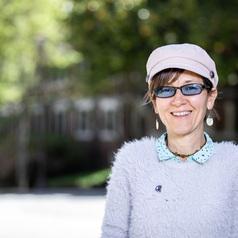
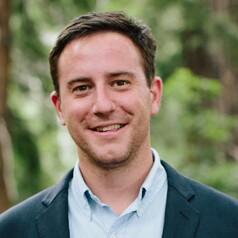
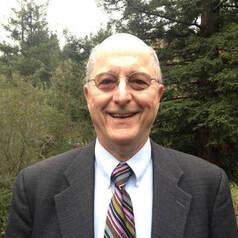
Associate Professor of Arabic and Arab Culture, Georgia Institute of Technology I research the connections among media, language, and disenfranchisement. I have published about Arab media (e.g., Lebanese TV), atheism (e.g., why Arab atheists use pseudonyms; how gender is implicated in the atheist message), and refugees (e.g., how systems of oppression against human groups cannot be dismantled without dismantling oppression agains t other species as well).
Professor of Economics, University of Tasmania Bachelor of Economics (Australian National University) Masters of Economics (James Cook University) PhD (Australian National University)
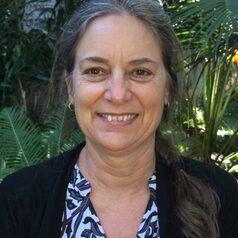
Associate Professor, School of Public Health, The University of Queensland Dr Osborne, BSc(Hons), MAgSc, PhD is an epidemiologist and toxicologist with research interests in using environmental epidemiology to examine aetiology and pathological pathways of disease. He has worked on a range of projects examining environmental exposures and health outcomes including exposure to metals, pollen, mould, chronic exposures to low levels of chemicals, pesticide and cyanotoxins. He also has experience examining how exposure to the environment may increase health and wellbeing (green/bluespace and solar irradiance and vitamin D). He has developed skills in the linkage of environmental and population health data in an interdisciplinary context, and has expertise in design, linkage, hypothesis formulation, analysis, interpretation, translation and dissemination. He has experience in designing and collecting epidemiological data and initiating studies of primary collected data (HealthIron, HealthNuts, Cornwall Housing Study, Survey of Recreational Water Users, Monitoring of Meniere's Symptoms). He also has used secondary data from existing cohorts (NHANES, UK Biobank, 1958 Birth Cohort, British Household Survey, Melbourne Collaborative Cohort Study, South Asian Clinical Toxicology Research Collaboration), as well as linkage of previously unconnected "big data" sets in mashups on novel platforms (MEDMI project). He has used traditional statistical methods such as linear/logistic regression, time series analysis, interrupted time series and Cox regression to ascertain associations between exposures and outcomes, as well as integrating confirmatory structured equation modelling with environmental/health data sets to construct conceptual diagrams of associations and assess pathway directions. He currently researches pollen and health outcomes as well as chronic kidney disease in low to middle income countries. He has supervised 6 PhD students to completion (2 primary supervisor, 4 co-supervisor) and currently supervises 4 PhD student. He has been associate editor of Archives of Environmental and Occupational Health since 2011 and is on the editorial board of International Journal of Epidemiology, International Journal of Environmental Research and Public Health and Pediatric Allergy, Immunology and Pulmonology. He is a member of Australasian Epidemiology Association, International Society of Environmental Epidemiology and International Epidemiology Association. He has previously worked at the Universities of NSW, Sydney, Exeter, Melbourne, Portsmouth, Queensland and Flinders, the Murdoch Children's Research Institute and the Cancer Council Victoria. He completed his PhD at the School of Population Health, University of Queensland/National Research Centre of Environmental Toxicology working on the toxicology and public health effects of cyanobacterial toxins in southeast Queensland.
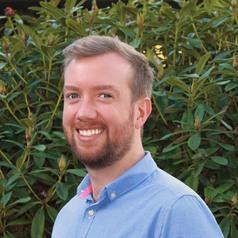
Adjunct Senior Research Fellow – Climate Science, Te Herenga Waka — Victoria University of Wellington Dr Nathanael Melia is a Senior Research Fellow (Adjunct) in Climate Science at the New Zealand Climate Change Research Institute (NZCCRI) at Victoria University of Wellington. He completed his BSc and MSc in Meteorology at the University of Reading. After a brief stint as a military officer in the RAF, he returned to the Meteorology Department at Reading for a PhD with Prof. Ed Hawkins and Keith Hains on opening Arctic sea routes. In 2016 he moved to Aotearoa New Zealand, with his wife working remotely on his decadal sea ice forecasting postdoctoral research. He worked at the New Zealand Forest Research Institute (Scion) for three years on several climate-related topics, from policy and mitigation to extreme weather events and climate change. Nathanael started at NZCCRI in 2020, working with Prof. Dave Frame on climate change emergence; in 2021, he transferred to an adjunct position while he began Climate Prescience Limited to deliver climate change risk assessments to New Zealand based entities.
Professor Emeritus of Psychiatry, University of California, San Francisco Professionally, I received a B.A. degree from Stanford and an M.D. degree from the University of California, Los Angeles. I interned at the University of Texas Medical Branch, Galveston, and received psychiatric residency training at the University of California, San Francisco. I now am an Emeritus Professor of Psychiatry at the University of California, San Francisco, and I directed the group therapy training program there and at the San Francisco VA Medical Center. In 2003, I received the J. Elliott Royer Award for excellence in Academic Psychiatry. I am a Fellow of the American Group Psychotherapy Association. For over 20 years I conducted research in group therapy and wrote a book entitled Group Therapy for Schizophrenic Patients. My latest book in this area is Integrative Group Therapy for Psychosis: An Evidence-Based Approach. For over 50 years I have written about space psychology and psychiatry. I have been the Principal Investigator of several NASA-funded and ESA-sponsored international psychological research projects involving astronauts and cosmonauts in space. In 1999, I received the Aerospace Medical Association Raymond F. Longacre Award for Outstanding Accomplishment in the Psychological and Psychiatric Aspects of Aerospace Medicine. In 2008, I received the International Academy of Astronautics Life Science Award. I am the co-author of the text book Space Psychology and Psychiatry, which won the 2004 International Academy of Astronautics Life Science Book Award and is in its second edition. More recently, I have written a book for the general public entitled Humans in Space: The Psychological Hurdles, which won the 2016 International Academy of Astronautics Life Science Book Award. In 2017, I gave the Psi Chi Keynote Speech on space psychology at the Eastern Psychological Association Convention in Boston; I was invited by the Buzz Aldrin Space Institute to participate in a Mars mission social sciences workshop at the Kennedy Space Center in Florida; and I was invited to give a series of lectures on space psychology to students at Beihang University, Beijing, China. My latest book came out in 2023 and is entitled Behavioral Health and Human Interactions in Space. I have collected antiquarian celestial maps for over 30 years. I am a Fellow of the Royal Astronomical Society (London) and have given talks on the history of celestial cartography to amateur and professional groups. I have written many articles and two books on astronomical history and celestial mapping: Star Maps (now in its expanded, hard-bound third edition) and Solar System Maps. I have been an amateur astronomer for over 50 years and have given talks at numerous amateur astronomy meetings and several World Science Fiction Conventions. I have written articles for Analog Science Fiction and Fact magazine, one of which won the annual readers’ poll award for the 2015 Best Fact Article. I also have published three science fiction novels: The New Martians, The Protos Mandate, and The Caloris Network.