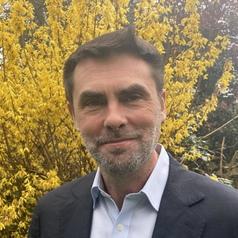
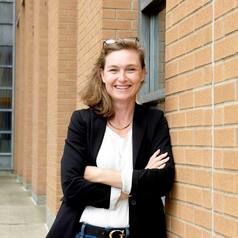
Professor of Housing and Planning, The Bartlett School of Planning, Faculty of the Built Environment, UCL Nick Gallent began his career at the University of Wales, completing doctoral research into the supply of housing in rural areas and the effectiveness of emergent 'planning and affordable housing' mechanisms, in 1995. He then worked at Cardiff and Manchester Universities before taking up a lectureship at UCL in 1999. He is a geographer by training and was elected a Chartered Member of both the Royal Town Planning Institute and the Royal Institution of Chartered Surveyors in 2002 and 2007 respectively. He became a RICS Fellow in 2014, a Fellow of the Academy of Social Sciences (AcSS) in 2015 and a Fellow of the RTPI in 2017. He maintains a range of professional interests and was Chair of the RTPI's Partnership and Accreditation Panel until 2018. He was Head of the Bartlett School of Planning for 8 years between 2011 and 2019. Nick Gallent is a housing specialist whose research focuses on UK planning policy as it pertains to housing delivery and as it affects rural communities. He has conducted research for a wide range of funding bodies. His research has been disseminated in 17 published books, mainly dealing with housing, planning, rural communities and the countryside, and in a large number of peer-reviewed articles and book contributions. Recent research has focused on: Planning for housing in the UK The UK housing crisis Securing affordable housing through planning Countryside planning and rural communities Rural housing markets, second homes and counterurbanisation Housing standards Community governance, planning and housing development Residential development processes and politics Nick Gallent is a university teacher with 25 years’ experience in higher education. He has taught across a range of topics but currently focuses on planning for housing and countryside planning, having co-authored key course texts on these subjects. He spent 14 years at UCL coordinating professional MSc planning programmes. He was Faculty Tutor for MSc Students across the Faculty of the Built Environment between 2010 and 2014, and in that capacity served as a member of UCL's MSc Scholarships Panel. Nick is a Fellow of the Higher Education Academy and completed professional training as a University teacher at Manchester in 1998. He has contributed, as guest lecturer, to teaching programmes at the Universities of Manchester and Nottingham, at London South Bank University and the LSE, and also at the Department of Urban Studies at Roma 3.
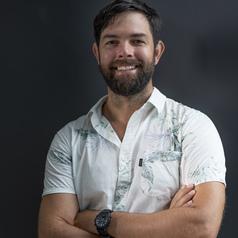
Research associate, Climate Change Research Centre, UNSW Sydney I’m a physical oceanographer at the University of New South Wales, having spent the last 5 years working on how the dynamics of the ocean and atmosphere influence the continental shelf waters off the east coast of Australia. I also have research interests in ocean observing systems, marine extremes, shelf-deep ocean connections and biophysical coupling. Born and raised in Cape Town, South Africa, I completed my PhD on the dynamics of the Agulhas Current off the east coast of Southern Africa, before moving to Australia for my postdoctoral work.
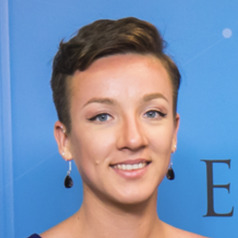
Research Assistant in concept creep - Melbourne School of Psychological Sciences, The University of Melbourne PhD student at the University of Melbourne - Social psychology/ Natural Language Processing
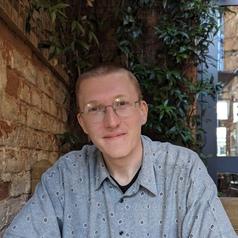
Teaching Associate, Department of Political Science and International Studies, University of Birmingham I am a Teaching Associate at the University of Birmingham, interested in issues related to governance, the state, and crisis management. My recently completed doctoral research examines the use of post-crisis inquiries in the UK.
Clinical Associate Professor of Nursing, Purdue University I have over 15 years at the bedside and in hospital leadership positions as an RN in the Southwest and Midwest United States. I am a Robert Wood Johnson Foundation Nursing and Health Policy Fellow and completed my PhD in the RWJF nursing and health policy collaborative at the University of New Mexico. My current research focuses on how community coalitions address substance use and the meaningful use of technology in healthcare. The latter includes the development of software solutions and Narcan delivery drones.
Professeure en biochimie des interactions hôte-virus, Université de Montréal Nathalie Grandvaux, Ph.D est professeure titulaire au département de biochimie et médecine moléculaire et chercheure au Centre de recherche du CHUM depuis 2005. Depuis 2020, elle est directrice adjointe scientifique - affaires étudiantes et postdoctorales au CRCHUM. Elle détient un diplôme d'ingénieur en biochimie de l‘Institut National des Sciences Appliquées de Lyon, France (1996) et un doctorat en Biologie Moléculaire et Cellulaire à l'Université Joseph Fourier de Grenoble, France (1999). Après un stage postdoctoral à l’Université McGill (2000-2004) où elle se spécialise dans l’étude des interactions hôte-virus, elle rejoint l’Université de Montréal et le CRCHUM comme chercheure indépendante. Les travaux de son groupe visent à élucider l’impact des interactions initiales entre un virus et son hôte – en portant une attention particulière sur la réponse interféron et le métabolisme redox – sur l’évolution d’une infection. Ces études s’inscrivent dans un effort global d’identifier des cibles pour le développement de nouveaux traitements antiviraux à large spectre ciblant des mécanismes cellulaires. Ses travaux ont également des applications possibles pour des traitements transformateurs pour toute une gamme de maladies autoimmunes et inflammatoires, incluant des maladies rares comme les interferonopathies. Ses travaux de recherche, financés par les IRSC, CRSNG, et FRQS et soutenues par des fonds d’infrastructure de la FCI, Elle est coauteur de 78 publications révisées par les pairs citées plus de 7700 fois. Elle est régulièrement invitée à donner des conférences au Canada et à l'étranger. Elle est également très régulièrement sollicitée comme examinateur des programmes de subvention et comme membre de plusieurs comités aviseurs. Elle a présidé le comité « système respiratoire » des IRSC et est actuellement membre du comité consultatif de l’institut III des IRSC. Elle est co-fondatrice et de la Société Canadienne pour la Virologie, un organisme sans but lucratif visant à promouvoir l'avancement de l'éducation, la diffusion et l'application des connaissances liées à la Virologie, dont elle a assuré la présidence jusqu’en 2020. Suite à la déclaration de la pandémie de la COVID-19, elle a co-fondé et co-dirigé le Réseau Québécois COVID-Pandémie à la demande des FRQ. Elle est également adjointe au pilier stratégies et thérapeutiques antivirales du réseau CoVarr-Net pour l’études des variants du SRAS-CoV-2. Elle est rapidement devenue une des porte-parole de la communauté scientifique dans la lutte contre le SRAS-CoV-2 avec de nombreuses apparitions dans les médias dans lesquels elle défend les informations fondées sur les données probantes.