Assistant Professor in Digital Humanities, Trinity College Dublin Nicole Basaraba received her PhD from Trinity College Dublin, Ireland with a specialisation in digital media narratives and digital humanities. Her research focuses on evaluating and finding best practices for creating interactive digital narratives in non-fiction genres. She is particularly interested in how participatory digital culture impacts storytelling practices in cultural heritage and tourism contexts, such as in creative and digital place-making. Basaraba also has a Master of Arts in Communications and Technology from the University of Alberta, Canada. She has presented at over 20 conferences worldwide and her work has been published in multiple peer-reviewed journals.
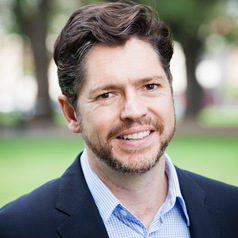
Principal Fellow, Melbourne School of Government, The University of Melbourne Nicholas Reece is a Principal Fellow at the Melbourne School of Government and the School of Social and Political Sciences at the University of Melbourne. A former lawyer, journalist, ALP party secretary and senior adviser to a Prime Minister and two State Premiers, Nick has a passion for public policy and politics. Nick is also a Director of the global men's health movement Movember and the social enterprise, The Big Issue.
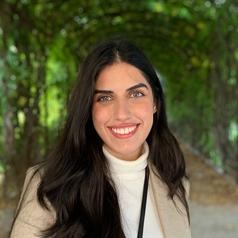
M.A. Student in School and Applied Child Psychology, Western University Nikita Kalwani is an M.A. student in the School and Applied Child Psychology program at Western University. Nikita graduated from McMaster University with an Honours science degree in Psychology, Neuroscience, and Behaviour, with a specialization in Mental Health. She has an interest in research that informs school- and community-based interventions that support the mental health outcomes of marginalized youth who may experience systemic barriers to accessing care.
Associate Professor of Thermo Fluid Sciences, University of Colorado Boulder Dr. Nathalie Vriend leads the Granular Flow Laboratory. She is an expert in performing detailed laboratory experiments and targeted field work involving particulate flows such as sand and snow. In addition, she also employs numerical simulations and theoretical modelling to complement observations, often in collaboration with scientists from multidisciplinary fields. She has active projects in granular rheology and avalanching, and dune structure and migration. In the past she worked on the dynamics of real snow avalanches, singing sand dunes, silo honking, and seismic wave propagation. Flowing granular materials arise everywhere around us, in industry from pharmaceutical processes to bulk goods transport lines, and in nature from snow avalanches to devastating landslides. To mitigate industrial economic losses and reduce hazards of naturally occurring flows, we need to be able to measure and model static and flowing granular materials, with transitions strongly depending on the spatial boundary conditions of the flow, external forcing, and time-dependent starting and stopping phenomena.
Associate Research Professor, Department of Educational Psychology, University of Connecticut Dr. Gelbar worked from 2014-2019 at the Autism Center at the Hospital for Special Care as a Psychologist, and as a researcher at the University of Connecticut University Center for Excellence in Developmental Disabilities. He is a Licensed Psychologist, National Certified School Psychologist, and a Board Certified Behavior Analyst at the Doctoral Level. He has training and expertise in Neurodevelopment Disabilities (including Autism Spectrum Disorder), Learning Disabilities, and Gifted/Talented individuals including those who also have disabilities (also referred to as Twice Exceptional).
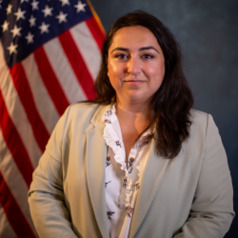
Assistant Professor at the Combating Terrorism Center, United States Military Academy West Point Dr. Jahanbani is an Assistant Professor and Researcher at the Combating Terrorism Center and the Department of Social Sciences at the United States Military Academy. She teaches an introductory course on terrorism, SS465 (Terrorism: New Challenges). At the CTC, she studies various aspects of Iran’s network of proxy militias. She is currently working on a project that looks at the evolution of Iran’s relationship with its proxies in Iraq and Syria over time. Her broader research agenda focuses on how states partner with violent non-state actors, such as rebel and terrorist groups, and how these organizations, in turn, are affected by these relationships. Her dissertation project focuses the causes and consequences of states supporting rebel groups. Dr. Jahanbani received her PhD and MA in Political Science from the University at Albany, and her BA in International Studies from the School of International Service at American University.