
Norin Arshed
Professor of Entrepreneurship and Innovation, University of Strathclyde
Professor of Entrepreneurship and Innovation, University of Strathclyde
0 articlesOur contributors
Meet the researchers, writers and practitioners bringing perspective to the global conversation.
Join the conversation509 contributors · N
Professor of Entrepreneurship and Innovation, University of Strathclyde
Professor of Entrepreneurship and Innovation, University of Strathclyde
0 articles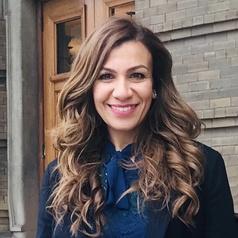
Assistant Professor, Dental Public Health and Oral Medicine, Schulich School of Medicine & Dentistry, Western University
Assistant Professor, Dental Public Health and Oral Medicine, Schulich School of Medicine & Dentistry, Western University Dr. Noha A. Gomaa is an Assistant Professor in the Divisions of Dental Public Health and Oral Medicine at the Schulich School of Medicine & Dentistry, Western University, and a Scientist at the Children's Health Research Institute, London, Ontario. Her research investigates the impact of socio-environmental factors on oral diseases and related non-communicable chronic conditions over the life-course, and evaluates clinical and policy interventions that aim to improve these conditions in various populations. Noha completed her PhD and Fellowship in Public Health Policy at the Faculty of Dentistry, University of Toronto, followed by a Clinician-Scientist Fellowship at the Hospital for Sick Children in Toronto. She takes special interest in knowledge synthesis and mobilization and has previously worked with government agencies on issues of oral health care policy for underserved populations and professionalism in dentistry.
0 articles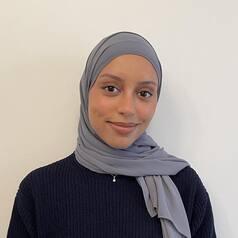
Dalla Lana Fellow in Journalism and Health Impact, University of Toronto
Dalla Lana Fellow in Journalism and Health Impact, University of Toronto Nahid is a freelance journalist and current Fellow in Journalism and Health Impact at the University of Toronto's Dalla Lana School of Public Health.
0 articles
Associate Professor of Education, University of Plymouth
Associate Professor of Education, University of Plymouth I’m an Associate Professor of Education at the University of Plymouth, UK and I lead the Institute of Education’s research. I have worked in education for 35 years, first as a primary school teacher and then with Plymouth University. My areas of interest are particularly around teacher accountability and the effects this has on pupils/students and on pedagogical relationships. My teaching includes working with undergraduate education students and a number of post-graduate research students on both PhD and EdD routes. I live in East Devon, UK, close to the sea.
0 articles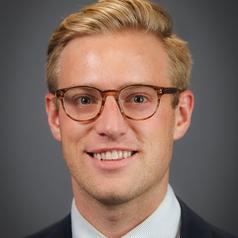
Assistant Professor of Political Science and International Affairs, University of Maine
Assistant Professor of Political Science and International Affairs, University of Maine Dr. Nicholas R. Micinski is Libra Assistant Professor of Political Science and International Affairs at the University of Maine. His research focuses on global governance, particularly how states and international organizations respond to refugees, migration, climate change, and peacebuilding. Micinski has published two books: Delegating Responsibility: International Cooperation on Migration in the European Union (University of Michigan Press, 2022) and UN Global Compacts: Governing Migrants and Refugees (Routledge, 2021). Previously, Micinski was postdoctoral fellow at Université Laval, ISA James N. Rosenau Postdoctoral Fellow, and visiting researcher at the Center for the Study of Europe, Boston University.
3 articles
Assistant Professor of History, University of Tennessee
Assistant Professor of History, University of Tennessee Nicole Eggers’ research interests include 20th-21st Century Congolese history, health and healing, refugees, and religion and politics in Central Africa. Her first book, Unruly Ideas: A History of Kitawala in Congo (Ohio University Press, 2023) follows the history of the influential religious movement Kitawala from its colonial beginnings in the 1920s to its present-day influence in some of the most conflicted parts of Eastern Congo. The study highlights practitioners of Kitawala as intellectuals and innovators and considers broad theoretical questions about how they have historically drawn on and reformulated practices of spiritual and social healing in times of upheaval, creating a historically situated framework for understanding how they and their communities have experienced and understood power and violence. In the process, the book engages a number of fields of inquiry: health and healing, violence and power, religion and rebellion, intersections of gender and power, colonial incarceration, prayer and spiritual agency, and nationalism and the post-colonial imagination. Eggers’ second book, tentatively titled Refuge in the Spirit: Religion in the Lives of Congolese Refugees, is a collaborative project centered around oral histories of Congolese refugee communities. For this project, Eggers and her collaborator, Dr. Roger Alfani, are investigating the significance of religion at different junctures of the Congolese refugee experience. With funding from an NEH Collaborative Grant, they have conducted interviews among Congolese refugees living in refugee camps in Kenya, Uganda, and Burundi, as well as among those who have left the camps to be resettled in Knoxville. The project seeks to illuminate how religion has functioned both as a space for building community for people who have lost their social safety net, as well as its role in addressing gaps — material, social, psychological, and spiritual — that state and international organizations too often neglect. Central to their investigation is the question of how people connect their experiences of social and physical security and insecurity to their understandings of spiritual security and insecurity. They argue that in-depth study of the religious lives of refugees is inherently valuable as a form of social and intellectual history that illuminates the complex inner lives and communal connections of people who are frequently viewed exclusively through the lens of trauma and crisis. In the classroom, Dr. Eggers is dedicated to teaching students how to ask evocative questions, think critically, and write effectively. One of her main goals is to teach students to reevaluate what they think they know about Africa and the study of history by introducing them to historical methods and narratives that highlight African experiences and voices. Dr. Eggers encourages active and creative student engagement with course themes and materials - both within and outside of the classroom - and strives to teach students that even when they are learning about places and peoples that are perhaps unfamiliar, they can learn to become critical consumers and producers of knowledge.
0 articles