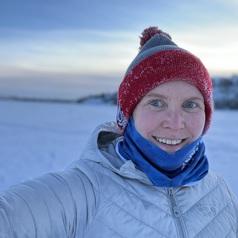
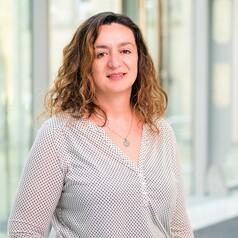
Lecturer in Geosciences, University of Montana I have a passion for finding creative ways to teach and communicate the importance of geology – its application in everyday life, for inspiring students to explore their environment, and for encouraging their natural awe and respect for the Earth. I have a broad range of geologic interests ranging from broad-scale landscape evolution and sustainability to public science communication and wine and terroir. I am passionate about employing creative ways to communicate the importance and value of scientific understanding in everyday life and how critical it is that we as a species embrace sustainable practices now. My recent research has focused on geoscience education, especially assessing the efficacy of pedagogic tools ranging from analog models of Earth systems to the integration of smart technology and augmented reality in learning experiences. My experience in post-secondary education has been driven by my passion for engaging and educating my diverse student body equally.
Postdoctoral research fellow, University of Ghana Dr Nikitta Dede Adjirakor is an academic researcher and creative writer. She holds a Feodor Lynen Fellowship with the Alexander von Humboldt Foundation and is a post-doctoral fellow at the University of Ghana. Her research focuses on literature in African languages, particularly poetry, aesthetics, popular culture and digital literature. Her creative writing focuses on the intersections between belonging, language, health and trauma. Nikitta is the writer and producer of the award-winning documentary 'A Thousand Needles' which explores African women’s health. She is the author of the forthcoming poetry chapbook 'Learning to Say My Name' (2023) to be published by the African Poetry Book Fund. Her children’s book Dede Dances at Our Day has been published in English and Twi. Under Write Ghana Literary Initiatives, she co-edited the Ga poetry anthology 'Hɔmɔwɔ: Ga Lalawiemɔi' and co-produces multilingual literary projects in Ghanaian languages.
Canada Research Chair in Environmental Influences on Water Quality, University of Winnipeg Canada is teeming with lakes, streams, and wetlands. Clean, healthy fresh waters support biodiversity and provide extensive health, economic, and cultural benefits to Canadian communities. However, rates of climate change in northern boreal regions are among the highest anywhere on Earth. Rising temperatures, changes to precipitation, and declining snow cover will fundamentally alter how water and chemicals move through the environment, and could threaten our valuable aquatic resources. How will environmental pressures, including climate change, impact water quality? Dr. Nora Casson and her team are working to unravel relationships between water and nutrient cycling, to understand how patterns and processes vary across the landscape and how human activities impact the surface waters that drain forested ecosystems. A robust understanding of the environmental controls on nutrient cycling in the boreal region is critical for informing decision-making aimed at safeguarding water quality. Dr. Casson's research expands our understanding of how human activities impact boreal ecosystems by diving deep into the mechanisms that underpin observed changes and also by looking broadly at controls on regional-scale patterns. Through interdisciplinary collaboration with researchers, practitioners, and decision-makers, the results of Dr. Casson’s research inform management decisions to protect ecosystems and water quality.
Professor, School of Psychology, University of Reading Netta Weinstein is a Professor in the School of Psychology at the University of Reading and Research Associate at the University of Oxford. She received her PhD in Clinical Psychology from the University of Rochester (2010). She studies the bi-directional relations between interpersonal exchanges and human motivation, with a particular focus on interpersonal supports such as listening for autonomous functioning, self-expression, and self-connection. She is also focused on understanding self-connection through solitude, asking how can time alone help people to recenter and connect with the self?
Teaching Fellow, University of Otago As an accomplished Teaching Fellow at the University of Otago's esteemed Otago Business School, I have been instrumental in transforming the way businesses engage with their stakeholders. My role encompasses advising the industry sector on cutting-edge stakeholder engagement practices, as well as creating robust monitoring and evaluation frameworks that drive results. I am passionate about designing innovative learning experiences that explore the critical intersections of Business, Government, and Society. As the Co-Director of the Master of Sustainable Business program, I have been at the forefront of molding future leaders who are primed to excel in the rapidly evolving business landscape. My expertise in supervising and coordinating research projects for Master's students has enabled them to achieve their academic goals and contribute to the field of sustainable business. I also take pride in my role as the Academic Lead for the Winds of Change Programme, where I strive to equip students with the knowledge and skills necessary to navigate the dynamic world of business and effect positive change.
Associate Professor of Work and Employment, Nottingham Trent University Dr Nadia K. Kougiannou is an Associate Professor of Work and Employment at Nottingham Business School. She also serves as the Deputy Director of Research Outputs at the institution. With a background in social anthropology, employment relations, HRM, and organizational behaviour, Nadia has extensive expertise in researching and teaching. Her principal research interests include investigating the gig economy's impact on work and working conditions, the role of technology and app-work on employee voice, working conditions, and the employment relationship, employer practices and employee reactions in challenging contexts, such as economic recessions, and the impact trust and justice have on the operation and effectiveness of collective and representative voice. Nadia has an impressive publication record, with her work appearing in renowned international journals such as the Industrial Relations: A Journal of Economy and Society, Human Resource Management Journal, British Journal of Industrial Relations, British Journal of Management, New Technology, Work and Employment, and Journal of Business Research. Her publications are a testament to her dedication to advancing the field of work and employment relations and HRM through her rigorous and impactful research. Apart from her academic work, Nadia is also an experienced consultant in the areas of employee voice, work in the gig economy, employment relations, trust, and organizational justice. With her outstanding academic credentials and expertise, she has much to offer her students and the wider community interested in the complex world of work and employment relations.