DPhil Candidate in Earth Sciences, University of Oxford Noam is a DPhil (PhD) Candidate in the Department of Earth Sciences, University of Oxford, researching marine dispersal around islands in the western Indian Ocean using state-of-the-art numerical models.
Lecturer in International Development, University of Bath Naomi is a Lecture in International Development in the Social and Policy Science Department at the University of Bath. She was formerly an Assistant Professor at the Firoz Lalji Institute for Africa at the London School of Economics and Political Science. Since 2010, she has carried out ethnographic and qualitative research in South Sudan on governance during war and peace. This has included research on patterns of violence, public authority, revenge, peace meetings, armed mobisations, humanitarian protection, Nuer prophets and famine. Her book 'Spiritual Contestations – The Violence of Peace in South Sudan' will be published in 2023.
As a former Assistant Director in a jurisdictional Ambulance Service and having served on the executive of the Professional Board for Emergency Care in South Africa, Navin is experienced in health systems management and regulation. His research and policy interest includes critical theory, transformative pedagogy, gender-based violence prevention and evidence-informed decision making that intersects state and civil society interests in emergency care professionalisation and in particular gender-based violence prevention. Navin was immediate past Chair of the Faculty Ethics Committee at the Cape Peninsula University of Technology and co-chair of the Belgium Red Cross First Aid for First Responders Evidence-based Medicine (EBM) project in sub-Saharan Africa and is a certified alternate dispute resolution mediator (Faculty of Law, University of Cape Town). He supervises higher degree research in South Africa and Australia, in the fields of Paramedicine, social inclusivity, health professions education, emergency and forensic medicine. Navin holds: a PhD in Forensic Medicine, a Master of Public Health, Higher Diploma in Education, Bachelor of Technology in Emergency Medical Care and a National Diploma in Ambulance and Emergency Care. More recently, he completed certification from the Royal Melbourne Institute of Technology (RMIT) in Recognising and Responding to Sexual Violence.
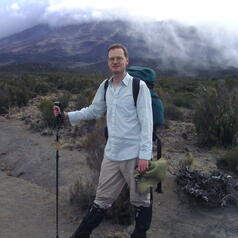
I am a climate scientist interested in mountain climates and how they may respond in a warmer world. I graduated from the University of Durham in 1991 with a first class degree BSc in Geography. I went on to study in Durham for a PhD supervised by Joan Kenworthy and Nick Cox, investigating long-term climate change in the Pennines in Northern England using meteorological records, and was awarded the PhD in 1994. In 1994 I started at the University of Portsmouth as lecturer in climatology/meteorology in the Department of Geography. In 1998 I was a visiting scientist for six months at the Institute of Arctic and Alpine Research (INSTAAR), part of the University of Colorado at Boulder, USA. I studied long-term climate change in the instrumental records kept by the Mountain Research Station at high elevations in the Colorado Rockies. This work was sponsored by a Fulbright Scholarship. In 2003/2004 I was awarded a National Academies National Science Foundation scholarship to visit NOAA’s Air Resources Laboratory in Silver Spring Maryland, U.S.A. for 12 months as a Senior Research Associate. My work as part of the Climate Variability and Trends Research Group under adviser Dr Dian Seidel, was concerned with the comparison of temperature trends from a variety of global datasets (surface, radiosonde and reanalyses). The focus was trends at high elevations sites, since mountain summits show some of the characteristics of both the free atmosphere and the Earth’s surface (boundary layer). More recently I have developed work on Kilimanjaro, installing a transect of 22 stations which observe air temperature and humidity - on both the south-west and north-eastern slopes. The range in elevation from below 1000 m to 5800 m is amongst the largest in the world, making the site critical for examining elevation changes in warming rates (elevation-dependent warming). In 2015 I helped lead a paper examining mountain warming (https://www.nature.com/articles/nclimate2563). I also have current field projects in the Pyrenees and in Finnsh Lapland examining cold air drainage patterns and how they may change in a warmer world. In 2018 I was a visiting scientist at the Institute of Tibetan Plateau Research at the Chinese Academy of Sciences in Beijing (PIFI scholarship) and have links with many Chinese researchers. I am currently Reader in Climate Science in the newly-formed SEGG (School of Environment, Geography and Geosciences) and I am a senior member of the Environmental Processes and Change Research Group. Research Interests Global and regional temperature change in mountainous regions Research concerns analysis of 20th/21st century temperature change in mountainous regions using a variety of primary and secondary datasets. Comparison of high quality homogenised climate datasets allows a comparison between free-atmospheric changes (measured by radiosonde and some satellite data and assimilated datasets such as reanalyses) and surface temperature changes (as measured by conventional instrumentation). Most recently work has compared MODIS LST (land surface temperature) data for mountainous areas with in situ air temperature data, with a particular focus on the Tibetan plateau. This work has been undertaken in collaboration with many international organisations including the Climate Variability and Trends Group at the Air Resources Laboratory in Silver Spring, Maryland, the Scripps Institution of Oceanography, San Diego, the University of Washington, Oregon State University, and the Institute of Tibetan Plateau Research in Beijing, China. Funding has been obtained from Royal Society, National Academy of Sciences (U.S), Chinese Academy of Sciences, Fulbright Commission and Newton Fund. Measuring and modelling surface temperatures in areas of complex relief Part of the reason why mountains and areas of incised topography show varied environmental responses to climate change is because of their inherent spatial and temporal complexity. Members of staff at Portsmouth have been part of climate monitoring campaigns in mountains and complex terrain around the world, including the Rocky Mountains of the USA, Arctic Lapland (northern Finland and Sweden), the Pyrenees, the uplands of England and Scotland, and on Mt Kilimanjaro in Africa. The focus has been on obtaining better information on the spatial and temporal variation in surface temperature and moisture fields using networks of meteorological sensors. This information allows us to relate temperature patterns to synoptic conditions, and thus to investigate the influence of landscape position on longer-term climate trends. Work has been performed in collaboration with the following institutions: University of Brunei Darussalam University of Colorado Mountain Research Station University of Turku Sub-Arctic Research Station Abisko Scientific Research Station University of Massachussetts University of St Andrews Centre for Ecology and Hydrology Servei Meteorologic de Catalunya Funding has been obtained from LAPBIAT 2, INTERACT, NERC and RCIF The influence of land use change on mountain climate on Kilimanjaro and consequences for summit ice fields Another emergent research strand is the response of the cryosphere (snow and ice) in mountain regions to contemporary climate change. This work involves a wide range of foci ranging from global analyses examining long term changes in snow cover in mountains and its influence on surface energy balance and mountain temperatures, to regional influences of atmospheric circulation on snow cover, and local field investigation into factors influencing snow distribution in the altitudinal and latitudinal forest-tundra ecotones (areas which are expected to show rapid environmental response to climate change). In relation to this specific project, NERC funding has been obtained to monitor mountain climate on the slopes of Kilimanjaro in Tanzania, East Africa. Through the installation of two unique climate transects on the SW and NE slopes of the mountain, covering a range of 5000 metres in elevation and extending back to 2004, this study can examine the day to day role of the diurnal thermal circulation in transporting moisture to and from the summit region. Typically, during the day moisture is transported upslope to the crater region, contributing indirectly (through cloud cover and increased humidity) or directly (through precipitation) to the mass balance of the summit ice fields. However these ice fields are in rapid retreat. The role of vegetation and land use change in this process is a focus of this project. Funding has been obtained from NERC and RGS.
Dr Nina Sivertsen is an Indigenous Sámi woman living and working on Kaurna Lands in Australia. She holds a position as Senior Lecturer (Nursing), Flinders University, and Associate Professor, Arctic University of Norway. Her academic work encompasses curriculum design and implementation, with cultural responsiveness in the centre to positively engage students in learning about First Nations health. In her research, she focuses on community and health systems research in partnership with First Peoples and contributes to restorative policy and practice, especially around women’s health in a socio-political context of assimilation and colonisation. She works in inter-Indigenous settings together with First Nations health professionals from around the world to improve healthcare and health outcomes for all First Nations people. Nina’s work in the nexus of Indigenous women’s identities, culture, health, and education has led to international recognition as evidenced by her partnerships in Norway, Canada and Australia. She is the recipient of numerous awards; amongst them the 2021 Women in Innovation Award, the 2020 Vice-Chancellor’s Award for Innovation in Teaching, as well as being a finalist of the 2021 AFR National Teaching Excellence Awards. Dr Sivertsen is an active member of many community organisations and academic committees providing space for Indigenous voices within strategic planning, governance, and curriculum. She works with research higher degree students to create new knowledge and build capacity enabling students to fulfil their potential as independent academics and researchers of the future.
Assistant Professor of Instruction, University of Texas at Dallas Since graduating with a Ph.D. in 2016, I've published two refereed journal articles and one monograph with Cornell University Press. My research, which was recently published as a monograph by Cornell University Press in April of 2022, is titled The Nature of the Religious Right: The Struggle Between Conservative Evangelicals and the Environmental Movement. This book is an intellectual history that offers the first historical account delineating how politically motivated white conservative evangelicals who make up the religious right ultimately learned to oppose environmental protection efforts including climate change over the last fifty years.