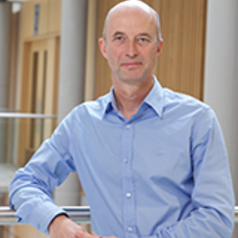
Senior Lecturer in Law, Nottingham Trent University Nigel Hudson is a Senior Lecturer at Nottingham Law School, and an active member of the research Centre for Legal Education. He started his legal career with five years as a solicitor at Edge & Ellison before joining Nottingham Law School as a Principal Lecturer in 1993. Since 2003 Nigel has worked for the University of Law as the Head of Learning Design, the University of Derby as the Online Learning Academic Lead in Law, and for CILEx as an Independent Adjudicator. In December 2015 Nigel returned to Nottingham Law School to teach as a Senior Lecturer in Law. He is currently studying a Professional Doctorate in Legal Education at NTU, examining the Communities of Practice within the legal professions as his main area of research. He also covers Legal Informatics and Learning Technology as additional areas of research interest.
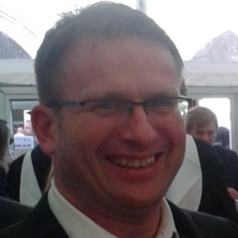
Lecturer in Law, Glasgow Caledonian University Nick is a Lecturer in Law in the Department of Law, Economics, Accountancy and Risk. Nick teaches mainly in the area of Public Law, Human Rights and Civil Liberties. His research reflects this including many public law issues including: developments around the Scottish Parliament, constitutional legal theory, housing law and the changing ways in which the state interacts with society and individuals. Nick regularly appears on radio discussing civil liberties issues in Scottish society. He has also written on legal research skills for students at all levels.
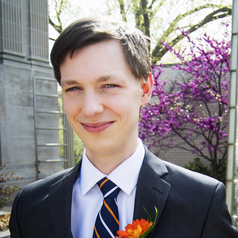
Postdoctoral Fellow, University of Texas at Austin I am a postdoctoral researcher at the University of Texas Marine Science Institute in Port Aransas. My research aims to understand the lifestyle of marine bacteria using the most recent “omic”-techniques. More specifically, my current project tries to unravel the metabolic capacities present in bacterial genomes and their metabolic potential. One topic I am working on deals with bacteria enriched during the Deepwater Horizon oil spill, addressing the question how bacteria cope with oil contamination. I am a biologist with a background in molecular biology. More specifically, I graduated in plant genetics and during my PhD I obtained an additional background in microbiology to better understand how microbes and plants interact. My current goal is to gain a better background in bioinformatics to better be able to tackle the research questions I am interested in. Currently, I want to understand: What are the microbes that can be found in marine ecosystems? How can we use “omics” to uncover novel bacterial lineages? What are their genomic and metabolic features? Where I come from: I did my PhD (just finished this year, in 2015) at the Max-Planck Institute for Plant Breeding Research in Cologne. I investigated how rhizosphere and root-bacterial communities interact with Arabis alpina and two Brassicaceae plant species. I worked on 16S rRNA gene community profiling and also isolated numerous bacteria. The research questions of my PhD were (in a simplified way): How are bacterial communities affected by their surroundings/ what determines how bacterial communities assemble on plant roots (i.e. plant species, soil type, flowering time…)? What is the effect of synthetic bacterial communities on plant growth?
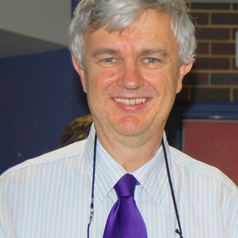
Professor of Theology, Australian Catholic University I began my academic career as a mathematician, obtaining a PhD in pure mathematics from UNSW in 1979. After working as a mathematician I began undertaking studies in theology, completing a Bachelor of Divinity, and Master of Theology from MCD before completing my DTheol
Research Fellow, Clinical Trials Development and Assessment, University of Sydney As a researcher at the University of Sydney my work focuses on the causes, prevention and treatment of obesity and metabolic disorders. Having worked in the industry both corporate and academic for over 10 years, I have had the pleasure of investigating a broad range of topics including dietary & exercise programmes, complementary medicines, commercial weight loss programmes, medical devices, bariatric surgery, satiety hormones, and the economics of obesity. The importance of a holistic approach to the treatment of overweight and obesity is something I am particularly passionate about implementing and dispelling the myth that one solution can fit all.