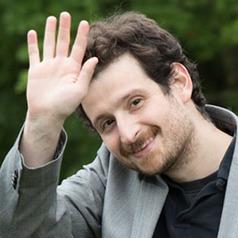
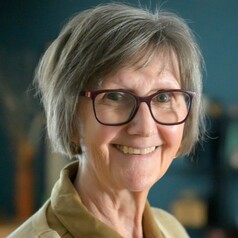
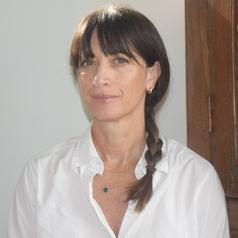
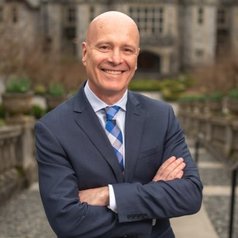
Senior lecturer, Department of Chemistry, Makerere University Patrick Ssebugere is a scientist in the Department of Chemistry at Makerere University in Uganda (East Africa). He received his DrSc in green chemical technology from Lappeenranta University of Technology, Finland, in 2015. In 2019, he undertook postdoctoral studies at Helmholtz Zentrum München, German Research Center for Environmental Health in Germany. In 2022, he was an Alexander von Humboldt guest scientist at Helmholtz Centre for Environmental Research – UFZ in Leipzig, Germany.
Lecturer in Natural Language Processing, University of Edinburgh Pasquale is a lecturer in Natural Language Processing at the School of Informatics, University of Edinburgh; co-founder and CTO of the generative AI start-up Miniml.AI; and ELLIS Scholar (Edinburgh Unit). His research interests include natural language processing and machine learning, focusing on relational learning and learning from graph-structured data, solving knowledge-intensive tasks, hybrid neuro-symbolic models, compositional generalisation, and designing data-efficient and robust deep learning models. Pasquale published over 100 peer-reviewed papers in top-tier AI conferences, receiving multiple awards (including one Outstanding Paper Award at ICLR 2021, one of the most influential conferences in AI), and delivered several tutorials on Explainable AI and relational learning in leading AI conferences. More information on his research is available on his website, www.neuralnoise.com.
Professor of Clinical Education, University of Southern California Paula M. Carbone is a professor of clinical education at USC Rossier. Her courses include education for sustainable futures, examining the role of public education in today’s society as a vehicle for the betterment of humanity’s shared future.
Associate Professor of Anthropology, University of Miami Pamela L. Geller is an associate professor of anthropology at the University of Miami. Over the years, she has conducted fieldwork in Hawaii, Belize, Honduras, Perú, and Haiti. Her intellectual interests include archaeology and bioarchaeology, feminist and queer studies, materiality of identity, the sociopolitics of the past, and bioethics. Based on her research, she has authored several books: The Bioarchaeology of Social-Sexual Lives (2017), Theorizing Bioarchaeology (2021), and Becoming Object: The Sociopolitics of the Samuel George Morton Cranial Collection (2024). Edited volumes include Feminist Anthropology: Past, Present, and Future (2006) and The Routledge Handbook of Feminist Anthropology (2025). More recently, she has wondered, “What does it mean to be human in an age of unprecedented anthropogenic impact on this planet?” The question is a longstanding one for anthropology; it seeks to address how the human condition shifts with technological innovation and socioeconomic interaction, as was the case during the Neolithic or Industrial Revolutions. Yet rather than look to ancient periods, she is undertaking an archaeology of the contemporary that focuses on plastics as material culture in the 21st century. She is particularly intrigued by the cultural maladaptability, ontological and biophysical implications, and future history of plastics. On this subject, her writings have appeared in scholarly publications and mainstream ones, such as Slate, Miami Herald, and The New York Times. Geller currently serves as the Specialty Chief Editor of Human Bioarchaeology and Paleopathology for the open-access journal Frontiers in Environmental Archaeology. She is also Series Editor for “Archaeology of Gender and Sexuality,” a book series with Routledge Press. Feel free to reach out with questions about submitting proposals or publications to either forum.
Professor emeritus, University of Bristol Peter Barham's research at the University of Bristol is concerned with polymer physics. He found ways to connect his research with his love of penguins, including the creation of silicon-based flipper bands which can be used for monitoring penguin populations. The silicone bands are designed to minimize the potential impact of carrying an external marking device and are currently in use on African penguins (Spheniscus demersus) at Bristol Zoo, UK and in the wild in South Africa. More recently, together with colleagues in the Computer Science Department at the University of Bristol, he has developed a computer vision system for the automatic recognition of African penguins. This system in 2008[2] was undergoing trials in South Africa.
Board Chair of the Academic Journalism Society, President and Vice-Chancellor, Royal Roads University Dr. Philip Steenkamp is president and vice-chancellor of Royal Roads University. He previously held the role of vice-president, external relations at the University of British Columbia and at Simon Fraser University. His academic roles have included research fellow at the University of Namibia and assistant professor and postdoctoral fellow in the Department of History at the University of Victoria. Among his many awards, Philip received the King Charles III Coronation Medal in 2024 to recognize his significant contributions to Canada and B.C.