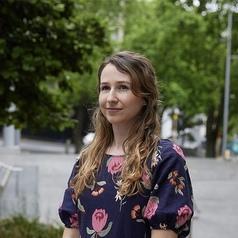
Lecturer in Sustainable Architecture, Auckland University of Technology Priscila Besen is a Lecturer in Sustainable and Regenerative Architecture at AUT’s Huri Te Ao School of Future Environments. With a PhD and a Master of Architecture in Sustainable Design from the University of Auckland, her work focuses on creating healthy, resilient and liveable built environments for a post-carbon future. Priscila began her career with a Bachelor of Architecture and Urbanism from UFSC, Brazil. Her research bridges technical and cultural aspects in built environment design, including life-cycle thinking in architecture, sustainable urban design, co-design, building energy performance, adaptive reuse and retrofit. She is a certified Passive House Consultant and a previous board member of Passive House Insititute New Zealand. In addition to her academic experience, Priscila has worked in practices in Brazil and New Zealand, developing a range of different projects including multi-unit residential architecture, landscape design, urban design and building environmental certification.
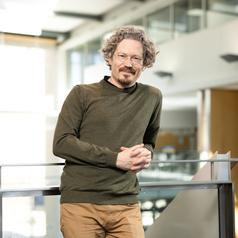
Professeur adjoint à la faculté de pharmacie, Université de Montréal Pierre-Marie David est sociologue et pharmacien. Actuellement professeur adjoint à la faculté de pharmacie de l’Université de Montréal, ses recherches portent sur l’évaluation des pratiques et politiques reliées aux médicament à partir de grilles d’analyse basées sur l’équité et les relations de pouvoir. Il a travaillé sur les politiques pharmaceutiques pour la Croix rouge française en Afrique centrale et l’OMS en Asie du Sud-Est. Il a co-dirigé avec J. Collin l’ouvrage Vers une pharmaceuticalisation de la société?, paru aux Presses de l’Université du Québec et publié de nombreux articles scientifiques.
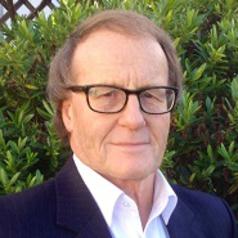
Professor of Human Geography, Te Herenga Waka — Victoria University of Wellington I am an urban geographer with the following research interests: The geography of happiness - the impact of place on subjective well-being. I begin with the observation that objective and subjective measures of local well-being are only weakly correlated and the questions this raises about the appropriate mix of wellbeing measures being developed to guide policy at both the national and local level. My empirical work is focusing the way we can measure the independent effect of people's place of residence (at various scales) on their subjective wellbeing, both 'globally' (overall satisfaction) and over a variety of 'domains' (satisfaction in particular spheres of life); Patterns of internal migration within and between urban areas. Of recent concern has been the extent to which the geographical pattern of flows of migrants are consistent with what we know about the micro motives of migrants themselves and how inferring micro motives from macro flows alone can be quite misleading. Another theme concerns the pattern migration between neighbourhoods sorted by levels of deprivation. The central question here is the extent to which residence in poor areas can inhibit migration up the neighbourhood hierarchy; The geography of the housing market. Of contemporary interest are the distributional effects of changing relationship between the demographic underpinnings of effective demand and their impact on tenure choice and residential location patterns, and; Local labour markets. Here I continue to be concerned with the way cities are organised to match the competing as well as complementary demands of labour and capital. My focus on labour market geography examines the uneven way in which firms and labour interact spatially to clear local labour markets and the possible distributional implications of the underlying geography of the labour market. I also have a long-standing interest in geovisualisation.
Commissioning Editor, Science, Technology and Business Paul is a journalist and editor with experience in print, radio, television and podcasting. He wrote about technology and business before joining BBC News as a science reporter. In that role, he covered everything from climate change and space launches to the search for the Higgs Boson. He later became the science editor for the BBC News website, working on breaking stories, features and special projects.
Affiliate Professor of Microbiology, University of Washington As a seasoned scientist, serving as a Principal Investigator and Full Professor, I bring a comprehensive interdisciplinary expertise encompassing critical thinking, problem-solving, innovative discoveries, scientist training, and adept leadership in collaborative endeavors.
Professor of Radiology, Boston University Practicing radiologist specializing in all aspects of breast imaging including screening, diagnostic evaluation and image guided intervention. Clinical researcher focusing on evaluation of new imaging modalities in the early detection, diagnosis and treatment of breast cancer with specific interests in MRI, digital breast tomosynthesis, contrast-enhanced mammography, and artificial intelligence. Medical educator developing and assessing curricula pertinent to medical student and resident education, with particular focus on professionalism, communication skills, healthcare economics, healthcare disparities, arts & wellness, and peer observation/teaching.