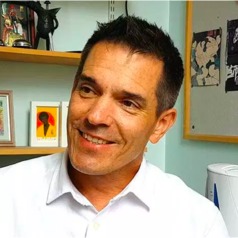
Professor of Cultural Studies, Cardiff University BA, English; MA, Cultural Studies; PhD, Cultural Studies (cultural theory, political theory, deconstruction). Author of many books on cultural theory, popular culture, film and martial arts; founder and director of The Martial Arts Studies Research Network, and co-editor of the journal Martial Arts Studies. Most recent book: The Invention of Martial Arts: Popular Culture Between Asia and America (Oxford University Press, 2021).
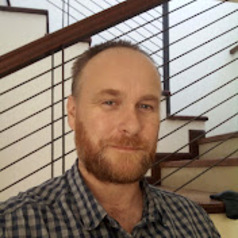
Visiting Researcher in Medical Sociology, Newcastle University Peter Steggals is a UK-based Sociologist affiliated with Newcastle University. He focuses on the sociocultural and political dimensions of mental distress and disorder. He uses a broadly trans-disciplinary approach drawing on social psychology and anthropology, as well as cultural sociology and social theory, to analyse the semiotic dimension of psychosocial patterns of psychopathology and interpret them in their sociocultural, historical and political context. After working in Forensic Psychology for the Prison Service and acting as a suicide and self-harm risk assessor, Steggals decided to research nonsuicidal self-injury in the wider population and from a sociological perspective. He secured an ESRC 1+3 grant and pursued an MA and PhD on this topic, eventually publishing his thesis as 'Making Sense of Self-Harm: The Cultural Meaning and Social Context of Nonsuicidal Self-Injury' (Palgrave Macmillan, 2015). Steggals is currently working on a second book that applies the approach he has developed for self-injury to the whole range of psychosocial psychopathology. This is due to be published by Routledge in 2025.
Lecturer in Psychology, University of Stirling I am a health psychologist by training and have many years of research experience in applied health and health services research. My research aims to help people make better decisions about their healthcare and actively manage their health and illness by engaging in healthy behaviours. It draws on the knowledge from psychological theories underpinning human behaviour and decision making, applied to improve health and healthcare delivery. I am an inter-disciplinary and mixed methods researcher, equally comfortable with qualitative and quantitative methodology. I joined the Division of Psychology, in FNS at Stirling in June 2021. Prior to this, I spent nearly 6 years as a lecturer in the Faculty of Health Sciences and Sport, teaching several aspects of Health Psychology (e.g. health behaviour change, clinical and shared decision making), and a wide range of research methods to nurses, paramedics and allied health professionals. Within Psychology, I lead the third year undergraduate module Clinical and Health Psychology, along with contributing to teaching on final year electives, MSc Health Psychology and UG, PG and doctoral supervision. I am also the convener and University representative for the Health, Families, Relationships and Demographic Change Pathway for ESRC's Doctoral Training Pathway.
Associate Professor of Atmospheric and Ocean Sciences, University of Colorado Boulder Pedro DiNezio, Ph.D., is an Associate Professor of Atmospheric and Ocean Sciences. DiNezio studies dynamics, predictability, and impacts of global climate fluctuations generated by the tropical oceans, such as El Niño and La Niña. DiNezio uses numerical models to investigate drivers of past environmental changes inferred from geological archives with the objective of improving predictions of future climate change.
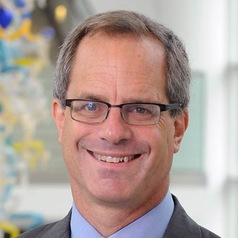
Professor of Law and Ethics, Georgia Institute of Technology Peter Swire is Professor of Law and Ethics at the Georgia Tech Scheller College of Business, and holds the J.Z. Liang Chair in the Georgia Tech School of Cybersecurity & Privacy. He has an appointment by courtesy with the School of Public Policy. He is Senior Counsel with Alston & Bird, LLP. In 2019, the Future of Privacy Forum honored him for Outstanding Academic Scholarship. In 2018, Swire was named an Andrew Carnegie Fellow for research on "Protecting Human Rights and National Security in the New Era of Data Nationalism." In 2015, the International Association of Privacy Professionals awarded him its Privacy Leadership Award. In 2013, he served as one of five members of President Obama's Review Group on Intelligence and Communications Technology. Prior to that, he was co-chair of the global Do Not Track process for the World Wide Web Consortium. He is Senior Fellow with the Future of Privacy Forum and has been a member of the National Academies' Forum on Cyber-Resiliency. Under President Clinton, Swire was the Chief Counselor for Privacy, in the U.S. Office of Management and Budget. He was the first person to have U.S. government-wide responsibility for privacy policy. In that role, his activities included being White House coordinator for the HIPAA medical privacy rule, chairing a White House task force on how to update wiretap laws for the Internet age, and helping negotiate the U.S.-E.U. Safe Harbor agreement for trans-border data flows. Under President Obama, he served as Special Assistant to the President for Economic Policy. Swire is author of seven books and numerous scholarly papers. He has testified often before the Congress, and been quoted regularly in the press. Swire graduated from Princeton University, summa cum laude, and the Yale Law School, where he was an editor of the Yale Law Journal.
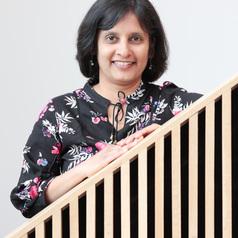
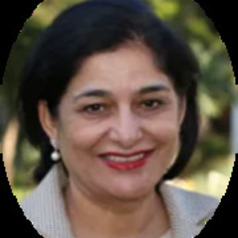
Professor of Crop Biotechnology, The University of Melbourne Professor Bhalla is a plant biotechnologist with an international reputation in plant reproduction, plant development biology, genetic engineering and tissue culture of crop plants. Her research has focused on discovering new knowledge that has strategic applications. She developed world’s first hypoallergenic grass and led to the discovery of a genetic ‘switch’ that can be turned on or off to alter the development of male gametic cells in plants bringing the understanding of plant reproduction to a whole new level.