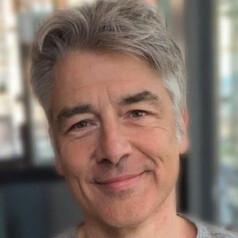
Professor of French Studies, University of Warwick I teach postcolonial literatures and have published on the former Belgian Congo, the DRC and the Congolese philosopher VY Mudimbe. I am now exploring extractivism (and mining) in an African context and via figures such as Sammy Baloji, Fiston Mwanza Mujila and Sinzo Aanza. Recent publications include: Fraiture, Pierre-Philippe. (2024). Digging holes, excavating the present, mining the future: extractivism, time, and memory in Fiston Mwanza Mujila’s and Sammy Baloji’s works. Modern & Contemporary France, 32(1), 139–159. https://doi.org/10.1080/09639489.2023.2244906 Fraiture, Pierre-Philippe, Congolese Cultural Production in Africa and the World, French Studies, Volume 78, Issue 1, January 2024, Pages 101–127, https://doi.org/10.1093/fs/knad236 Fraiture, Pierre-Philippe, Langues congolaises et littérature africaine: entretien avec Richard Ali A Mutu, French Studies, Volume 78, Issue 1, January 2024, Pages 128–137, https://doi.org/10.1093/fs/knad235 Fraiture, Pierre-Philippe, Unfinished Histories: Empire and Postcolonial Resonance in Central Africa and Belgium, 2022, Leuven University Press, 426pp. https://library.oapen.org/handle/20.500.12657/59183
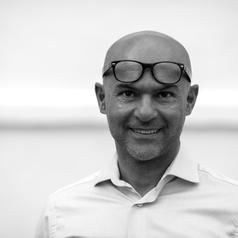
Researcher and Consultant, Psychiatry, Lund University Pouya Movahed Rad's research began with a focus on the capsaicin receptor (the active compound in chili pepper) on sensory neurons, advancing our understanding of pain and inflammation by studying endogenous substances as ligands. He also investigated how garlic compounds interact with TRPA1 channels on sensory neurons, providing insights into the evolutionary strategies of plants affecting sensory pathways. As a postdoctoral researcher, Movahed Rad led the Swedish multicenter study (KetECT), evaluating the effectiveness of electroconvulsive therapy (ECT) and IV ketamine for hospitalized patients with depression. This work, involving over 200 patients, garnered media and scientific attention, contributing to the development of new guidelines. Moreover, Movahed Rad conducted research in pediatric psychiatry, focusing on the safety and efficacy of ECT in children and adolescents. His involvement in studies on ECT during pregnancy demonstrates his commitment to safe psychiatric treatment across all patient groups. He is now the national coordinating principal investigator for a psilocybin depression study, supported by Compass Pathway. Seeking to advance psychiatry, Movahed Rad is pursuing funding for academically sponsored psilocybin research. His commitment to innovative psychiatric research and clinical work, particularly in treating challenging cases at the brain stimulation unit in Lund's psychiatric clinic, aims to enhance patient outcomes
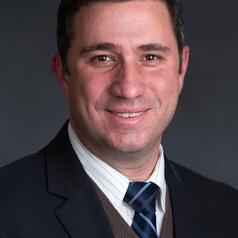
Adjunct Assistant Professor of History, Quinnipiac University Philip Goduti, Jr. earned his BA in history from Quinnipiac University in 1997 with a minor in English. He went on to earn a Master of Arts in History from Providence College in 1998 meeting his wife Alyssa. Goduti moved to Hamden, CT to work at Quinnipiac University full time as a Residence Hall Director. It was during that time he started teaching history for the university, eventually going on to earn another Master of Arts in history at the University of Connecticut in 2005. His master’s thesis, directed by Dr. Frank Costigliola, was entitled “To Khrushchev, With Love: Kennedy’s Soviet Policy, 1961” and would eventually serve for the first six chapters of his book Kennedy’s Kitchen Cabinet and the Pursuit of Peace: The Shaping of American Foreign Policy, 1961-1963, published by McFarland and Co., Inc. in 2009. Goduti continues to teach at Quinnipiac University and also teaches history full-time at Somers High School where he was the 2017 Somers Public Schools Teacher of the Year and the 2020 Daughters of the American Revolution Connecticut Outstanding Teacher of American History. Goduti's second book, Robert F. Kennedy and the Shaping of Civil Rights, 1960-1964, was published in 2013 by McFarland and Co., Inc. He has also contributed to American National Biography Online, which is published by Oxford University Press. His most recent book, RFK and MLK: Visions of Hope, 1963-1968, was published in 2017 by McFarland and Co., Inc. Goduti recently finished his Ph.D. in history from the University of Connecticut. Under the direction of Dr. Frank Costigliola, his dissertation, titled "'The Durability of a Kennedy': How Emotional Communities Contributed to John F. Kennedy's Core Beliefs, 1930-1963," examines the evolution of John F. Kennedy's core beliefs as he inhabited four emotional communities throughout his life that included his family, education at Choate and Harvard, the Navy, and his time in public office. It investigates how those core beliefs helped shape Kennedy's foreign policy decisions while President of the United States.
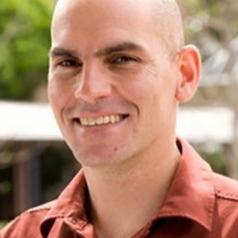
Associate professor of oceanography, University of Tasmania Paul specialises in ocean climate modelling. He uses geophysical fluid dynamics to understand the ocean’s role in global climate.
Research Fellow, Ecology and Conservation, University of Exeter Peter Kennedy is a behavioural ecologist interested in how insect behaviour affects their survival in a heterogenous and changing environment. His research has focussed on beneficial insects, both predatory and pollinating insects, the ecosystem services they provide, and the interaction of multiple stressors - whether natural or man-made - on their survival. To this end, he utilises a range of technologies to study the movements and foraging patterns of insects. Since 2017, this has included the invasive Asian hornet, which has enabled authorities to track hornets to locate their nests. He has contributed to international forums in developing strategies to limit the spread of this invasive species.
Assistant Professor of Biomedical Engineering, Kennesaw State University Dr. Paul (Seung Yup) Lee is an Assistant Professor of Biomedical Engineering in the Department of Electrical and Computer Engineering at Kennesaw State University. At KSU, he is leading Translational Biomedical Optical Laboratory that aims to develop the next generation of optical imaging and spectroscopic technologies for clinical diagnostics and health monitoring. Dr. Lee received his B.S. degree in Electrical Engineering from Seoul National University (SNU) in 2004, his M.S. degree in Biomedical Engineering from SNU, in 2006, and a Ph.D. degree in Biomedical Engineering from the University of Michigan (UM), Ann Arbor in 2015. From 2006 to 2010, he was a research engineer in Korea Electrotechnology Research Institutes. From 2016 to 2021, he was a postdoctoral fellow in the Wallace H. Coulter Department of Biomedical Engineering at Georgia Tech (GT) and Emory University. He has received several fellowships and awards including American Heart Association Postdoctoral Fellowship (2019), Best Scientific Poster Award at the Southeastern Pediatric Conference (2018), Best Oral Presentation Award at the GT Postdoc Symposium (2018), Petit Scholar Mentorship (2017) at GT and Rackham Centennial Fellowship at the UM (2013).