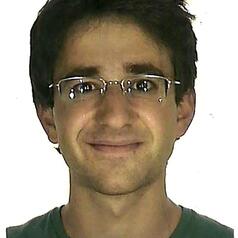
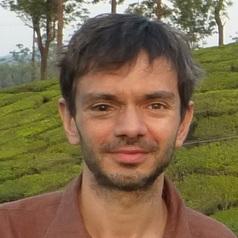
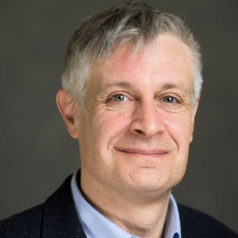
Senior Research Scientist in quantitative ecology, CSIRO Peter has a 35-year career undertaking applied research in the fields of animal populations, animal disease, invasive plants and pests, human diseases and much more ... He has a PhD in Applied Ecology and Masters of Applied Science from the University of Canberra.
Associate Professor of Intercultural Communications (Tourism and Languages), Edinburgh Napier University Phiona Stanley has degrees from the University of Edinburgh (MA Honours in Politics, 1994), the University of Sydney (MEd, 2006), and Monash University (PhD, 2010); in addition, she has vocational qualifications in TESOL --RSA Cert (1993) and RSA Dip (1997)-- and the DELE Superiór in Spanish (2002). She currently works as Associate Professor of Intercultural Business Communication at Edinburgh Napier University in Scotland. Phiona's academic publishing includes five Routledge books on topics including: Westerners teaching English in China, backpackers learning Spanish and engaging in volunteer work/staying in homestays in Latin America, and the gendered cultural pressures women experience to 'fit in' socially, even now. Methodologically, she has contributed to autoethnography, editing two books on the research method's intersections with culture/the intercultural. She has also published around 40 peer-reviewed journal articles and book chapters. Thematically, Phiona's work is all about mobilities and about the 'intercultural' in its broadest sense: complex comings and goings of humans, non-humans, and objects in specific times and places. Within a broad focus on how cultures operate, she is particularly interested in gender, embodiment, and other normative 'rules', and in the tensions between conventionality and singularity. This has required an ambitious traversing of disciplinary boundaries and innovative cross-pollination of theory.
Tisch College Associate Dean for Academic Affairs and Lincoln Filene Professor, Tufts University Peter Levine is the Academic Associate Dean and Lincoln Filene Professor of Citizenship & Public Affairs in Tufts University’s Jonathan Tisch College of Citizenship and Public Service. He has secondary appointments in the Tufts Political Science Department, Philosophy Department, and Clinical and Translational Sciences Institute. He was the founding deputy director (2001-6) and then the second director (2006-15) of Tisch College’s CIRCLE, The Center for Information and Research on Civic Learning and Engagement. Levine graduated from Yale in 1989 with a degree in philosophy. He studied philosophy at Oxford on a Rhodes Scholarship, receiving his doctorate in 1992. From 1991 until 1993, he was a research associate at Common Cause. From 1993-2008, he was a member of the Institute for Philosophy & Public Policy in the University of Maryland’s School of Public Policy. During the late 1990s, he was also Deputy Director of the National Commission on Civic Renewal. Levine is the author of What Should We Do? A Theory of Civic Life (Oxford University Press, 2022), six other scholarly books on philosophy and politics, and a novel. He has served on the boards or steering committees of AmericaSpeaks, Street Law Inc., the Newspaper Association of America Foundation, the Campaign for the Civic Mission of Schools, Discovering Justice, the Kettering Foundation, the American Bar Association Committee’s for Public Education, Everyday Democracy, and the Deliberative Democracy Consortium.
Clinical Assistant Professor and Director of Digital Academic Initiatives (University of Michigan Law School) | Visiting Lecturer (University of Chicago Law School) | Visiting Lecturer (UCLA School of Law), University of Michigan Patrick Barry is a clinical assistant professor of law and the director of digital academic initiatives at the University of Michigan Law School and a visiting lecturer at the University of Chicago Law School and the UCLA School of Law. His teaching and research focus on creating a new vocabulary to talk about advocacy, especially in the age of artificial intelligence. Among his teaching awards are the Wayne Booth Prize for Excellence in Teaching, the Provost’s Innovation in Teaching Prize, and the Outstanding Research Mentor Award. In addition, he was recently selected as a faculty fellow by the Office of Diversity, Equity, and Inclusion’s Center for Educational Outreach and a Public Engagement Fellow by the Center for Academic Innovation. An All-American soccer player in college, Barry focused on the theatrical aspects of Supreme Court confirmation hearings as a PhD student in English at the University of Michigan. During that time, he also worked with other Michigan faculty to create Clinnect, a global network of legal clinics devoted to combating human trafficking. Barry is the author of ten books—including Good with Words: Writing and Editing, Good with Words: Speaking and Presenting, Feedback Loops: How to Give and Receive High-Quality Feedback, and The Syntax of Sports. He has also created several online courses for the educational platforms Coursera and Michigan Online and regularly collaborates with the Human Trafficking Clinic, the Child Welfare Appellate Clinic, and the Social Enterprise Clinic, as well as with various law firms, government agencies, and nonprofit organizations. He is a member of the California Bar.