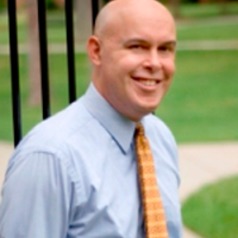
Professor of U.S. History, High Point University Paul Ringel is an award-winning associate professor of history at High Point University in High Point, North Carolina. He teaches a variety of courses on the 19th and 20th-century United States, with a particular focus on race, sports, and popular culture. He was named High Point University Service Learning Professor of the Year for 2014-2015. His book, Commercializing Childhood: Children’s Magazines, Urban Gentility, and the Ideal of the American Child, won the Children's Literature Association's 2015 Honor Book Award for "outstanding scholarship in the field of children's literature," and is available now. He has written articles for a variety of outlets, including Time, The Atlantic, and Smithsonian magazines, as well as scholarly journals such as The Public Historian and NINE: A Journal of Baseball History and Culture. As a public historian, he has worked as a consultant for the PBS television program The Time Warp Trio and leads the William Penn Project, a service learning initiative through which High Point University students are researching and building a website on the history of the city’s all-black high school from 1892 through 1968. Current projects include a biography of Brad Lilley, a Black Panther based in High Point, NC; a monograph on Boston’s Royal Rooters, an early group of celebrity sports fans; and an update of the 1970s television program Schoolhouse Rock.
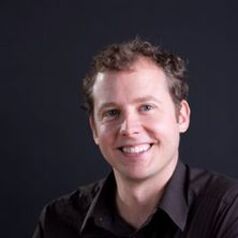
Professor, School of Health and Rehabilitation Sciences, The University of Queensland My research concerns i) understanding causes and impacts of hearing impairment, particularly in the context of multimorbidity in older age, ii) prevention and treatment of hearing impairment, and iii) hearing service development and evaluation. My research involves epidemiological modelling with population data sets, clinical trials and hearing health policy. I have authored over 130 publications in peer reviewed journals and books, and I frequently present invited and keynote addresses at international conferences. I have received the British Society of Audiology's TS Littler prize for services to audiology and a prestigious US-UK Fulbright award.
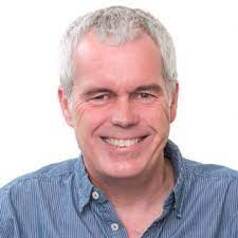
Emeritus Fellow, Bioscience, Quadram Institute I graduated with a degree in Biophysics from the University of East Anglia in 1985, and began my research career at the Institute of Food Research in the same year, working on the dielectric spectroscopy of protein systems. Since then my main research interest has been relating to the interfacial properties of surface-active food components with functional properties of foods. My initial research was to determine how molecular structure and properties influence interfacial behaviour, which in turn controls bulk functional behaviour (i.e. foam and emulsion stability). My main interest was to understand how proteins adsorb at interfaces, how they interact with surfactants and emulsifiers, what structural changes take place and how this affects interfacial tension, interfacial rheology, adsorbed layer dynamics and subsequent foam and emulsion properties. My research focus has gradually changed over the years, and now the main aims of my research are to understand how the microstructure of food changes during digestion and the impact of this on health. I am interested in how the molecular and interfacial properties influence the fundamental mechanisms that control the texture breakdown and digestion of food emulsion systems in order to develop strategies for improving the nutritional impact of dietary fats. This includes investigating the key interfacial and colloidal mechanisms underpinning the digestion and absorption of dietary fat, and how this may impact on physiological responses such as satiety, serum lipids and cholesterol. I also have a broader interest in how the different length scales of structure in food influence the way it is digested. I firmly believe that the structure of the food we eat is the single most important factor determining the health outcomes of our diet. By understanding the relationship between food structure and health, we can understand how foods can be designed to control the rate and extent of digestion and delivery of beneficial compounds to the microbiota. Controlling the kinetics of digestion and fermentation can lead to positive health benefits such as improved glucose, lipid and insulin response and promotion of satiety. These will ultimately lead to improved outcomes in individuals in terms of obesity, type 2 diabetes and related metabolic conditions. I have published over 135 papers (h-index = 40, average citations = 33 per paper) and presented approximately 15 invited lectures at international meetings. I am a member of the Food Group Committee of the Royal Society of Chemistry. I am on the editorial board of Food Hydrocolloids and Colloids and Interfaces. I am an Honorary Professor in the School of Pharmacy at the University of East Anglia.
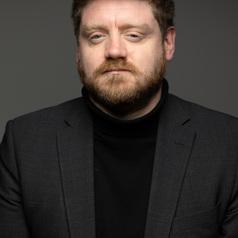
Postdoctoral researcher and lecturer, University of St.Gallen Dr. Philip Di Salvo is a postdoctoral researcher in the School of Humanities and Social Sciences at the University of St. Gallen (HSG) Switzerland. Philip’s main research interests are investigative journalism, Internet surveillance, the relationship between journalism and hacking, and black box technologies. At HSG, Philip is involved in the Human Error Project, dealing with the fallacies of algorithms in reading humans. Previously, he was a Visiting Fellow at the London School of Economics and Political Science (LSE)’s Department of Media and Communications (2021-2022) and he held different research and teaching positions at Università della Svizzera italiana (USI)’s Institute of Media and Journalism (2012-2021). Philip received his PhD in Communication Sciences from USI with a dissertation about the adoption of encrypted whistleblowing platforms in journalism in the summer of 2018. Philip has also worked as a Lecturer at NABA - New Academy of Fine Arts in Milan, Italy (2018-2020). As a freelance journalist, Philip has written for Wired, Motherboard/Vice, Esquire and other publications covering the social impact of technology and hosts a weekly radio show on technology on Milan-based Radio Raheem. Philip has authored two books: "Leaks. Whistleblowing e hacking nell’età senza segreti" (LUISS University Press, Rome, 2019) and "Digital Whistleblowing Platforms in Journalism. Encrypting Leaks" (Palgrave Macmillan, London, 2020). He’s also a member of the board of DIG Festival, an international investigative journalism event based in Italy.Dr. Philip Di Salvo is a postdoctoral researcher in the School of Humanities and Social Sciences at the University of St. Gallen (HSG) Switzerland. Philip’s main research interests are investigative journalism, Internet surveillance, the relationship between journalism and hacking, and black box technologies. At HSG, Philip is involved in the Human Error Project, dealing with the fallacies of algorithms in reading humans. Previously, he was a Visiting Fellow at the London School of Economics and Political Science (LSE)’s Department of Media and Communications (2021-2022) and he held different research and teaching positions at Università della Svizzera italiana (USI)’s Institute of Media and Journalism (2012-2021). Philip received his PhD in Communication Sciences from USI with a dissertation about the adoption of encrypted whistleblowing platforms in journalism in the summer of 2018. Philip has also worked as a Lecturer at NABA - New Academy of Fine Arts in Milan, Italy (2018-2020). As a freelance journalist, Philip has written for Wired, Motherboard/Vice, Esquire and other publications covering the social impact of technology and hosts a weekly radio show on technology on Milan-based Radio Raheem. Philip has authored two books: "Leaks. Whistleblowing e hacking nell’età senza segreti" (LUISS University Press, Rome, 2019) and "Digital Whistleblowing Platforms in Journalism. Encrypting Leaks" (Palgrave Macmillan, London, 2020). He’s also a member of the board of DIG Festival, an international investigative journalism event based in Italy.
Professor of English, Faculty of Humanities and Social Sciences, Athabasca University I am a professor of English at Athabasca University, where I am studying representations of sleep in Canada. My book Restless in Sleep Country: Imagination and the Cultural Politics of Sleep is due out from McGill-Queen's University Press in May 2024. My previous book, Nature’s Broken Clocks: Reimagining Time in the Face of the Environmental Crisis (U Regina Press, 2020), was a finalist for the Alanna Bondar Memorial Book Prize for the Environmental Humanities and for the ASLE-UKI Book Prize for Ecological Creative Writing. My first book, Timing Canada: The Shifting Politics of Time in Canadian Literary Culture (McGill-Queen's UP, 2015), was a finalist for the Gabrielle Roy Prize.