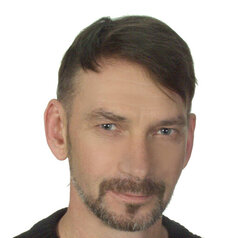
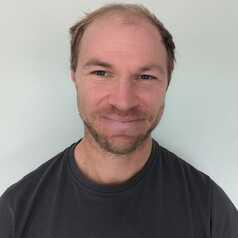
Associate Professor of Archaeology, Taras Shevchenko National University of Kyiv I, Pavlo Shydlovskyi, born in 1974, am a graduate of the Historical Faculty of Taras Shevchenko National University of Kyiv, specializing in History and Archaeology (1997). I have worked at the Institute of Archaeology of the National Academy of Sciences of Ukraine, the Kyiv Regional Center for the Preservation of Monuments of History, Archaeology, and Art, and the Scientific Research Institute of Monument Protection Studies under the Ministry of Culture of Ukraine. Since 2002, I have been teaching courses in prehistoric archaeology and the preservation of archaeological heritage at the Department of Archaeology and Museology of Taras Shevchenko National University of Kyiv. In 2008, I defended my dissertation titled "Cultural Adaptation of Early Hunters in Eastern Europe (18-10 thousand years ago)" to obtain the academic degree of Candidate of Historical Sciences in the specialty of World History. In 2014, I was awarded the academic title of Associate Professor. I lead the expedition of the Department, focusing on the study of prehistoric sites in the Middle Dnieper region. I am the founder of the NGO Center for Paleoethnological Research and the scientific editor of VITA ANTIQUA publishing. Since the beginning of the large-scale aggression by the Russian Federation in February 2022, I participated in the Territorial Defense Service of Kaniv District (March-May 2022) and became an employee of the Ukrainian State Institute for Cultural Heritage, concurrently, to implement the monitoring of archaeological sites during the war in Ukraine. Since January 2024, I have been elected as the Head of the Department of Archaeology and Museum Studies at Taras Shevchenko National University of Kyiv through a competitive selection process.
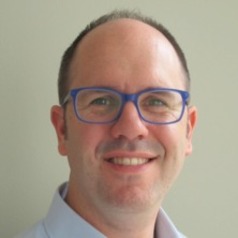
Conjoint Professor in Respiratory and Sleep Medicine, Child Health Research Centre, The University of Queensland Conjoint Professor Paul Robinson is the Deputy Director of the Children's Health Environment Program within the Child Health Research Centre (CHRC), and Senior Staff Specialist in Respiratory and Sleep Medicine at the Queensland Children's Hospital. His research program performs translational research outlining the role of peripheral airway function tests in early lung disease detection and ongoing monitoring of established disease. He has led the development and standardisation of novel measures of lung function across the entire age range from infancy onwards, facilitating the development of commercial equipment available for widespread use. His research focuses on defining the clinical utility of two specific peripheral airway function tests (Multiple breath washout, MBW, and oscillometry) in important obstructive lung diseases (e.g., asthma, cystic fibrosis, and post bone marrow transplant pulmonary graft vs host disease) and in understanding the impacts of environmental exposures. Structure-function relationships have been explored using state-of-the-art imaging techniques, with the aim of also developing new strategies to reduce any radiation exposure associated with these to advance incorporation into clinical care (e.g., ultra-low dose CT). These novel lung function tools are used not only in the hospital setting but also in the school and home setting, enabling the successful development of a parent-supervised remote monitoring strategy for asthma which has been shown to reflect clinically meaningful outcomes missed by conventional approaches. In collaboration with industry, this strategy is now being employed in a series of research projects. Involvement in longitudinal birth cohorts has outlined the early lung function trajectories in health, and the identification of risk factors affecting normal lung development and contributing to the early development of asthma. Studies investigating environmental health have highlighted the adverse effects of ultrafine particle air pollution. Professor Robinson's standing as an international expert, both in terms of clinical and research experience, has led to broader leadership roles across national and international levels.
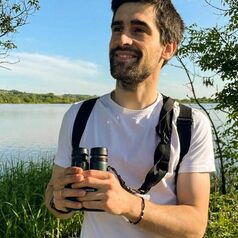
Research Associate in ecology, evolution and behaviour, University of Glasgow Evolutionary biologist interested in animal cooperation and how animals adapt to, and are affected by, anthropogenic habitat change.
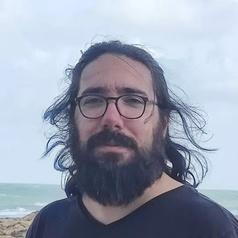
Lecturer in International Relations, University of Portsmouth I am a scholar dedicated to critical studies in International Relations, Global Political Economy, and Historical Sociology. My teaching and research explore many interdisciplinary dialogues between these three areas, with an empirical emphasis on Latin American, and specifically Brazilian, experiences of colonisation, state-formation and development. I have degrees in Social Sciences (UERJ) and Law (UFRJ), an MA in International Relations at Sussex University, and a PhD in International Relations titled "The Peculiarity of Brazilian State-Formation in a Geopolitical Context: The Challenge of Eurocentrism in International Relations and Political Marxism". My doctoral research was funded by CNPq, a funding agency under Brazil's Ministry of Science, Technology and Innovation. Outside of academia, I have worked with legal and political consultants of trade unions in the oil sector in Brazil.
Research Fellow, Astronomy, University of Southampton I research the most extreme events in the Universe: exploding stars (supernovae) and giant flares from super-massive black holes. I am an expert in using a particular type of exploding star, known as a "type Ia supernova", to measure distances in the Universe. We can use these to infer the expansion history of the Universe and understand what it is made of. In 2023 I led the discovery and analysis of the largest cosmic explosion ever detected, AT2021lwx, which was 10 times brighter than any known exploding star. We believe that the extreme luminosity was caused by huge amounts of gas from a giant cloud falling onto a super-massive black hole.
Professor of Management and the Futures of Work at the Essex School of Business, University of Essex I am an internationally regarded scholar writing about technology and work, with a focus on quantified work and worker struggle. I write about artificial intelligence and its discontents; occupational safety and health and digitalisation; psychosocial pressures and the limits of algorithmic management.