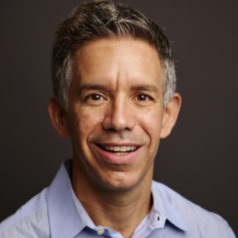
Lecturer in Strategy and Innovation, Boston University Patrick Abouchalache is a lecturer in Strategy and Innovation and Family Business at Boston University's Questrom School of Business, and founded The PEGA Group, a Boston- and New York-based operating, investment and advisory firm.
Lecturer in Earth Sciences, UCL I am a Lecturer in Earth Sciences at UCL. My research focuses on solar geoengineering, a set of proposals to increase the amount of light that the Earth reflects to lower its temperature. Through my research, I seek to understand the potential risks and benefits of solar geoengineering and to explore its broader implications. My work has two broad themes: 1) Evaluating the climate response to solar geoengineering. Using state of the art Earth system models, I analyse the climate response to stratospheric aerosol geoengineering and other solar geoengineering proposals. I am particularly interested in finding ways to understand and effectively visualise this climate response. 2) Considering the broader implications of solar geoengineering. Collaborating with colleagues from a range of disciplines, I seek to draw out the implications of the scientific findings on solar geoengineering for the broader questions that this proposal raises. In my interdisciplinary work I seek to connect the scientific findings on solar geoengineering to the broader questions that this proposal to control the climate raises. I work with ethicists, economists and lawyers to better understand the potential harms and benefits of solar geoengineering and how they could be addressed through compensation. I also work to understand the implications that the technical requirements of solar geoengineering would have on its governance.
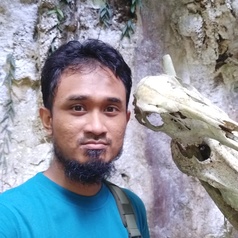
Postdoctoral research fellow, Mochtar Riady Institute for Nanotechnology I am a post-doctoral research fellow at the Mochtar Riady Institute for Nanotechnology, Tangerang, Indonesia, with research interests in human genetics, population genetics, and evolution.
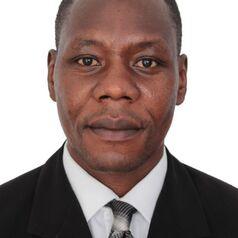
Research Fellow, Stockholm Environment Institute Philip Osano is Africa Centre Director, Stockholm Environment Institute. Philip leads SEI’s research, policy engagement, and capacity strengthening on environment and development in Africa. Prior to joining SEI, he was a Technical Consultant at the African Union Commission supporting the development of the Implementation Strategy and Roadmap for the Comprehensive African Agricultural Development Programme (CAADP). He has interest in environmental policy, development, and international affairs with over 20 years of experience in applied research, project coordination, policy analysis, and university teaching on diverse topics including biodiversity conservation, climate change, agricultural policy, water and land management, and integrated environmental planning. Philip has published and co-authored more than 50 publications. A Jean Sauvé Fellow in Public Leadership, he holds a PhD in Geography from McGill University in Canada, an MSc in Conservation Biology from the University of Cape Town in South Africa, and a BSc in Environmental Science from Egerton University in Kenya.
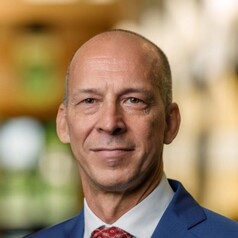
Professor of Global Affairs, University of Notre Dame Paul Winters is associate dean for academic affairs and the Keough-Hesburgh Professor of Global Affairs in the Keough School of Global Affairs at the University of Notre Dame. Winters’s research and teaching focus on rural poverty and food insecurity and the evaluation of policies and programs designed to address these issues. He has published numerous journal articles and working papers in the areas of rural poverty and food insecurity, rural development, small-scale agriculture, inclusive and sustainable food systems, agricultural data, impact evaluation, migration and social protection programs. He holds a PhD in agricultural and resource economics from the University of California at Berkeley, an MA in economics from the University of California at San Diego and a BA in non-Western studies from the University of San Diego.
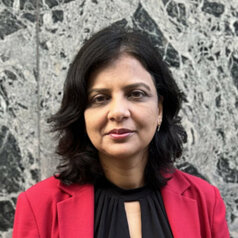
Professor of Infrastructure Engineering and International Development, UCL Professor Parikh has expertise in infrastructure (water, sanitation and energy) for resource constrained settings such as slums and rural communities in Africa and Asia. She is also leading research on developing evidence base to link SDG's and infrastructure. She is Director of Bartlett's School of Sustainable Construction and Engineering for International Development Research Centre. She provides strategic advise on links between Infrastructure and climate change and SDGs in emerging economies. She is a Trustee with Institution of Civil Engineers, Engineers Against Poverty and Happold Foundation. She was recognised as one of the top 50 women in engineering in UK in 2022 and one of the top academics for supporting policy making by Apolitical.