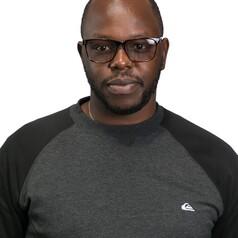
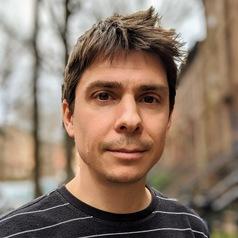
Post-doctoral research fellow, University of KwaZulu-Natal Patrick Nyamaruze recently earned his PhD from the University of KwaZulu Natal. He is currently completing a post-doctoral fellowship at HEARD. His areas of specialization include adolescent sexual and reproductive health, gender and sexual diversity, mental health and health promotion research.
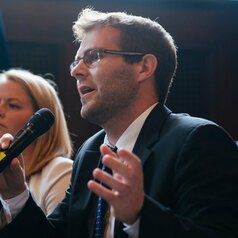
Research Fellow, University of Zurich Patryk I. Labuda is a Swiss National Science Foundation Fellow at the University of Zurich. A former practitioner with experience in central and north Africa, Patryk draws on interdisciplinary methods to study how international institutions interpret legal norms to achieve public policy aims. He specialises in international (criminal) law, human rights, and peace and security studies. He has 14 years of work and research experience in central and north Africa, with a regional focus on the politics of the Democratic Republic of Congo, Central African Republic, Sudan and South Sudan. His first book ‘International Criminal Tribunals and Domestic Accountability: In the Court's Shadow' (OUP) was published in 2023. Patryk holds a PhD from the Geneva Graduate Institute of International and Development Studies.
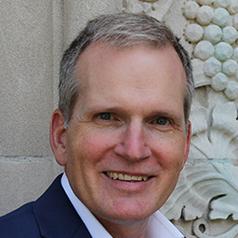
Professor of Employment Relations; Director of Human Resources and Labor Relations, Michigan State University Peter Berg is professor of employment relations and Director of the School of Human Resources and Labor Relations at Michigan State University. His research interests include work-life flexibility policies and practices, the implications of an aging workforce for organizations, and international comparisons of working time. Professor Berg is the author of numerous publications in a variety of academic journals, including ILRReveiw, Human Relations, and Human Resource Management Review. He is also a co-author of the book Manufacturing Advantage: Why High Performance Work Systems Pay Off. Professor Berg has been a Fulbright Scholar and conducted research or presented his work in over 20 countries around the world. He has served as an executive board member of the Labor and Employment Relations Association (LERA) and as President of the Industry Studies Association. Professor Berg also serves on the editorial board of ILR Review, Work, Aging, and Retirement, and on the international advisory board of the British Journal of Industrial Relations.
Professor of Marine Science, Institute for Marine and Antarctic Studies, University of Tasmania After graduating with a PhD in Marine Microbial Ecology from the Queen’s University of Belfast (Ireland), I commenced my career as a postdoctoral researcher at Plymouth Marine Laboratory (UK) where I was a part of the seminal Joint Global Ocean Flux Study (JGOFS). This led to a four year postdoctoral position at the School of Oceanography (University of British Columbia, Canada), followed by an appointment as a Phytoplankton Ecologist with the National Institute of Water and Atmosphere (NIWA, New Zealand). In New Zealand, I established the NIWA Centre for Chemical and Physical Oceanography – based at the Chemistry Department, University of Otago, Dunedin. In 2013, I took up my current appointment as a Professor of Marine Biogeochemistry at the Institute for Marine and Antarctic Studies (IMAS), University of Tasmania (Australia). I currently lead an ecological project “Biological Responses” within the Ocean Carbon and Ecosystems programme of the Antarctic Climate and Ecosystems (ACE) Co-operative Research Centre (CRC).
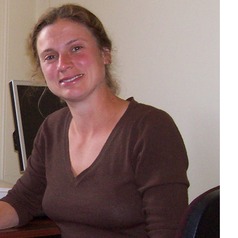
Reader in the Use and Design of Educational Space, Newcastle University Pam has a background in school teaching, but she has been researching educational environments for nearly two decades. She works with school communities to understand their use of their spaces, enabling her to develop an overview of the potential for school premises to support change and improvement. Her work, bridging architecture, education and visual mediation methods, is unusual and she has been invited to provide expert input into projects and discussions regionally, nationally and internationally levels. Outputs have included an influential review, The Impact of School Environments (2005), a book for school users (the Design of Learning Spaces, 2010) and an interdisciplinary edited collection, School Design Together (2015) about participatory design of school space. Her recent collaboration with the Council of Europe Development bank (CEB), Constructing Education (2021), proposes a framework to guide collaborative activities through planning and building educational premises so that design and use are in alignment. From 2019 to 2022, she led an EU-funded initiative, CoReD (https://www.ncl.ac.uk/cored/), which developed a suite of user-friendly tools and other resourcces that can be used by school communities to evaluate and improve their educational environments.
Associate Professor of Practice, Negotiation and Conflict Resolution, Columbia University Peter Dixon is an Associate Professor of Practice in Negotiation and Conflict Resolution at the School of Professional Studies at Columbia University. He received his PhD in sociology from the University of California, Berkeley in 2015. In his research, Dr. Dixon uses mixed methodologies to understand how local knowledge can influence transformative solutions toward peace and justice in conflict-affected communities. Currently, he is researching community-based transitional justice in Colombia and bottom-up approaches to public safety and restorative justice in urban America. He has received support for this work from foundations including the National Science Foundation, United States Institute of Peace, Inter-American Foundation, and Humanity United. His writing has been published in journals including the International Journal of Transitional Justice, the Journal of Human Rights Practice, and Law and Social Inquiry, and in a number of edited volumes. Dr. Dixon collaborates with diverse organizations in his work, always with the goal of making his research useful for addressing social problems and respectful of the communities who these problems ultimately affect. As a former evaluation specialist at the United Nations in New York and at the International Criminal Court in The Hague, he also continues to support international organizations on monitoring, evaluation and strategy. He serves on the Boards of the NGO Everyday Peace Indicators and the Davis Collaborative in Conflict Transformation at Middlebury College. He is also a Faculty Affiliate at the University of California Berkeley Possibility Lab and fellow of the Salzburg Seminar.