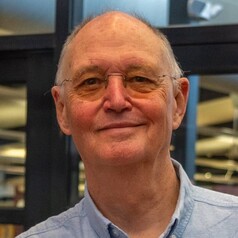
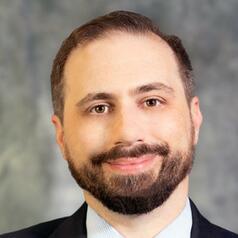
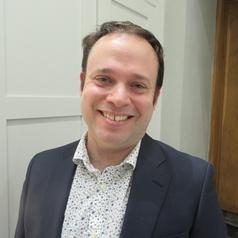
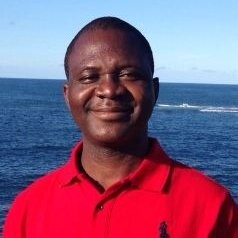
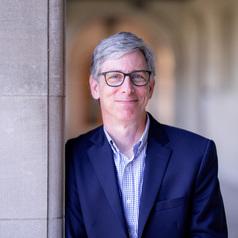
Professor, University of Notre Dame Australia I am a political anthropologist whose work for Aboriginal organisations since the early 1980s involves practical research and advice on issues of land use and distribution, community control of community development, and governance institutions at the local and regional levels. For two separate periods I was the Senior Anthropologist for the Kimberley Land Council, formulating anthropological and policy advice on local, national and international projects, as well as native title cases. From 2002 to 2012 I was a Research Fellow, and Senior Research Fellow, in Indigenous Regional Organisation, Governance and Public Policy at the Australian Institute of Aboriginal and Torres Strait Islander Studies. I concentrated my research on public policy approaches to Indigenous affairs. I have authored numerous scholarly articles and practical reports, and the book Belonging Together: Dealing with the Politics of Disenchantment in Australian Indigenous Policy (Aboriginal Studies Press, Canberra 2011). I am currently an Honorary Professor at the Crawford School for Public Policy (ANU), and a Professor at the Nulungu Research Institute, University of Notre Dame Australia, Broome. I led the ARC-funded project Reciprocal Accountability and Public Value in Aboriginal Organisations.
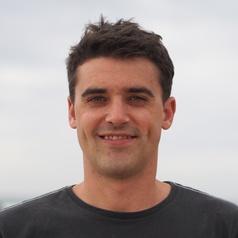
Associate Professor of Pharmacogenomics, University of Pittsburgh Dr. Philip Empey is the Associate Director for Pharmacogenomics of the Pitt/UPMC Institute for Precision Medicine and leads the PreCISE-Rx and Test2Learn teams to implement pharmacogenomics clinical, research, and educational initiatives. He also directs the University of Pittsburgh - Thermo Fisher Scientific Pharamcogenomics Center of Excellence which is deploying population scale preemptive pharmagenomics testing (to >150,000 patients) in western Pennsylvania. As a clinician-scientist in the Department of Pharmacy and Therapeutics, Dr. Empey conducts NIH-funded clinical and translational research aimed at understanding the mechanisms of the variability in drug response to improve medication-related outcomes in critically-ill patients. He received his PharmD from the University of Rhode Island and completed PGY1 and PGY2 residencies in Pharmacy Practice and Critical Care at the University of Kentucky. He earned a PhD in Clinical Pharmaceutical Sciences at the University of Kentucky before completing postdoctoral research training at the University of Pittsburgh.
Professor of Human Geography, Aberystwyth University Peter Merriman is a human geographer specialising in cultural and historical geography, heritage, and mobility and transport studies. He has written widely on geographies of mobility, roads and driving, coastal heritage, and theoretical approaches to space and place. Until 2023 he lead a major project on ports, coastal communities and trans-oceanic social and cultural connectivity. Pete joined Aberystwyth as a lecturer in 2005 and was awarded a personal chair in 2014. He completed his BA and PhD degrees at the University of Nottingham, and was a Lecturer at The University of Reading from 2000 to 2005. He is co-Director of the University's Centre for Transport and Mobility (CeTraM). Pete is an Honorary Member of the Centre for Advanced Studies in Mobility and the Humanities at the University of Padua (Italy), a member of the AHRC Peer Review College and UKRI Talent Peer Review College, and has served on a range of national and international grant awarding panels. He is Editor of the 'Routledge Research in Culture, Space and Identity' Book Series, and sits on the editorial boards of the journals 'Cultural Geographies', 'Mobilities', 'Transfers', 'Applied Mobilities', and ‘Mobility Humanities’. Pete is the External Examiner for Human Geography for Parts IA/IB of the Geographical Tripos at the University of Cambridge (2023-26). He was conferred as a Fellow of the Academy of Social Sciences in 2022, and is also a Fellow of the RGS-IBG and the Higher Education Academy.
Lecturer and Researcher in Public Health, Torrens University Australia Dr Philip Dalinjong is a lecturer and researcher in the Public Health Department at Torrens University. His research is focused on ensuring optimal use of scarce health resources for the benefit of all, and that all have access to health care services when needed.
Professor of History & American Culture Studies, Associate Vice Dean of Research, Arts & Sciences at Washington University in St. Louis I am a historian who examines the intersection of American politics and culture. My work examines not only the realities of politics and policymaking, but also the ways that Americans interpret and imagine the political world around them. Much of that focuses on the Presidency in politics, policymaking, and culture. My work in this area extends from the Founding Fathers through the current day. In addition to my research in these fields, I teach courses on the American political system in general and the American Presidency in particular. I have written periodic op-ed pieces for various media outlets, and have served as an expert for print, radio, and TV journalists.
Professor of Marine Science & Founder/Director of Blue Carbon Lab, Deakin University Professor Peter Macreadie is a marine scientist and global leader in blue carbon. His research focuses on understanding and responding to the impacts of global change on aquatic ecosystems (namely marine, but also freshwater). His approach to research is multi-disciplinary, spanning the fields of chemistry, ecology, microbiology, economics, policy, and molecular biology. Macreadie is Founder and Head of Deakin University's Blue Carbon Lab (www.bluecarbonlab.org) and holds the position of Professor in Marine Science. He is the Chair of the Independent Scientific Advisory Board for the National Decommissioning Research Initiative. Macreadie is actively involved in translating science into policy; he currently sits on the Victorian Coastal Council’s Science Panel; the Australian Academy of Sciences Future Earth Oceans and Coasts Expert Working Group, and the Australian Government’s Blue Carbon Expert Working Group. Macreadie has published >200 peer-reviewed papers and received >$35M in research funding, including six Australian Research Council Grants. He has received 25 Awards/Fellowships, including: the 2023 Frontiers Planet Prize National Champion (Australia); the 2020 Premier's Sustainability Award (Victoria); the 2019 Australian Financial Review Award for Industry Engagement; the 2017 Deakin Vice Chancellor's Mid-Career Research Award; and the 2015 David Syme Prize for ‘best original research in Australia undertaken in the previous two years in Biology, Physics, Chemistry or Geology’.