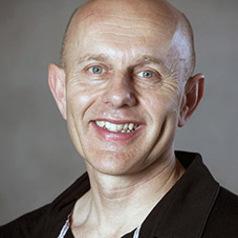
Adjunct Associate Professor of Physiotherapy, Curtin University PhD, La Trobe University, Melbourne, Australia, 20/10/2006 Graduate Diploma of Manipulative Therapy, La Trobe University, Melbourne, Australia, 08/04/1994 Bachelor of Applied Science (Physiotherapy), La Trobe University, Melbourne, Australia, 12/04/1991 Bachelor of Applied Science (Chiropractic), RMIT University, Melbourne, Australia, 25/06/1986 Certificate in Computer Programming, Wellington Polytechnic, New Zealand, 1979
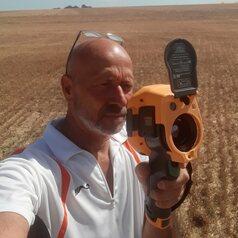
Directeur de recherche au CNRS, Université de Lorraine Mon activité scientifique se place dans la politique de transition énergétique, animée par trois tendances majeures : les sciences de la terre, le développement durable et les impacts environnementaux. Cette activité concerne principalement les enveloppes superficielles naturelles ou anthropisées avec comme finalité leur éco-utilisation dans la problématique de transition énergétique en lien avec leurs protections durables. Les recherches entreprises se focalisent sur l’étude des mécanismes de transfert et d’interaction des fluides dans l’écosphère. La porte d’entrée dans tous ces systèmes se situe au niveau moléculaire (nm). Cette approche, nécessairement multi échelle, s’articule autour de trois axes de progrès principaux : - développer une métrologie d’observation et de quantification du transfert des fluides en milieux naturels, pouvant intégrer les trois compartiments : géosphère (-3000, 0m), biosphère (0, 10m) et troposphère (10, 10 000m) - comprendre les mécanismes d’interaction fluides - solides et leurs transports dans les différents compartiments affectés, - interpréter ces phénomènes d’interactions et de transfert en termes de modèles 2D/3D d’échange intra et inter compartiments. Ces recherches trouvent naturellement leurs applications dans le domaine de l’utilisation pérenne et responsable du sol et du sous à des finalités énergétiques à savoir : l’exploitation des ressources minérales, la gestion des rejets miniers, le stockage géologique profond de déchets ultimes et le stockage en milieu géologique du CO2, de l’énergie (H2) et la surveillance et la sécurisation de sites émissifs qu’ils soient naturels, urbains, industriels, militaires ou évènementiels.
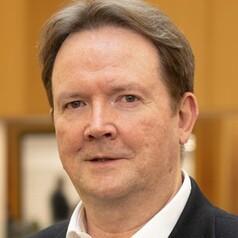
Director, Institute of Rheumatic and Musculoskeletal Medicine, University of Leeds Professor Philip Conaghan MBBS PhD FRACP FRCP is Director of the NIHR Leeds Biomedical Research Centre and until recently was also Director of the Leeds Institute of Rheumatic and Musculoskeletal Medicine (a EULAR Centre of Excellence) at the University of Leeds. His research focuses on understanding the causes of, and developing effective therapies for, common joint problems. He has previously chaired NICE osteoarthritis clinical guidance, is co-editor of the Oxford Textbook of Rheumatology and has co-authored over 650 publications as original research, reviews and book chapters. He has received multiple international research awards including the Carol Nachman award for Rheumatology, the OARSI Clinical Research award and the Elise Jourdevant prize.
Distinguished Professor in Pest Management and Conservation, Lincoln University, New Zealand My primary research focus is predicting the risks arising from plant invasions and recent work has examined the traits that underpin the success of invasive species; clarifying the main routes by which these species are introduced to a region; assessing their rates of spread; gauging the vulnerability of habitats to invasion, quantifying the impacts of invasive species and predicting the potential impact of climate change on invasive species distributions. However, my research also includes wider assessments of biological invasions and increasingly the importance of human perspectives such as the role of trade and wealth creation on invasion rates as well as the importance of appreciating the non-market costs of alien species impacts. I apply a wide range of approaches to address these issues including modelling, experiments and field surveys with research undertaken across the world from the forests of North America and East Africa to the montane ecosystems of Italy and New Zealand. I am a Fellow of the Royal Society of New Zealand.
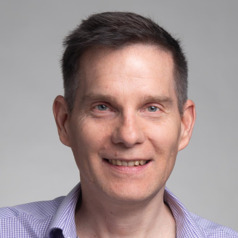
Postdoctoral Associate at the Tegmark Lab, Massachusetts Institute of Technology (MIT) Dr. Park applies mathematics, the social sciences, and the cognitive sciences to research human-AI dynamics. To illustrate, OpenAI's mission is to create "highly autonomous systems that outperform humans at most economically valuable work." If and when we humans cede our decision-making to these highly autonomous AIs, will we come to regret this potentially irreversible choice? Dr. Park investigates this question by using a variety of tools, such as empirical studies of current AI systems, relevant data from the evolutionary or historical past, and mathematical models of what a hypothetical AI-led future may look like.
Senior Lecturer in Environmental Engineering, University of Portsmouth I completed my BEng (Hons) degree in Civil and Structural Engineering at the University of Bradford, and my MSc in Water Management (Community Water Supply) at Cranfield University. After two years working in industry, I returned to Cranfield University to complete my PhD titled 'Anaerobic ponds for domestic wastewater treatment in temperate climates'. I continued at Cranfield at a Post-Doctoral Research Fellow for three years, before taking a role as Lecturer in Water and Environmental Engineering at the Botswana International University of Science and Technology. In July 2019 I returned to the UK to take up my current appointment as Senior Lecturer in Water and Environmental Engineering and the University of Portsmouth. My current research focuses on resource recovery - water, energy, and minerals - from wastewater streams, including with the EC Interreg project NEREUS. I am also interested in technology implementation for improved WASH access in developing countries, and how that technology interacts with the social and economic issues present in the sector. An emerging research interest is the treatment and remediation of pollution of coastal cities, particularly at present the issue of Nitrates in Portsmouth Harbour and the Solent. Previous research activity involved work for major UK water companies and consultancies, and for the development sector in energy recovery from latrine wastes and solid waste streams in developing countries. Whilst at Cranfield University, I was a Work Package leader within the European Commission FP7 project Water4India, and contributor to the Nanomembrane Toilet, a Phase 2 Bill and Melinda Gates Foundation project.