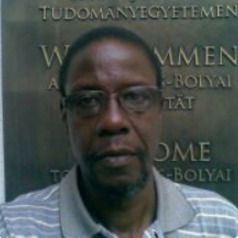
Maître de conférences CAMES, Université Cheikh Anta Diop de Dakar Professeur Papa Sakho est Maître de conférences CAMES de géographie à l’Université Cheikh Anta Diop de Dakar. Il capitalise 30 ans d'expérience d’enseignement, de recherche et d’expertise sur les villes africaines. Il s’est intéressé particulièrement ces dernières années à la production urbaine par les transports et les mobilités y compris les migrations internes et internationales. Professor Papa Sakho is a Lecturer in Geography at Cheikh Anta Diop University in Dakar. He has 30 years of experience in teaching, research and expertise on African cities. He has been particularly interested in recent years in urban production through transport and mobility, including internal and international migration.
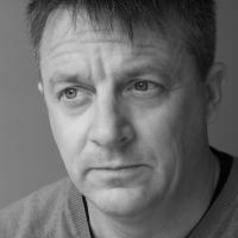
Professor of Business and Sustainability, Cardiff University Professor Peter Wells has vast experience of research into the global automotive industry around which he has developed his academic and theoretic interests in socio-technical transitions, business models, cultures of automobility and sustainability. Research interests: - Alternative local economies - Automotive industry - Celebrities, wealth and sustainability - Corporate strategy - Government transport and environment policy - Mobility - Sustainable business models - Transitions to sustainability
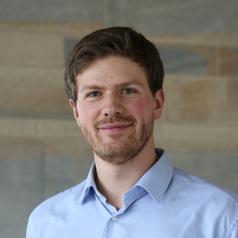
Research assistant professor, University of Essex My research interests include social, personality, political, and cross-cultural psychology as well as science communication and research methods. A significant part of my empirical work includes human values (e.g., freedom, loyalty, security). Among other things I am interested in how people perceive the values of other people, and whether living in cities or countries in which other people share one's values has positive effects on one's well-being. Currently, I am especially interested in similarities between groups of people. While people often tend to assume that values, attitudes, and abilities differ between, for example, women and men, younger and older people, or people from different countries, the amount of similarities between these groups is on average pretty large, typically between 80 and 95%. In my research I investigate the effects of highlighting similarities between groups of people. For a full list of my publications see my Google Scholar profile https://scholar.google.com/citations?user=huR7aNgAAAAJ&hl=en
Professor & Chair in Air Quality and Health; Founding Director, Global Centre for Clean Air Research (GCARE), Co-Director, Institute for Sustainability, University of Surrey, University of Surrey Prashant is a founding Co-Director of the pan-university Institute for Sustainability (https://www.surrey.ac.uk/institute-sustainability), Founding Director of the Global Centre for Clean Air Research (GCARE; www.surrey.ac.uk/gcare) at the University of Surrey (UK). He is a Full Professor and Chair in Air Quality & Health, the founder of successfully running Guildford Living Lab (https://tinyurl.com/GuildfordLL), a Trustee at Zero Carbon Guildford (ZERO), an Adjunct Professor at Trinity College Dublin Ireland, and a Guest Professor at Southeast University China. As an Associate Dean (International), he provided international leadership to the largest faculty. Earlier, he served as a Reader, Senior Lecturer and Lecturer. An engineer by training, he obtained his PhD (Engg) from the University of Cambridge (UK) after winning a Cambridge-Nehru Scholarship and Overseas Research Scholarship award, and earned his Master's Degree in Environmental Engineering & Management from the Indian Institute of Technology, Delhi, with CGPA 9.8/10 and rank 1. Clarivate Analytics recognised him in the top 1% of the Global Highly Cited, Researchers, 2022. He was the winner of the University of Surrey's "Researcher of the Year Award" in 2017. His fundamental and application-oriented cross-disciplinary research develops the interfaces of clean air engineering/science, human health and smart/sustainable living in cities/megacities. His current research projects are focused on multidisciplinary areas of air pollution monitoring/modelling, low-cost sensing, citizen science participation, nature-based solutions for climate change mitigation and the development of innovative technological and passive (e.g. green infrastructure) solutions, tools and guidance for both developing and developed world. A prolific author with >300 articles in top-ranked journals, his research has attracted >16800 citations, h-index, 68; i10index, 239, secured £11M of individual research funding from >£30M projects, funded by the UKRI, EC, industry, charities & international funding bodies. Currently, he is a PI/Director of the £1.2M UKRI-funded RECLAIM Network Plus. He has developed a network of collaborators across four continents and works closely with industrial partners. He is Editor-in-Chief of the air quality section of ‘Atmosphere’, founding Speciality Chief Editor of ‘Climate Change & Cities’ and serves editorial board of several journals (e.g. Scientific Reports). He advises local/international bodies and serves as a board member of many funding agencies in the UK and worldwide. His research has featured in well-read media outlets such as the BBC and The Times.
Head of Clinical Psychedelic Research, Monash University Paul Liknaitzky is Head of Clinical Psychedelic Research at Monash University, and Chief Principal Investigator on a program of psychedelic trials. He is a Research Fellow within both the Dept of Psychiatry (School of Clinical Sciences) and the Turner Institute for Brain and Mental Health (School of Psychological Sciences) at Monash University. He earned an Honours in Neuroscience and a PhD in Psychology from the University of Melbourne, and has Adjunct or Honorary appointments at St Vincent’s Hospital, Macquarie University, Deakin University, and the University of Melbourne. In Australia, he is an Investigator on a number of the country’s initial psychedelic trials, coordinated the first applied psychedelic therapist training programs, obtained the first industry funding for psychedelic science, and leads the first clinical psychedelic lab. His work is focused on developing a rigorous program of research in clinical psychedelics that seeks to evaluate therapeutic effects, innovate on treatment design, mitigate known risks, explore potential drawbacks, and understand therapeutic mechanisms.
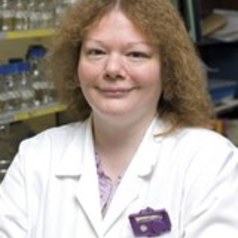
Senior Lecturer in Clinical Microbiology, University of Leicester Dr Primrose Freestone (BSc (Hons), PhD, PGCE) is a Lecturer in Clinical Microbiology. She is a biochemist by training, with extensive experience in bacterial physiology and biochemistry, including bacterial protein phosphorylation (she was the first to identify tyrosine phosphorylation as a regulatory mechanism in bacteria and provided key evidence concerning the biochemical function of the Universal Stress protein (uspA) in E. coli). Currently, Dr Freestone’s research interests are focused on the relationship between stress and infection. She is a co-founder and internationally recognised leader in the field of Microbial Endocrinology, a newly recognised research discipline which represents the intersection of microbiology, endocrinology and neurophysiology. Microbial Endocrinology is directed at providing a new framework with which to examine and understand the ability of microorganisms to interact with a host in both health and disease (Freestone et al 2008, Trends in Microbiology). Dr Freestone’s Microbial Endocrinology research interests are focussed on the relationship between stress and how it influences human and animal infection, particularly the effects of exposure to human stress hormones such as adrenaline and noradrenaline on bacterial growth and virulence. This research has led to the demonstration that stress hormones stimulate biofilm formation in normally harmless skin commensals such as Staphylococcus epidermidis, an important factor in the mechanism by which these inadvertent pathogens form biofilms within indwelling medical devices. This research was funded by the Wellcome Trust and was published as a lead article in the Lancet. Other ongoing research projects include molecular analyses of stress hormone responsiveness in E. coli, Salmonella, the staphylococci, and other bacterial pathogens. Dr Freestone is an editorial board member of Recent Patents on Anti-Infective Drug Discovery, Bentham Publishers, and a member of the SGM, ASM and SFAM. She has research collaborations with Professor Mark Lyte, Texas Tech University; Texas, USA, Professor Charles Penn, University of Birmingham; Dr Anthony Roberts, School of Dentistry, University of Manchester; Professor Vic Norris, University of Rouen; Dr Nick Walton, Institute of Food Research, Norwich, and with colleagues at the University of Leicester, including Dr Jonathan Woodward, of the Department of Chemistry and within the Department of III - Professor Christopher O’Callaghan, Professor Richard Camp, and Dr Jonathan Barratt.