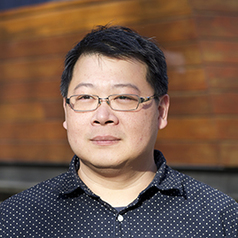
Lecturer in digital architecture design, University of Melbourne Paul Loh is lecturer in Digital Architecture design at the University of Melbourne. Prior to this Paul studied architecture at the University of Melbourne and University of East London before joining the Design Research Lab at the Architectural Association where he completed his Master in Architecture and Urbanism. He has over 12 years of practice experience in London, Melbourne and Kuala Lumpur. Paul was senior lecturer at the University of East London between 2005 and 2011. He has taught at the Architectural Association and lectured in UK, Sweden, Italy and China. He is a partner of Melbourne based design practice LLDS / Power To Make, focusing on the relationship between making, technology and material. Paul is a PhD candidate at SIAL RMIT. His main research interest is digital fabrication and craft formation in computational design.
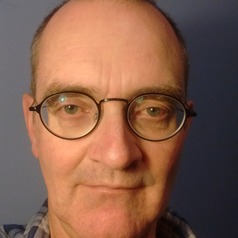
Research and RHD Coordinator & Lecturer in Sound, Production, Lecturer in Interactive Art Media, VCA., University of Melbourne I am an artist who works in interactive media, cross/multi modality creative arts, and have published and exhibited internationally. I currently work at the Victorian College of the Arts and have 12 RHD students in areas including design, interactivity, community arts, music, and media. My PhD explored the relationship of creator, object and audience through ephemeral computer based artworks.
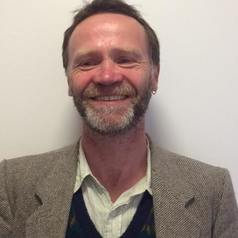
Lecturer in Education, Keele University I joined Keele in March 2016 to take up the role of Director of PGCE Programmes. I have worked at the Universities of Bristol, Southampton and Bath Spa. I completed my PhD as an ESRC funded scholar, under the supervision of Professors Susan Robertson and Roger Dale at Bristol University, and my thesis investigated the role of the European Commission in the Governance of Education Policy in the European Union. As a researcher, I work in inter-disciplinary collaboration with scholars from Economic Geography, Politics and Sociology with a particular interest in the Political Economy of Education, ethnographies of educational institutions, the inter-scalar production of education policy and the financialisation of Higher Education. My teaching spans PGCE, Masters and Doctoral Education programmes with particular responsibility for Curriculum, Policy and International Education modules. I have gained research funding and managed research projects for the Economic and Social Research Council and the Equalities and Human Rights Commission in the UK, and the European Commission and Centre for European Policy Studies in Europe.
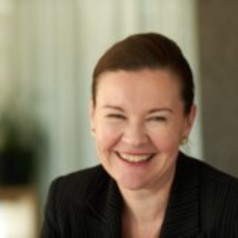
Professor, University of Adelaide Petrina Coventry is Industry Professor and Director of Development with Adelaide University Faculty of Professions and Business school. Petrina has spent over twenty years working in Asia, the United States and Europe performing global leadership roles with The General Electric Company, The Coca Cola Company, Proctor and Gamble and Santos Ltd. She has worked across multiple industry sectors including energy, oil and gas, education, fast moving consumer goods and financial services. Her work in the area of ethics and governance, transformation and change, organization design, human capital planning and policy has led to increased involvement with governments, industry associations and consulting groups across the Asian region. Petrina is an ethicist by background and has been appointed as a Fellow of the Australian Institute of Company Directors, a Vincent Fairfax Fellow, and a Fellow of the Australian Human Resource Institute. She is a Non-executive director of AHRI, a Non-executive director of the Australasian Association of Philosophy, and a Non-executive director of Beston Global Food Company Ltd.
Lecturer in Critical Thinking, The University of Queensland Director of the University of Queensland Critical Thinking Project and lecturer in critical thinking in the school of Historical and Philosophical Inquiry. Degree in Education and post graduate degree in Philosophy. Master of Contemporary Science from the ANU. Former Head of Experimental Science at the Queensland Academy of Science, Mathematics and Technology.
Research Professor, University of Florida I am interested in the ecology and conservation of wetlands, and particularly of wetland vertebrates. These creatures are adapted to environments that are extremely productive, yet often very unpredictable, and whose nutrient cycling is completely different from terrestrial, oceanic or lacustrine environments. The field of wetland science is dominated by studies of energetic flow, plant ecology, and nutrient flux, in which wetland vertebrates are often assumed to play minor roles. Yet animals, even vertebrates, are often key in the healthy functioning of these ecosystems, and the conservation and restoration of these ecosystems depends strongly upon an understanding of how larger animals use them, especially in terms of movement behavior, foraging ecology, and reproduction. For vertebrates, this often requires understanding various aspects of ecosystem function at once, and often at regional and even international scales. In my research program, wetland birds have been used intensively and extensively as indicators of ecosystem health, ecosystem function, and as guides for the spatial and temporal scale at which conservation and restoration should occur. My work has included vertical studies of long-legged wading birds in the Everglades (health, reproduction, foraging ecology, energetics, flight behavior, communication, movements, demographics, feedback nutrient loops), comparisons of ecosystems (Everglades, Miskito Coast, Okavango Delta, Brazilian Pantanal), measuring anthropogenic effects (human disturbance, hydrological management, nutrient pollution, powerlines, construction, contaminants), multidecadal studies of population dynamics and movements, and ecosystem/regional planning for conservation.