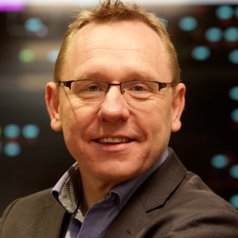
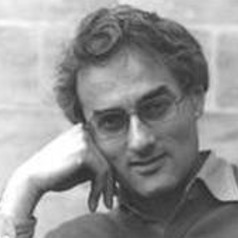
Senior Lecturer and CMI Programme Director, University of Huddersfield I joined the University on a full time basis in February 2014. Prior to that I had worked as a part time lecturer since October 2013. This followed a successful 4 year period of study at the University where I completed the CIPD professional development course and gained a Masters Degree in Human Resource Development. Between Dec 2007 and Feb 2014 I worked for Provident Financial Group where I performed a variety of roles within the People Development function. In the first 2 years I was the training lead on a major new project then I transferred to a Divisional role as a People Development Adviser with a specific remit for Learning and Development. In this role I covered Yorkshire, Humberside, the North East and parts of Nottinghamshire. During this time I also developed and delivered modules centrally on the Leadership and Management programmes accredited by the CMI. Between Nov 2012 and Feb 2014 I was based in Head Office again with Internal Verfirier responsibilities for the CMI Level 5 (Senior Management) programme and I designed and managed the Management Learning Academies which provided a 6 weeks induction to the company for new managers with a mixture of classroom and experiential learning. Between April 2002 and Dec 2007 I worked for Protocol Skills (the UKs largets independent training provider). Having started out as an assessor I became an Internal Verifier (IV) and as such hold D32, D33 and V1 qualifications. In 2003 I became Area Manager for West Yorkshire and Lead IV for Yorkshire and Humberside. In these combined roles I increased our levels of funding by regularly exceeding the funding body target success rate of 70%. During 2005 and 2006 I was seconded to a change management project group which altered the business model from a paper based to an e-portfolio. My role on the project was training lead and I converted all project material into training materials which I then delivered to the pilot location of Yorkshire and Humberside. This successful pilot enabled the e-portfolio to be adopted on a national basis. Between March 1997 and April 2002 I worked for Thomas Cook. 1997 – 2001 I worked overseas and progressed from being a rep to Head Rep and Resort Manager. I managed multiple resorts in Menorca and Fuertaventura and was Airport Controller in Cancun. My favourite destination was Mallorca where I worked for 3 seasons. My greatest success as a Resort Manager came in Menorca where I achieved 86% good or excellent customer service scores, from 19,000 guests, against a target of 80%. 2001 – 2002 I was Senior Customer Service Adviser in the Bradford office, leading a team of 9, dealing with post holiday queries.
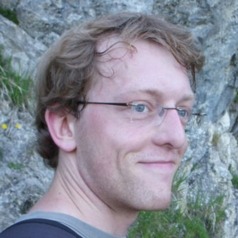
Postdoctoral Research Associate in Computer Science, Princeton University I am interested in computer networks and security, and why the two don't get along very well. I enjoy being part of all phases of a research project—from sketching ideas on a whiteboard, to implementation, and finally deployment and maintenance. To this end, I have worked in the three research areas listed below. I keep maintaining code I have developed in these research projects, so they are open-ended in some sense. Keeping bad actors out of the Tor network As communities grow in size, it becomes increasingly hard to keep out bad actors, and Tor is no exception because the network is run by volunteers. In 2013, I started developing exitmap, a fast and flexible scanner for Tor exit relays. If you have a background in functional programming, think about it as a map() interface for Tor exit relays. It allows you to run arbitrary, TCP-based tests over each exit relay. One of the main tasks of exitmap is to expose and block malicious and misbehaving exit relays. I recently broadened my scope to Sybil relays, sets of Tor relays that are under the control of a single entity. I am developing sybilhunter which is meant to assist in finding and analysing Sybils. Censorship analysis Early on in my Ph.D. studies, I became interested in the Great Firewall of China (GFW). I was first exposed to the GFW in 2011, when trying to understand how it blocks the Tor network. I have since revisited the topic several times, to understand how the GFW fails over space and time, and how its active probing component is designed. As part of my work on the Tor network, I also helped characterise—and circumvent—a censorship system in Ethiopia. Traffic obfuscation Motivated by my work on censorship systems, I became interested in traffic obfuscation, i.e., shaping network traffic in a way that it is hard to classify and block. I started by developing a small tool for server-side circumvention. It was designed to prevent the GFW from recognising Tor handshakes on the wire. The tool transparently rewrites the window size in a SYN-ACK segment, forcing the client to split its initial payload across two segment instead of one. Back in 2012, the GFW would not reassemble TCP streams, rendering it unable to spot circumvention traffic “protected” by this tool. I then went on and developed ScrambleSuit, a polymorphic traffic obfuscation protocol. ScrambleSuit can protect against the GFW's active probing attacks by relying on a “password” that is shared between client and server. ScrambleSuit has since been superseded by the faster and more elegant obfs4, which is no longer maintained by me.
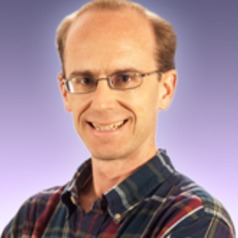
Dr. Roundy studies waves of the tropical atmosphere and ocean and how these waves interact with one another and with atmospheric moist deep convection to modulate global weather and climate. Areas of emphasis include analysis of observations to study modulation of tropical cyclogenesis and the El Nino/Southern Oscillation (ENSO) by convectively coupled waves and intraseasonal oscillations.
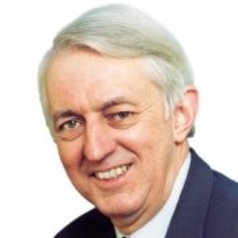
Professor of Peace Studies, University of Bradford Paul Rogers continues his work on trends in international conflict with a particular focus on the interactions of socio-economic divisions and environmental constraints. Within this area of study he works on issues such as the politics of energy resource use and the impact of climate change on international security. He has a particular research interest in radicalisation and political violence. His regional emphasis is primarily on the Middle East and South Asia and his work on sustainable security links with Oxford Research Group. He is also involved in a new pilot project for the Network for Social Change on “Remote Control” – the use of armed drones, Special Forces, privatised military companies and other forces to maintain control, raising issues of ethical behaviour, accountability, precedent-setting and and risk of proliferation. In the past, Paul lectured at Imperial College and was a Senior Scientific Office in Kenya and Uganda.
Dr. Peter Ghosh is Associate Professor of Modern History at Jean Duffield Fellow in Modern History, University of Oxford. I am interested primarily in the history of ideas, both social and political theory and also the history of historiography, in accordance with my research interests. I have two related research interests: first, the interface between political ideas and English politics, ca 1850-1895; secondly, the evolution of Western European and British ideas, including historiography, from the Enlightenment to the present. My current publishing commitments centre on Max Weber.