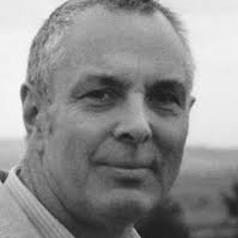
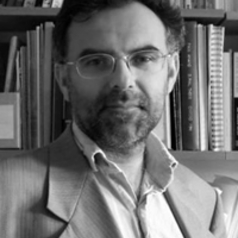
Dr Paul Lashmar joined Sussex in October 2015 as a Senior Lecturer and he is also an investigative journalist and research academic. Prior to Sussex he was at Brunel University. His PhD is on the links between the intelligence services and the media, which is his core research interest. Paul is a highly regarded investigative journalist and has worked in television, radio and print. He has been on the staff of The Observer, Granada Television’s World in Action current affairs series and The Independent. He has also produced a number of TV programmes for BBC’s Timewatch and Channel 4’s Dispatches series and is the author of three books and a chapter in ‘Investigative Journalism: Context & Theory’ (2008). He covered the ‘War on Terror’ for the Independent on Sunday from 2001-2008. He was awarded ‘Reporter of The Year’ in the 1986 UK Press Awards. Paul has written about terrorism, intelligence, organised crime, offshore crime, business fraud and the Cold War and has broken many major domestic and international stories. He is an adviser to the Centre for Investigative Journalism. Often interviewed on radio about these and other subjects. An adviser to the Centre for Investigative Journalism at City University. His full CV can be found at www.paullashmar.com Specialist in journalism education and training Current research interests: * The British Press and the EU * Moral Panics and the Journalist * Information flow between intelligence agencies and the news media * The relationship between reporters and their audience * Excellence in Journalism Practice * Socio-economic diversity in journalism * Journalism and war on terror * Journalism and organised crime * Online media entrepreneurialism Forthcoming book. Multimedia Journalism. Co-author with Steve Hill (Solent University) Sage Publications. Due publication Sept 2013. This book is a synthesis of theory and practice and includes interviews with practitioners. June 2013 - Paul has a chapter "Journalist, Folk Devil?" in Moral Panics in the Contemporary World. (Eds: Critcher, Hughes, Petley and Rohloff). London: Bloomsbury. Moral panic theorists say the media are central to the 40 year old and popular concept, but in this chapter Paul Lashmar challenges the model observing that no research into actual journalism practice on stories deemed moral panics has previously been undertaken. From July 2011 Paul has been Honorary Editor for the Proceedings of the Dorset Natural History and Archaeological Society (DNHAS). The Proceedings is an annual semi-scholarly publication that has been published since 1870s. The first volume (133) under Paul's editorship has been available since November 2012. For more details contact Dorset County Museum. The index and details of Proceedings can be found here.
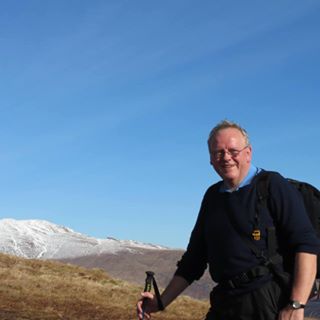
I’ve enjoyed a varied career ranging from early days in pure science (principally geology), through water resources and environmental engineering (especially groundwater engineering), on through mining environmental engineering to energy engineering. There are several persistent threads running through all of these experiences, mainly to do with quantitative geoscience, numerical modelling of fluid flow and reactive mass transfer, and the translation of high-level conceptual principles into hands-on engineering solutions, invariably for purposes which I believe are socially and environmentally benign. I owe my formal education to two universities: Newcastle University in the UK (BSc and PhD), and Oklahoma State University in the USA (MS), where I spent two very happy years as a Harkness Fellow (1984-86), taking advantage of burgeoning activities in the then-National Centre for Groundwater Research and the EPA’s RSKERL Lab in Ada. My education was extended – and continues to be – by industrial experience, with Yorkshire Water, the National Rivers Authority, Centro Yunta (La Paz, Bolivia), NIREX, Northumbrian Water, Project Dewatering Ltd, Cluff Geothermal Ltd, Five-Quarter Energy Ltd and various consultancy missions worldwide. I spent just under 20 years at Newcastle University, where I: taught water and environmental engineering; founded and led the HERO research group (which won the University the Queen’s Anniversary Prize for the first time in 2005); established what is now the Sir Joseph Swan Centre for Energy Research; founded and Directed the Newcastle Institute for Research on Sustainability; served as the University’s Public Orator; and was the UK's first-ever Pro-Vice-Chancellor for Engagement. I joined Glasgow University in August 2012. I currently serve as Chair of the Global Scientific Committee of the Plant Earth Institute, an intermational NGO (of which I am also a Trustee) which aims to promote South-South collaboration in science-based projects that further the cause of 'scientific independence for Africa'. I am also a Trustee of Arran Community Energy, which is striving to implement renewables in a manner compatible with the important tourist industry of that beautiful Scottish island. My current research is entirely focused in the energy sector, and besides engaging with the broad challenges of keeping the lights on and homes and businesses warm whilst decarbonising our energy systems, I focus specifically on three areas in which my particular skills and experience can be put to best use: geothermal energy, underground coal gasification tightly coupled to carbon capture and storage, and hydropower.
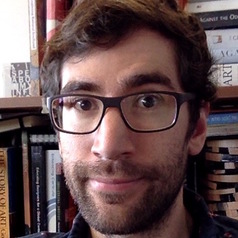
I am a lecturer in Graphic Design at Edinburgh Napier University. My general research interests surround the social, ethical and political dimensions of visual communication design as it operates within society. My PhD research investigating the ethical foundations of design was carried out at Gray’s School of Art, Robert Gordon University.
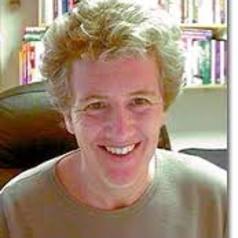
Pippa Norris is the McGuire Lecturer in Comparative Politics at the John F. Kennedy School of Government, Harvard University and ARC Laureate Fellow and Professor of Government and International Relations at the University of Sydney. A political scientist and public speaker, her research compares election and public opinion, political communications, and gender politics. She also served as Director of the Democratic Governance Group in United Nations Development Programme, NY and as an expert consultant to many international organizations such as the World Bank, Council of Europe and OSCE. In 2011 she was awarded the Johan Skytte prize with Professor Ronald Inglehart for contributing innovative ideas about the relevance and roots of political culture in a global context. This is among the most prestigious prizes relating to the field of political science. She was also awarded the Kathleen Kitzpatrick Australian Laureate Fellowship by the ARC, a 'special recognition' award by the UK Political Studies Association, and a Doctor honoris causa for work 'at the forefront of global political science' by the University of Edinburgh. In 2014 she was awarded IPSA's Karl Deutsch prize. Her current research focuses upon the Electoral Integrity Project, a major new multi-million 5-year research study. The project research team is based at the Department of Government and International Relations at the University of Sydney. It has been generously supported by many agencies, including the Australian Research Council. Recent and forthcoming publications include Why Elections Fail (2015), Contentious Elections (2015), Why Electoral Integrity Matters (Cambridge University Press 2014), Advancing Electoral Integrity (co-edited, Oxford University Press, 2014), Comparing Democracies 4 (Sage, co-edited April 2014), and also an edited symposium on electoral integrity in Electoral Studies (Oct 2013).
I have held fellowships in Oxford and Cambridge Universities and am currently a Professor at the Open University, Research Associate at Oxford University and the London School of Economics. My work stems from long standing interests in the foundations of decision sciences, used to be primarily normative, and have argued for the expansion of decision theory beyond older conceptions of rational choice, something that has, broadly speaking, taken place both in economics and philosophy. In recent years, I have been interested in the operationalisation of Sen’s capabilities approach to welfare economics and its use in debates about the measurement of progress. Earlier work has been published in a variety of leading economics journals including The Economic Journal, Theory and Decision, Oxford Economic Papers, Economica, Journal of Health Economics, Annals of Operations Research and much of it is collected in my monograph Foundations of Rational Choice Under Risk published by Oxford University Press in 1993 (with reprints in 1995 and 2002). In addition, I have just edited and contributed to the Oxford University Press Handbook of Rational and Social Choice with Professor Prasanta Pattanaik (Riverside, University of California, USA) and Professor Clemens Puppe (Karlsruhe University, Germany) to be published in 2008. Work on capabilities and wellbeing is summarised in greater detail on the capabilities measurement project website. I have also been interested in the interaction these theories and their development in policy contexts or experimental and survey based work. This work has been published in a wide variety of scientific journals including Science, Journal of Theoretical Politics, British Journal of Management, Social Theory and Practice, Social Indicators Research, Health Care Analysis and the Journal of Economic Psychology. Having taught research methods at graduate level for five years and acted as a consultant researcher on economic statistics to the OECD and NAO my most recent work brings a these interests together with interests in the foundations of social choice. With about 25 colleagues, at the latest count, I have sought to demonstrate the extent to which the measurement of human capabilities is feasible along multiple dimensions and explore the techniques that can be applied to such measurements. This work has resulted in approximately a dozen publications and has been incorporated into research projects in Oxford, Glasgow and Buenos Aires.
My research focuses on development of novel material systems and processes for development of functional nanomaterials. Our studies are focused on advancement of fundamental knowledge of electronic structures, carrier dynamics, and interactions between incident electromagnetic radiation and these nanoscale materials. Based on our understanding, we design and fabricate these nanostructured materials using a variety of top-down and bottom-up scalable nanofabrication techniques. We also employ a variety of spectroscopic methods including optical, electronic, ultrafast and other optoelectronic and surface sensitive spectroscopy techniques to study fundamental interaction between light, charge carriers and phonons in individual nanoparticles and mesoscale nanoparticle assemblies. This leads us to design principles for development of useful devices based on desired engineered nanoparticle properties and cooperative phenomenon in nanostructured assemblies.