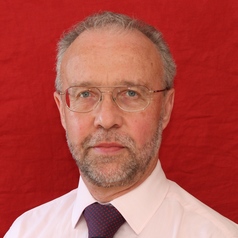
Paul Watson is Professor of Computer Science and Director of the Digital Institute. He is PI of the EPSRC Centre for Doctoral Training in Cloud Computing for Big Data and also directed the £12M RCUK-funded Digital Economy Hub on Social Inclusion through the Digital Economy. He graduated in 1983 with a BSc in Computer Engineering from Manchester University, followed by a PhD on parallel graph reduction in 1986. In the 80s, as a Lecturer at Manchester University, he was a designer of the Alvey Flagship and Esprit EDS systems. From 1990-5 he worked for ICL as a system designer of the Goldrush MegaServer parallel database server, which was released as a product in 1994. In August 1995 he moved to Newcastle University, where he has been an investigator on research projects worth over £40M. His research interest is in scalable information management with a current focus on Cloud Computing. He sits on the board of Dynamo North East, an industry-led organisation created to grow the IT economy of the region. Professor Watson is a Chartered Engineer, a Fellow of the British Computer Society, and a member of the UK Computing Research Committee. He received the 2014 Jim Gray eScience Award.
Peter was educated at the University of Otago, the University of New England and Simon Fraser University. He has been a visiting Scholar at the University of Otago, The University of British Columbia, Rutgers University and The University of Oxford. Peter’s research is focused on the interactions between economic growth, economic development and international trade. He has also written on human capital accumulation, trade and environmental issues, the causes of long run growth through history, corruption, military spending and immigration. Peter has also served as an expert consultant to the Productivity Commission and to the Department of Innovation, industry, Science and Research.
Professor Peter Cowling is a member of the Department of Computer Science and the York Centre for Complex Systems Analysis (YCCSA) at the University of York. His research is focussed on models and algorithms for decision making in games and resource optimisation problems, and to this end he works with a wide range of industry partners in the games and IT industries. He is the Director of 3 large projects in the area of digital games and media: The Digital Creativity Hub (DC Hub -www.digitalcreativity.ac.uk) was recently awarded £18 million in funding which will drive our ambition to become a world centre of research in digital games, interactive media and the space where they converge. It has over 80 partners from digital content industries. The EPSRC Centre for Doctoral Training in Intelligent Games and Game Intelligence (IGGI - www.iggi.org.uk) has over £12 million in support to train 56+ PhD students working with the games industry over the next 7 years. The New Economic Models and Opportunities for digital Games (NEMOG - www.nemog.org), as well as the DC Hub and IGGI is actively investigating how digital games and interactive media can be repurposed to achieve economic, scientific, social and cultural impact - primarily through working with industry and public sector organisations. He has also worked on a number of projects to develop IT decision support systems for road maintenance, personnel scheduling, logistics and manufacturing. He has published over 100 papers in leading scientific conferences and journals and gained over £35 million in research funding across 38 projects.
Phil Godsiff is a Senior Research Fellow at the Surrey Centre for the Digital Economy, (CoDE), part of the Business School at the University of Surrey, UK. CoDE was formed to study the impact of digital technology on business, the economy, and society. Working closely with businesses, CoDE adopts a multi-disciplinary approach to analyzing the broad economic, organizational, and sociological changes brought about by the advance and spread of digital technology. His research interests include the effect of developments in the digital economy on industries, such as financial services, where existing business models may no longer be appropriate, and where new forms of currency and organization, such as crypto- and personal currencies, have the potential to emerge leading to profound effects on the economy and wider society. He is an Investigator on a recently awarded UK Research Council grant titled “CREDIT”, which is examining the nature and practices of these crypto currencies, and will be defining the future research agenda. The main themes of the research are to explore the effect of these “currencies” on the digital transformation of business models, and to clarify issues around governance, standards and regulation. He took part in ministerial roundtable discussions at the UK Treasury after the UK Chancellor’s 2015 Budget announcement of an expanded research programme into Digital and Crypto Currencies. He was a member of the expert panel comprising practitioners and academics which advised Sir Mark Walport, the UK Government Chief Scientific Officer, during his preparation of his report “Distributed Ledger Technology: beyond blockchain” published in January 2016. Phil contributed the chapter on disruptive potential which explored the way blockchain technology might spark the next industrial revolution, and the implications for the economy and society. He holds an M.A. in Economics from Cambridge University, and a PhD in Management from Exeter University. He received his PhD in 2013 with a study on “wicked problems”, (those without a rational solution), and how they impacted the operations of a government agency. He is a Fellow of the Institute of Chartered Accountants, and spent 30 years working at a senior level in in the Financial Services industry.
Peter Taylor-Gooby is Research Professor of Social Policy at the University of Kent’s School of Social Policy, Sociology and Social Research. He chaired the British Academy New Paradigms in Public Policy Programme (2010/2011) and is Chair of the REF Social Work and Social Policy and Administration panel 2011-15, a Fellow of the British Academy, a Founding Academician at the Academy of Social Sciences and, previously, a Fellow of the Royal Society of Arts and President of the British Association for the Advancement of Science, Sociology and Social Policy Section. He participated in the Prime Minister’s No 10 ‘progressive consensus’ Round Table and advised the Prime Minister’s Strategy Unit between 2009 and 2010. He has also written 23 books, including The Double Crisis of the Welfare State and What We Can Do About It, a new book published by Palgrave.
Paula Jarzabkowski is a Professor of Strategic Management. Her research focuses on strategy-as-practice in complex contexts, such as regulated firms, third sector organizations and financial services, particularly insurance and reinsurance. Her research in this regard has been foundational in the establishment of the field of strategy-as-practice. She is experienced in qualitative methods, having used a range of research designs, including cross-sectional and longitudinal case studies, and drawing on multiple qualitative data sources including interviews, observation, audio and video ethnographic techniques and archival sources to study private and public sector organizations. In particular, this includes the first global ethnography – a programme of research that included the use of video methods - of the reinsurance industry. Professor Jarzabkowski’s career has been marked by a series of prestigious fellowships that have enabled her to conduct detailed ethnographic studies of business problems. For example, in 2006-2007, funded by an AIM Ghoshal Fellowship, she conducted an audio-ethnographic longitudinal study of the paradoxical tensions involved in implementing a major strategic shift in a regulated telecommunications firm. From 2009-2012, she held the inaugural Insurance Intellectual Capital Initiative (IICI) fellowship, under which she conducted a 3-year audio and video ethnography of the global reinsurance market, which extended her skills from organisational to industry-level ethnography. From 2012-2014 she held an EC Marie Curie International Outgoing Fellowship at Cornell University. Her work has appeared in a number of leading journals including Academy of Management Journal, Organization Science, Strategic Management Journal, Journal of Management Studies and Organization Studies and in 2005, she published the first book on strategy-as-practice, Strategy as Practice: An Activity-Based Approach (Sage). In addition, her engagement with industry has made Professor Jarzabkowski skilled in turning academic research into applied outputs, including collaborating with industry in developing research questions, and presenting here research at industry venues and conferences. The relevance of her work was recognised recently with the prestigious 2013 ESRC Outstanding Impact on Business Award. Professor Jarzabkowski has just released a new book with Oxford University Press, entitled 'Making a Market for Acts of God: The Practice of Risk-Trading in the Global Reinsurance Industry' based on her 3-year ethnographic study of the industry.