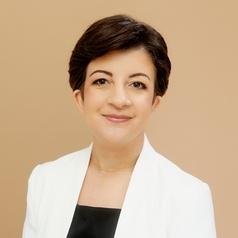
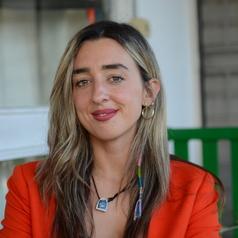
Associate Professor of Sustainability in the Built Environment, University of Cambridge Dr Ronita Bardhan is an architectural engineer and urban studies educator, with a PhD in urban engineering. She believes that data-driven intelligence of built environments can effectively address sustainability goals and policies. Her research is in the niche sector of the sustainable built environment to inform health and energy decisions in the changing climate and low-income communities. Bardhan uses data-driven methods that couples architectural engineering, AI and machine learning with social sciences to provided built environment solutions for health in resources constraint societies. Her tractable research informs demand-side design solutions using digital tools which positively affects well-being, energy security, and gender equality while entailing fewer environmental risks. Bardhan works in Slum Rehabilitation (social) housing (in India, Indonesia, Ethiopia, South Africa and Brazil). Her impactful work has received traction from policymakers and has received wide coverage in the news media. Ronita is part of AI for Environmental Risk, Cambridge Public Health, Centre for Science and Policy, Cambridge Zero , Cambridge Global Challenges and Sustainability Leadership for Built Environment (IDBE). She is Director of MPhil in Architecture and Urban Studies (MAUS) and leads the Sustainable Design Group at the Martin Centre: Sustainable buildings and cities, Department of Architecture. Dr Bardhan is Director of Studies and Fellow in Architecture at Selwyn College in Cambridge. Bardhan Chairs the Equality Diversity Inclusivity Committee at the Department of Architecture and History of Arts and is strongly committed to and is an ardent advocate of the shared vision of equality, diversity, inclusion, and belonging in all spheres of her research and teaching. She believes that everyone benefits from strength in difference and that diversity is instrumental to success.
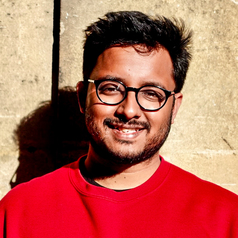
Cambridge Zero Fellow, University of Cambridge Dr Ramit Debnath is the inaugural Cambridge Zero Fellow at the University of Cambridge. He is also a visiting faculty associate in Computational Social Science at Caltech, and a sustainability fellow at Churchill College, University of Cambridge. Ramit works at the intersection of data science and public policy to support climate action. Primarily focussing on developing novel approaches to natural language processing, machine learning, AI and qualitative analysis to enable a people-centric and just net-zero transition. In addition, he is interested in exploring how the public, industry and policymakers make decisions for energy and climate justice. At the same time, developing design-driven solutions to counter misinformation and distributive injustices. He is currently co-leading a work package with UNEP on developing a decision-making system for sustainability in the built environment. He has previously worked with the International Energy Agency, Stanford University and the Indian Institute of Technology Bombay. Ramit has a background in electrical engineering and public policy, an MPhil and PhD from Cambridge as a Commonwealth and Gates Scholar. He is the recipient of the 2022 Enrichment Award from the Alan Turing Institute, UK. In Cambridge, he has affiliations with multiple research units like the Energy Policy Research Group (Judge Business School), Centre for Natural Materials Innovation (Architecture), Centre for Climate Repair (Engineering), Cambridge Social Decision-Making Lab (Psychology) and the Bennett Institute of Public Policy (POLIS) as a Research Associate. Ramit has received over £400,000 in research grants and prestigious fellowships. And published in over 30 peer-reviewed journals and conferences
Assistant Professor of Comparative Literature and Middle East Studies, University of Michigan I am a scholar of war and trauma; world literature and literary culture; visual studies; and the Global South. My current book project is on moral, social and ideological collapse during the Lebanese civil wars (1975-1990) as represented by the recurrent trope of madness in literature and visual arts produced during and after the conflict. Prior to my return to academia, I served as a Foreign Service Officer with the US Department of State in Washington DC and Saudi Arabia. I am also on the board of a local chapter of the National Alliance on Mental Illness (NAMI).
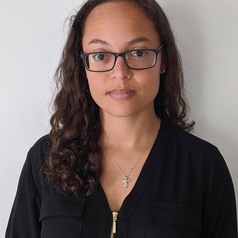
Research Fellow & PhD Student, Global Strategy Lab, York University, Canada Roojin Habibi is an international lawyer and a research fellow of the Global Strategy Lab (York University). As a law academic who bridges disciplines of international law, health law and human rights, her scholarly work examines the impact of transnational institutions, actors, and norms on global health equity and the realization of health as a human right. In 2022, Roojin was appointed to the WHO expert committee mandated to advise countries on proposed amendments to the 2005 International Health Regulations. She is among a five international law academics from around the world appointed to the committee. Roojin has worked on health and human rights issues in government, non-governmental, and international organizations. She holds a Joseph-Armand Bombardier Doctoral Award for her doctoral research at Osgoode Hall Law School, York University, and has a law degree (J.D.) from the University of Ottawa's French Common Law program, a specialization in transnational law from the University of Geneva Faculty of Law, and a Master’s of Science in Global Health from McMaster University. She is a Barrister and Solicitor in Good Standing with the Law Society of Ontario and is fluent in English, French, and Farsi.
Research Fellow, School of Arts, English and Languages, Queen's University Belfast Ruth is a historian of medical and oral history. Her expertise lies in modern British and Irish history; the Troubles, medicine, Irish society and culture. She particularly focuses on using oral history as a method to uncover hidden or sensitive histories. Ruth's first book on the experiences of the Northern Ireland Health Service during the Troubles will be published soon by Liverpool University Press. Ruth is currently a Research Fellow at QUB working on a project investigating 'mixed marriage' in Ireland. They are actively looking for interviewees for the project. You can find out more here: https://www.qub.ac.uk/sites/acts-of-union/
Research Fellow in Cosmology, The University of Queensland I am a Cosmologist studying the properties of the Universe on the largest scales. By mapping the positions of millions of galaxies, I investigate the unknown physics of the dark energy which drives the evolution of the Universe today, and the physics just after the Big Bang, when the ripples which grew under gravity to become galaxies were created. I am actively participating in the key experiments designed to understand dark energy and gravity. I am co-chair of the Dark Energy Spectroscopic Instrument (DESI) lensing working group, and an active member of the Vera Rubin Observatory (LSST) and the Dark Energy Survey (DES). In the past, I had led science with the Sloan Digital Sky Survey, one of the major quests of contemporary physics that has spurred advancement in answering a range of fundamental questions about the origins of the universe. I am passionate about communicating top-level research ideas to audiences outside our immediate academic sub-community. I have experience on a variety of media, including radio, public talks and lectures to local schools, science festivals and amateur astronomy groups, outreach activities at Stargazing Live events, as well as through written pieces. I am an advocate for making STEM field accessible to everyone. During my career, I took part into different initiatives aiming to reduce structural barriers faced by different minorities in academia and inspire the next generation of STEM careers. I am part of the Women in Science Association with the aim to foster a community for young women in STEM, within and beyond the academic community. I worked and volunteered at N.G.O. centres, in Italy and Australia supporting young students to overcome educational inequality caused by poverty and other conditions. Since 2021 I am on the Early Career Chapter committee for the Astronomical Society of Australia (ASA) to promote and assist the career development of early and mid-career researchers in the Australian astronomy community. I am also part of the Wellbeing Ambassador program at the University of Queensland, with the aim of contributing to creating a safe and healthy space for staff and students. I am a Cosmologist studying the properties of the Universe on the largest scales. By mapping the positions of millions of galaxies, I investigate the unknown physics of the dark energy which drives the evolution of the Universe today, and the physics just after the Big Bang, when the ripples which grew under gravity to become galaxies were created. I am actively participating in the key experiments designed to understand dark energy and gravity. I am co-chair of the Dark Energy Spectroscopic Instrument (DESI) lensing working group, and an active member of the Vera Rubin Observatory (LSST) and the Dark Energy Survey (DES). In the past, I had led science with the Sloan Digital Sky Survey, one of the major quests of contemporary physics that has spurred advancement in answering a range of fundamental questions about the origins of the universe. I am passionate about communicating top-level research ideas to audiences outside our immediate academic sub-community. I have experience on a variety of media, including radio, public talks and lectures to local schools, science festivals and amateur astronomy groups, outreach activities at Stargazing Live events, as well as through written pieces. I am an advocate for making STEM field accessible to everyone. During my career, I took part into different initiatives aiming to reduce structural barriers faced by different minorities in academia and inspire the next generation of STEM careers. I am part of the Women in Science Association with the aim to foster a community for young women in STEM, within and beyond the academic community. I worked and volunteered at N.G.O. centres, in Italy and Australia supporting young students to overcome educational inequality caused by poverty and other conditions. Since 2021 I am on the Early Career Chapter committee for the Astronomical Society of Australia (ASA) to promote and assist the career development of early and mid-career researchers in the Australian astronomy community. I am also part of the Wellbeing Ambassador program at the University of Queensland, with the aim of contributing to creating a safe and healthy space for staff and students.