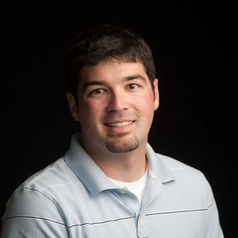
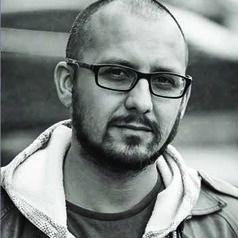
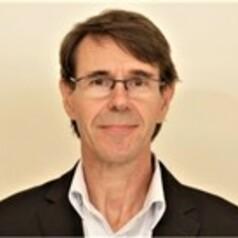
Associate Professor of Economics, Gonzaga University Professor Herzog was hired in fall of 2009. Professor Herzog is a native Washingtonian, born in Tacoma, Washington where he spent most of his life around the Puget Sound. Professor Herzog's academic interest range from topics related to international finance, macroeconomics, and regional business cycles. He loves advising students on graduate school options or helping them on their internship/career paths. In the classroom he diverges from the traditional lecture style through interactive assignments and in class problem sets. He encourages student participation during lecture and keeps students active in the classroom through the use of technology and economic experiments.
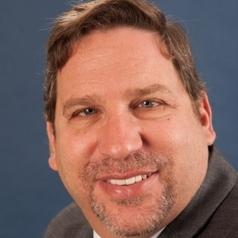
Continuing Lecturer in Writing, University of California, Santa Barbara Bob Samuels' research interests include academic writing, social science writing, psychoanalysis, rhetoric, and media. He holds doctorates in Psychology and English, and he is the author of numerous books, most recently "Political Pathologies from The Sopranos to Succession," "Educating Inequality: Beyond the Political Myths of Higher Education and the Job Market," "The Politics of Writing Studies: Reinventing Our Universities from Below," and "Why Public Higher Education Should Be Free." He blogs at Changing Universities.
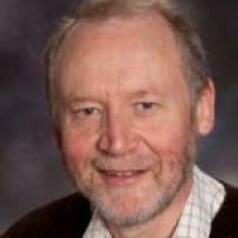
Honorary Senior Lecturer in Bioanthropology, Australian National University Papua New Guinea has been the focus of most of my recent research on health, nutrition and demography. This has been both at the level of nationwide and historical reviews, and of local research with Dr Don Gardner amongst the Mianmin of the highlands fringes of Sandaun (West Sepik) Province, where life expectancy is short, and health and child growth are generally poor, but where these also vary with local variation in altitude and ecology. In a different kind of human biological research project (also ARC-funded), I have recently focused with Prof Simon Easteal and others on the anthropological genetics of Papua New Guinea. In this project we are exploring genetic variation in both the female and male lines for clues as to the long-range histories of Papuan-speaking populations: questions include how the island of New Guinea was originally populated; whether genetic variation correlates with linguistic variation; and whether particular population groups may have expanded with the expansion of language families agricultural practices. In earlier research I studied population processes, ecology and nutrition in Zangskar valley, Jammu and Kashmir Province, northern India.
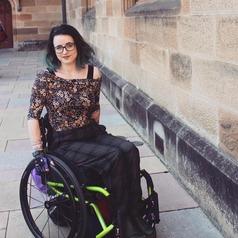
History PhD candidate, University of Sydney Robin Eames is a queercrip historian, poet and PhD candidate living on Gadigal land. They are currently researching 19th century trans history, criminalisation, and medicalisation at the University of Sydney. Their work is currently on display in the State Library of NSW's Amaze Gallery, as part of the Pride (R)Evolution exhibition.
Assistant researcher, University of Nottingham Dr Richard Ramchurn is an artist and researcher whose work explores adaptive narratives; he creates stories that can sense and adapt to the viewers’ physiological and emotional state. His film work explores race and technology in the Anthropocene in the forms of science fiction and magical realism. Ramchurn has been creating films and experiences using Brain Computer Interface technology since 2013. #Scanners, a successfully kick-started project, became an interactive narrative film called The Disadvantages of Time Travel (2014) that viewers controlled via brain data and blinking. His next brain-controlled film, The MOMENT (2018) touring internationally, and online and was covered by international media. These films were further explored as a multi award-winning research PhD project at the University of Nottingham’s Mixed Reality Lab working with world-class researchers in the field of Human Computer Interaction. His current interactive film Before We Disappear is set in the aftermath of a climate revolution in the near future. It explores the use of computer vision to support non-conscious interaction.
Judith and David Coffey Chair in Sustainable Agriculture, Plant Breeding Institute, University of Sydney Professor Robert Park’s career began after he completed a PhD in Plant Pathology at La Trobe University in 1984. His first appointment was with the Queensland Department of Primary Industries, where he worked on the impact of wheat stripe rust in the north eastern Australian wheat belt. He was appointed as a Research Fellow at the University of Sydney’s Plant Breeding Institute in 1988, and has worked there since on rust diseases of cereals. Professor Park was awarded an Alexander von Humboldt research award in Germany in 1995, and a Fulbright Senior Scholarship to the USA in 2010. In recognition of his work in China, he was awarded the Friendship Award of China in 2009. This is the highest honour that the Chinese Government bestows on foreign experts who have made outstanding contributions to China.