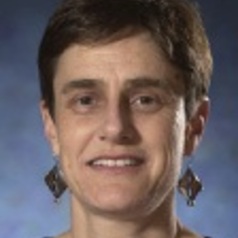
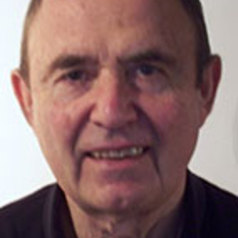
Professor of Oral and Maxillofacial Surgery, Neuroscience Division, University of Florida My research focuses on the molecular and physiological processes that initiate and maintain chronic pain. In particular, we are examining alterations in the function of the N-Methyl-D-Aspartate (NMDA) class of excitatory amino acid receptor in the spinal cord and the vanilloid receptor – the protein responsible for detecting the burning sensation produced by hot chili peppers – in the periphery following persistent stimulation. The NMDA receptor performs the function of an amplifier in the spinal cord to enhance pain signals, whereas the vanilloid receptor detects pain from heat, inflammation, and chemicals throughout the body. These studies examine changes in the phosphorylation status of these two receptors and alterations in subunits and splice variants as a result of painful experiences. These studies also examine the interaction of the NMDA receptor and vanilloid receptor with endogenous neuropeptides that are released during chronic pain. The ultimate goal of our work is to develop novel strategies to avoid the induction of chronic pain and new therapies to treat chronic pain once it is established.
Senior Lecturer in Law, Monash University Dr Renata Alexander has been a permanent senior lecturer with the law faculty since 2000 teaching the Family Law and Practice as well as the Ethics and Negotiation components of the PDLP course. Prior to that she taught undergraduate family law on a sessional basis. Renata has always been a legal practitioner since admission to the Supreme Court in April 1979. She worked as an in-house family lawyer/solicitor with Victoria Legal Aid from before working as the Deputy Registrar for the Family Court of Australia. Renata then went to the Victorian Bar in November 2002 where she practices on a part-time basis given her teaching and academic commitments. In 2003, Renata received a Centenary Medal from the Prime Minister for her work in voluntary legal services as she has been a voluntary lawyer with community legal centres since 1975. Furthermore, Renata has also won a PILCH award for similar services.
Professor of Health Psychology, University of Wollongong Croft has a PhD in psychology, with his thesis focusing on electrophysiology (EEG) methodology. His electrophysiology expertise has been extended into the RF-EMF health research, with his focus being laboratory research determining the effects of RF-EMF on awake and sleep EEG. Although a smaller aspect of his research, he has published RF-EMF epidemiological research, as well as substantial collaborative work employing in vitro and dosimetric methods to address the RF-EMF health issue. Croft is Director of the NHRMC CRE in RF-EMF health, the Australian Centre for Electromagnetic Bioeffects Research (ACEBR) and was Executive Director the forerunner Centre (Australian Centre for Radiofrequency Bioeffects Research), and is a Commissioner within the International Commission on Non-Ionising Radiation Protection (ICNIRP).
Senior Lecturer, Economics Dept; Senior Fellow, Law, University of Melbourne, University of Melbourne Rhonda Smith holds the degree of Doctor of Commerce from the University of Melbourne. She teaches graduate and under graduate subjects in the Economics Department and also teaches in the Competition Law Masters program in the Law School. She is a former ACCC commissioner and is presently a member of the Australian Copyright Tribunal and until recently was a lay member of the High Court of New Zealand. She provides economic advice in relation to competition issues and has acted as an expert witness in a number of competition cases.
Lecturer in Education, Queensland University of Technology Rebecca English teaches in the School of Curriculum in the Faculty of Education at QUT. She was a teacher in both the Catholic Education and Education Queensland sectors for seven years. She holds a PhD from Griffith University.
Roger King is visiting professor at the School of Management at the University of Bath. He is also adjunct professor at the Teaching and Education Development Institute at the University of Queensland, Australia. He is research associate at the Centre for the Analysis of Risk and Regulation, London School of Economics and Political Science. Roger is co-chair of the Higher Education Commission inquiry, and helped produce a report called 'Regulating Higher Education', launched in parliament in October 2013. He has also recently concluded a six-year period as Visiting Professor at the Centre for Higher Education Research and Information (CHERI) at the Open University. Previously, in the 2000s, he has been a Visiting Professor at the following Australian universities: Griffith, QUT, and Sunshine Coast. He has also been Visiting Research Fellow at the Association of Commonwealth Universities (2003-5). He was Vice-Chancellor of the University of Lincoln (UK) from 1989-2001 and the founding Chair of the Institute for Learning and Teaching in Higher Education (now the Higher Education Academy) from 1998-2001. He has been a member of the Board of the Observatory of Borderless Higher Education (OBHE) since its founding in 2001. He has undertaken various consultancy and Board positions in recent years. He is also the Series Co-Editor (with Noel Entwistle) of Palgrave Macmillan's Universities into the Twenty First Century, which has produced a dozen or so well-received titles since 2002. He is also co-convenor of the Higher Education Policy Group for the Political Studies Association. He is on the research advisory group of the QAA. Recent book publications include: The State, Democracy and Globalization (2003); The University in the Global Age (2004); The Regulatory State in an Age of Governance (2007); Governing Universities Globally (2009); and a Handbook on Globalization and Higher Education (with Simon Marginson and Rajani Naidoo, 2011). In addition he has written a number of published journal and other articles, including on global science; network power and social constructivism; in higher education model diffusion; university rankings; and risk-based regulation. Currently he is researching marketization, risk governance, and social networks in higher education policymaking.