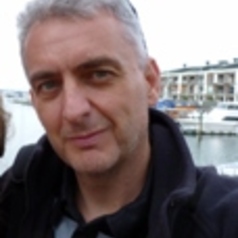
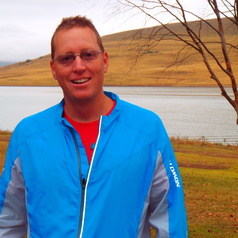
My research has always been focused on understanding animal behaviour and how it can be used to improve animal conservation and animal welfare. Although, much of his research is applied some of it addresses fundamental questions about how animals communicate, for example. In recent times my captive research has focused on questions regarding “Fitness for the Ark”; that is, can captive (zoo) animals be used in reintroduction programmes and what training might they need to survive in the wild. In the field I have studied primates, maned wolves, fish and birds. I am particularly interested in the human wildlife interface in how sound pollution from mining activities affects wildlife. And in human-animal interactions in urban environments especially how such interactions can be managed. My research approach is both interdisciplinary and multidisciplinary as I believe strongly that this is how we will be able to answer the ‘big questions’. Thus, I collaborate widely with researchers that include engineers, geographers, mathematicians, psychologists and sport scientists. I have always been fascinated by the natural world and the need to conserve it for future generations. Thus, I studied Biology BSc (Hons) at the University of Nottingham (graduated 1989), followed by a PhD at the University of Edinburgh (graduated 1993) in animal behaviour/animal welfare under the supervision of Prof. Alistair Lawrence. I then embarked on a wildlife career working as Research Coordinator for the Royal Zoological Society of Scotland (Edinburgh Zoo), where I was able to put into practice much of the theory I had gained during my university education. In 2001, I moved to Brazil, as a Professor of Animal Behaviour, to further fulfill my ambition to study wildlife. Here I developed a number of long term research projects on primate species (notably titi monkeys and marmosets), birds, carnivores and urban wildlife. At the beginning of 2013 I moved to the University of Salford to take-up a Chair in Wildlife Conservation.
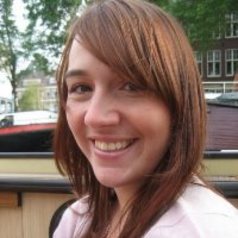
I am a Lecturer in Political Theory at the University of Warwick. Prior to this, I taught Political Theory at the University of Oxford, and before that, taught for several years at the University of Manchester. I have a PhD in Political Theory from the University of Manchester. My doctoral research was concerned with moral psychology and the role played by emotion and sentiment in public reason and the construction of morality, but since then I have become more radical in both my thinking and my activism. I am now especially interested in the challenge posed to class based liberation movements by the shift towards identity politics, and in particular the implications of this for feminist theory and practice. I have written extensively about the nature of sex, gender and identity, and am currently in the process of completing a book on the subject, entitled “The Politics of Gender Identity: A Feminist Critique”, to be published by Palgrave in late 2016.
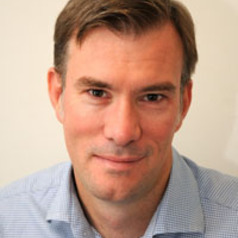
Roger works on optimisation and integration of renewable energy systems, linking together different technologies to find the least expensive, most reliable systems with the lowest carbon emissions possible. He also researches the chemistry of the stratosphere, and the impact of ozone chemistry on the surface climate. Prior to returning to Melbourne in 2008, he worked for the International Energy Agency on the Energy Technology Perspectives 2008 publication. He has worked to integrate observing systems for the global carbon cycle, and on the impact of climate change on the carbon cycle.
I am currently undertaking a Computer Science PhD at the University of Bath researching autonomous robotics, with a focus on domestic applications and ethical considerations. What models do humans form when interacting with AI systems, and how do we make the behaviour of these systems more understandable? I am interested in real world AI for real world problems. I am also Founder and CFO of RWA Ltd, a major international supplier of IT systems to the leisure travel industry for over 20 years. I have a wide experience of developing technology and systems, including electronics, chip design, systems and applications programming in many languages and environments.
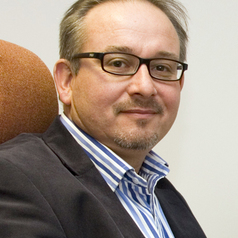
Blumenthal. Ryan, MBChB (Pret), MMed (Med Forens) Pret, FC For Path (SA) Dip For Med (SA) PhD (Wits) Senior specialist forensic pathologist at the University of Pretoria’s Department of Forensic Medicine. His chief field of interest is the pathology of trauma of lightning (keraunopathology). He has been involved in the publication of numerous articles and textbooks on lightning and electrothermal injuries and has helped generate international standard operating procedures and guidelines for lightning strike fatality and electrocution victims. He has published widely in the fields of suicide and other areas involving the pathology of trauma. His chief mission in life is to advance Forensic Pathology Services both nationally and internationally. Interests outside of forensic pathology include sleight-of-hand-magic, mountain-biking, bird-watching, squash, running and novel writing. He also has a personal interest in innovative strategies and techniques in conflict resolution.
Professor Dalton is an alumna of University College London. As a licensed architect, she has worked for Foster and Partners (London) and Sheppard Robson Corgan Architects (London) and key projects upon which she has worked include the Carré d’Art de Nîmes, in France, the Palaçio de Congresos in Valencia, Spain, and the Kings Cross International Terminal (unbuilt). She has taught at the Architectural Association, London, the Georgia Institute of Technology, Atlanta, USA and the Bartlett School of Architecture, UCL. Professor Dalton’s research interests are centred around the relationship between the spatial layout of buildings and environments and their effect on how people understand and interact in those spaces. Professor Dalton is an expert in space syntax analysis and is passionately interested in the use of virtual environments as a method for researching human factors in the built environment.